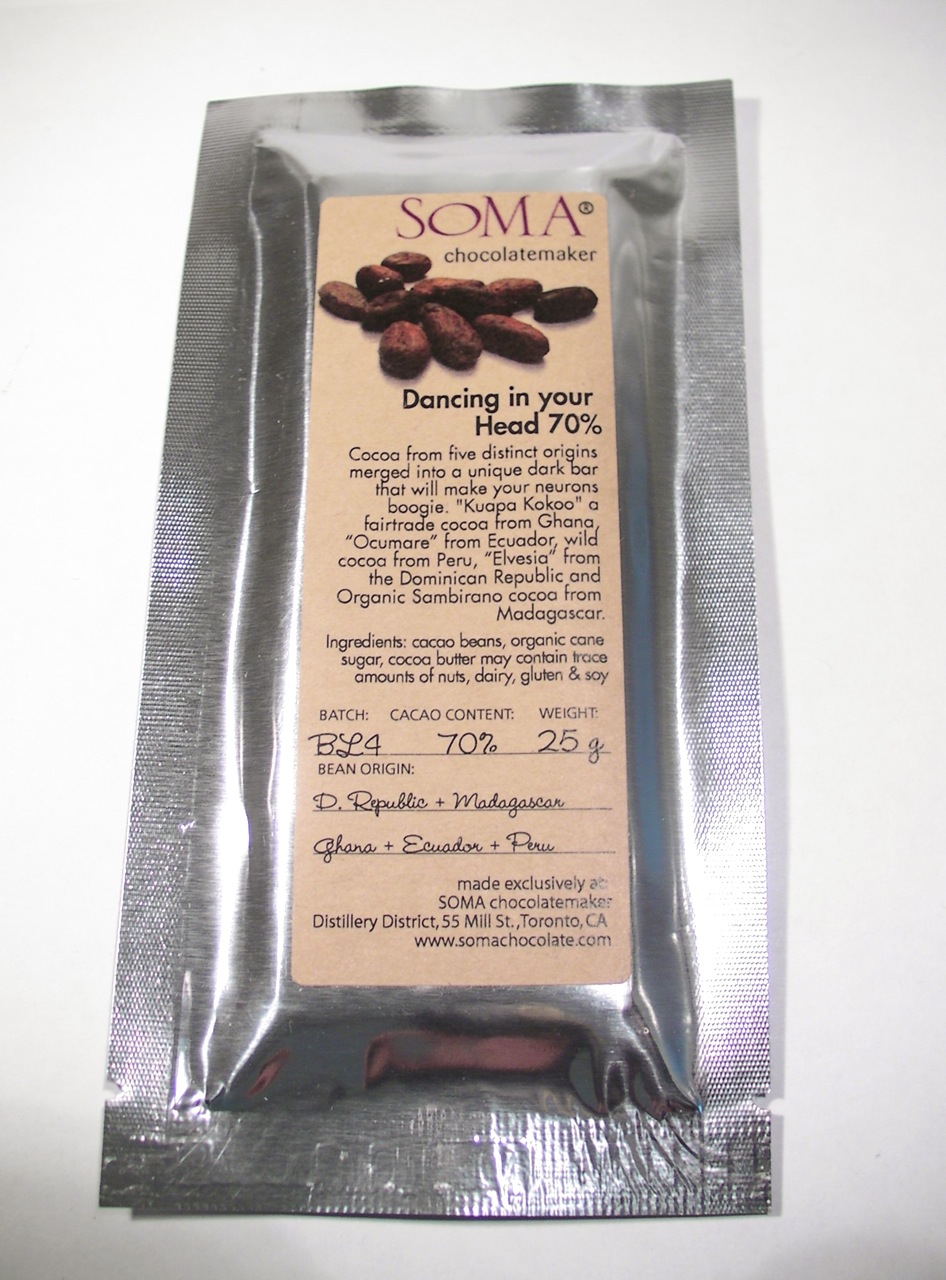
I’m a big fan of Toronto’s Soma Chocolatemaker. The Chuao bar I reviewed back in January is still one of my all time favourites, but I’ve tried two recent batches of the same bar, just weren’t the same. They were still pleasant chocolates, but the light & fruity notes that I love so much just weren’t there for some reason.
So when the lovely Judith brought back some more Soma from Canada (it’s is still not available in the UK unfortunately), I was interested to see how it would compare.

Like the Three Amigos bar, this is a blended chocolate, this time made with beans from the Dominican Republic, Madagascar, Ghana, Ecuador and Peru.
It does seem a little odd to me that a quality bean-to-bar operation like Soma would choose to produce blended chocolate, rather than working on highlighting the unique flavour characteristics of a single origin. It’s even more interesting that they would mix a fine, fruity Madagascan bean with one from Ghana, but Soma clearly know what they’re doing, so I’m happy to go along with it.
Interestingly, the Ghanaian beans are from Kuapa Kokoo, the cocoa farming co-operative which owns Divine Chocolate.

Of course, flavour is the most important thing, and it’s immediately obvious that some of the more interesting flavour notes have been diluted in the mix. There’s a slight hint of that citrus fruit, a little spice and the odd flowery note, but it’s quite difficult to pick out specific flavours (especially for someone like me who’s rubbish at it at the best of times).
It is a pleasant, well rounded chocolate though, and something I’d happily nibble on through the day (if I had more than a 25g bar). It has a gentle sweetness and a smooth texture that make it very easy to eat, but it doesn’t grab your attention like the Chuao bar did. I can’t say that it especially ‘dances in my head’.
Pleasant, but if I had a limited budget to buy Soma chocolate with, I’d go for one of their single origin bars instead.

The bizarre world of Zotter continues to evolve at an incredible pace, although I think this particular bar has been around a while. If the slightly odd choice of flavours didn’t give it away, the American flag illustration on the wrapper should make the influence here quite clear.
Most of the writing is in German, so I’m not sure if Zotter just brainstormed a list of American flavours and put them together in a bar (in which case, I fully expect to see a Coca Cola and Cheeseburger flavour variety soon), or if there was a greater reason behind this choice of flavours.

The list of ingredients is extensive. The bar contains everything from tomato pulp to raisins, grappa and birds eye chilli, all wrapped up in a thin layer of 70% dark chocolate.
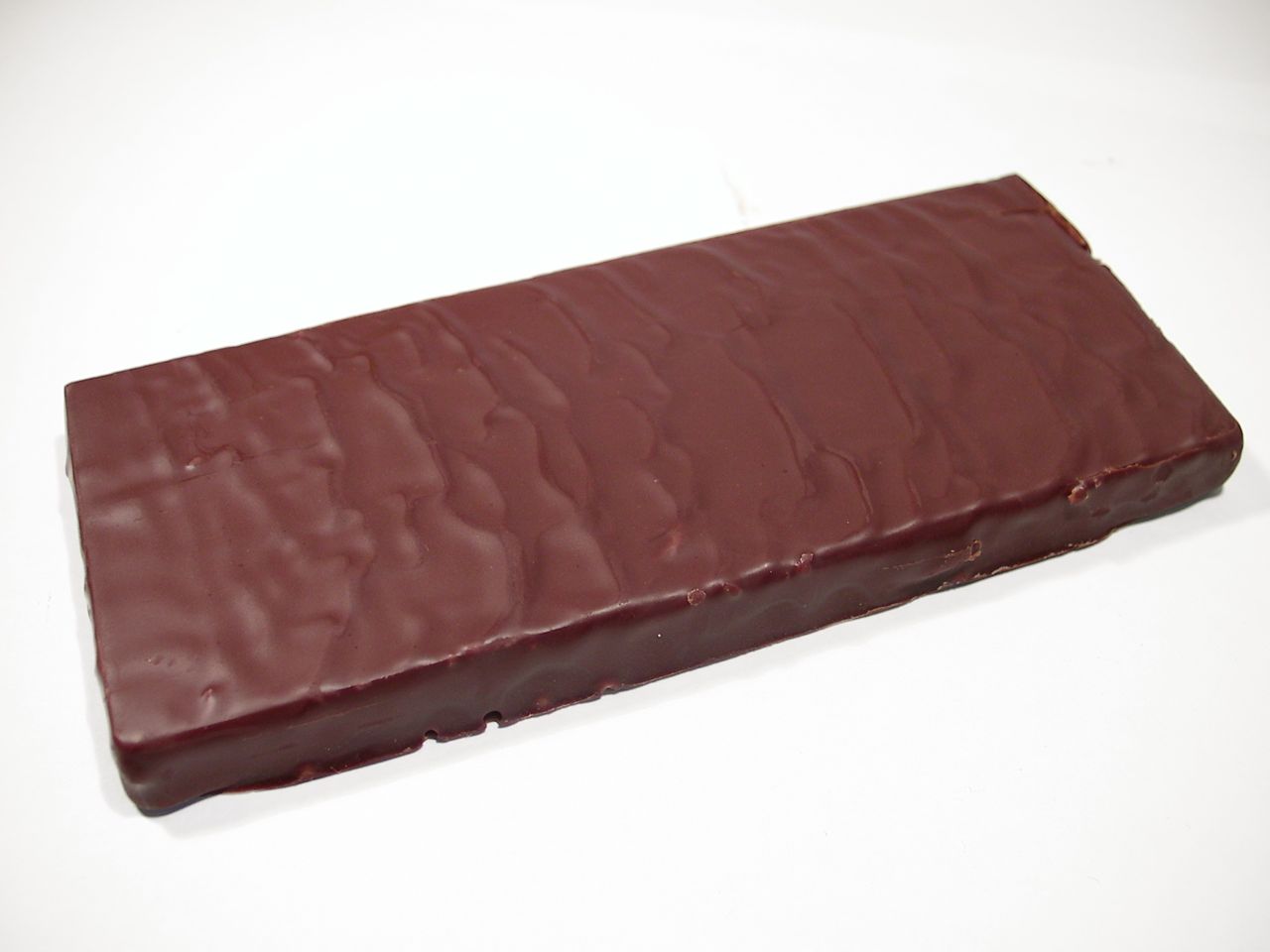
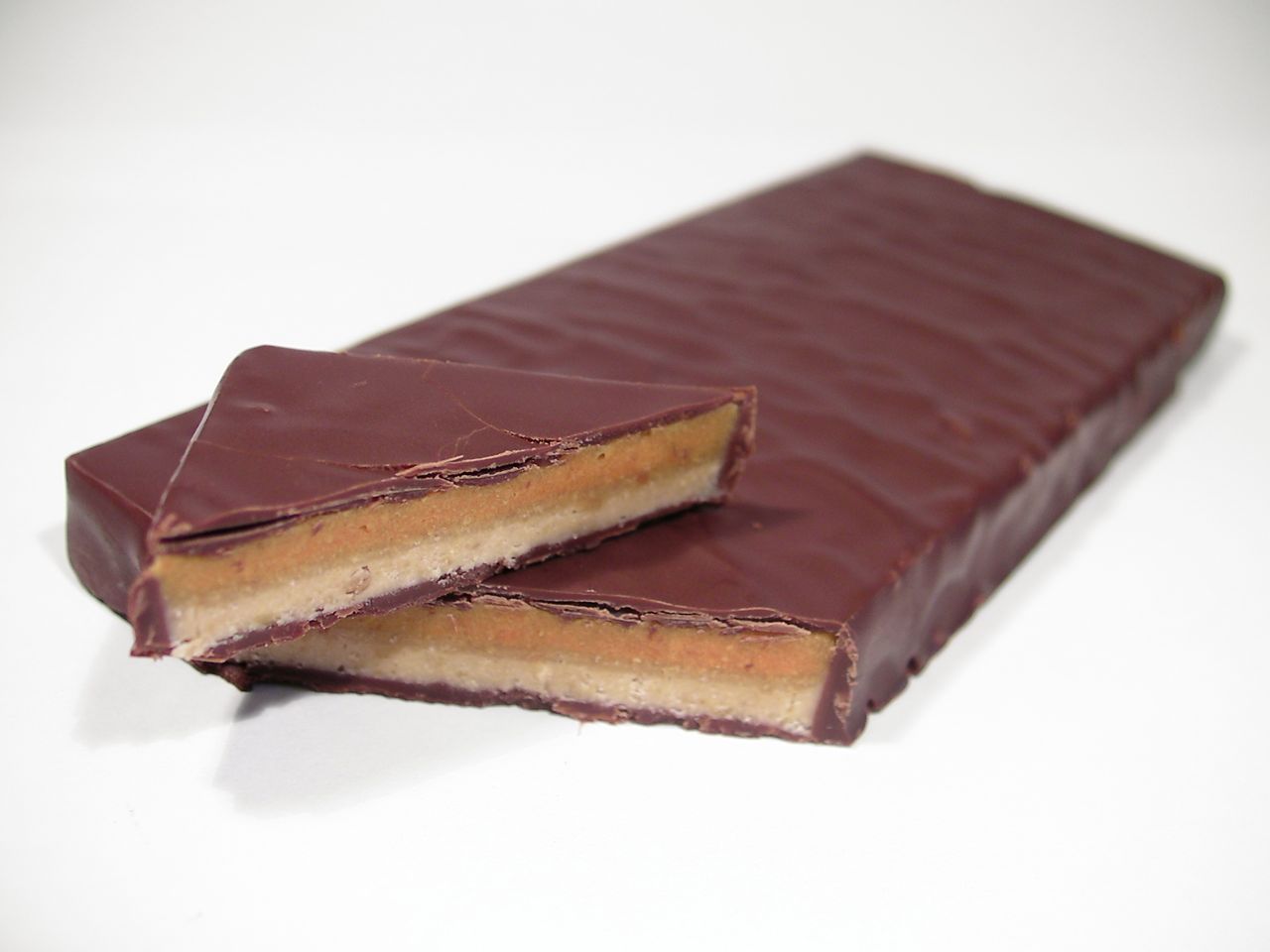
As you can see, the format is exactly the same as Zotter’s other filled bars, meaning you get a lot of filling and not much chocolate.
There are two distinct layers inside the bar, with the soft peanut praline nougat on the bottom, and the ‘ketchup’ layer on top.

Taken on its own, the peanut nougat layer is actually very nice indeed. It has a delicious, slightly crunchy texture, and a flavour that takes me back to a time in my life when I thought Snickers was the height of luxury.
The ketchup layer is equally surprising. Although not a true ketchup, there’s definitely a tomato flavour going on there, but it’s nicely balanced by all the other sweet fruit. The flavour is quite sharp and very fruity, which is partly due to apple juice and lemon concentrate in the mix.
Put together, the flavours do clash a little, although it still just about works. The tangy ketchup does taste a little odd with the smooth peanut, but once you get used to it, it’s actually quite pleasant. Odd, but pleasant.
The chocolate itself doesn’t make much of an appearance, which is the thing I find a little disappointing about these filled bars. The small hint of it that you get right at the end is very pleasant, but otherwise the ‘ketchup’ flavour dominates it entirely.
You wouldn’t buy one of these crazy Zotter bars for the chocolate though. You’d buy it as a novelty gift or to share with curious friends. It’s one of those things that’s worth trying, but you probably only need to try it once.

Some months ago, as I was wondering the aisles of my local Foodland, I found Nestlé Plaistowe 70% cooking chocolate. I was curious, but decided to come back to it some other time.
Then, more recently, I found alongside it, Lindt Dessert 70% specialty cooking chocolate. Now I was intrigued, for two reasons, one slightly more off-beat than the other.
For years, the kind of chocolate I ate was pretty much limited to Cadbury Dairy Milk, and there’s only so much of that I could take anyhow. When I was a kid and teenager, Mum had this strange stuff now and again called “cooking chocolate”. And later after I was married, my wife would sometimes be making chocolatey things and it would appear in the fridge as well.
This cooking chocolate always seemed to have the magical properties that anybody who broke lumps off and walked away munching on it would get their fingers smacked; that by the cooking this chocolate somehow became “better”. And of course when I found it, the amount of it would somehow shrink.
It was not until much later that I looked at labels to find that most common supermarket cooking chocolates are 40% cocoa solids at most, and packed with vegetable fats and other things that, these days, I regard as unacceptable.
The second reason for being intrigued was that I still don’t understand the idea of most home-grade cooking chocolate being low grade junk. OK, its often a bit less milky, but a 40% cocoa chocolate padded with palm oil and god-knows-what puts me in the mind of what cooks are told about wine: If It’s Not Good Enough To Drink You Should Not Cook With It. So how come it’s OK to cook with crappy “cooking chocolate”?
Professional cooks have couverture chocolates available – high quality, and packaged to allow easy use in cooking, usually without the need to smash a block to pieces; its home cooks who suffer the low grade muck.
So having found two readily available cooking chocolates, both 70% cocoa, both aimed at the home cook, it seemed time to put them to the test. And the only sensible test I can think of is to use that approach about wine: don’t cook with them. Eat them, and see what they are like.
So without further ado:
Nestlé Plaistowe 70%
The label proudly proclaims “Intense and Indulgent Real Chocolate for Cooking”. A check on the back of the pack shows typical ingredients for a 70% cocoa: cocoa mass, sugar, cocoa butter, lecithin, flavour. But there are also two that are a little unusual: milk solids and butter oil. I’ve eaten plenty of eating chocolates like this, so its no big deal. I’m guessing butter oil will make it slightly softer. Milk solids is a bit odd.
The label isn’t exaggerating – this is a very pleasant, rich, powerful 70% chocolate which you could happily cook with or just eat as it is. It’s not excessively sweet, there is a very tiny hint of a cocoa powderiness, but you really have to search to find it.
I wondered if perhaps the Plaistowe name had some kind of long and colourful tradition, in the manner of Cadbury Bourneville. As far as my research shows the name is just the creation of the marketing department.
Lindt Dessert 70% Specialty Cooking Chocolate
The chap with the big hat and his whisk on the front of the pack certainly leaves no illusions about the intended purpose of this product. Again, it was time to check the ingredients: Cocoa mass, sugar, reduced fat cocoa powder, cocoa butter, lecithin, flavour. Seeing “reduced fat cocoa powder” is the unusual one here. I’d take a wild guess that many chocolates are fortified with cocoa powder and it can be wrapped up in the guise of “cocoa mass”. Actually saying so on a label is the odd part.
Again, this is a pleasant, rich, powerful 70% chocolate. Again, I’d quite happily cook with it. It’s also a pretty good eating chocolate, but by comparison with the Plaistowe, this has a slightly harsh note. I can’t really pick what or how – it just seems a little less refined – in the genteel rather than industrial sense of the word. If anything this is slightly more bitter.
Neither of these 200g blocks are especially cheap, coming in at about A$5 each – so the no-name brands are around only because they are very cheap. For cooking, either of these will do a reasonable job. Depending on what you make them into, you could choose either and be well served; if making something with minimal other ingredients go for the Nestlé Plaistowe.

That’s right, Thorntons are now selling their very own chocolate liqueur! Or more correctly, your favourite booze emporiums are now selling a Thorntons chocolate liqueur.
The drink was launched last month at an event which I unfortunately missed, but Thorntons were kind enough to send a bottle along for me to sample. There was no accompanying press release, so I decided to just try a glass or three.
I should warn you then that I’m writing this review while in a mild state of inebre… inniebri… drunkenness.

The drink was developed by Thorntons Master Chocolatier Keith Hurdman, and as you might guess from the appearance, can best be described as a chocolatey version of Baileys (albeit made with vodka rather than whiskey).
Thorntons might tell you might tell you that it’s unique and distinctive and took many months of arduous development work, but when you’ve consumed a large wine glass full like I just have, that doesn’t really matter. It’s chocolatey Baileys.

And very nice it is too. As you may have guessed, I know very little about this kind of thing, but if you like chocolate and you like sweet, creamy liqueurs, then you’ll love it. Personally, I’m looking forward to experimenting with cocktails using it. But I’m fairly sure I’m going to need another bottle for that.
Thorntons! Are you reading this? Send more liqueur!
(Oh yes. Drink responsibly, please. Not like me. I’m not responsible at all.)