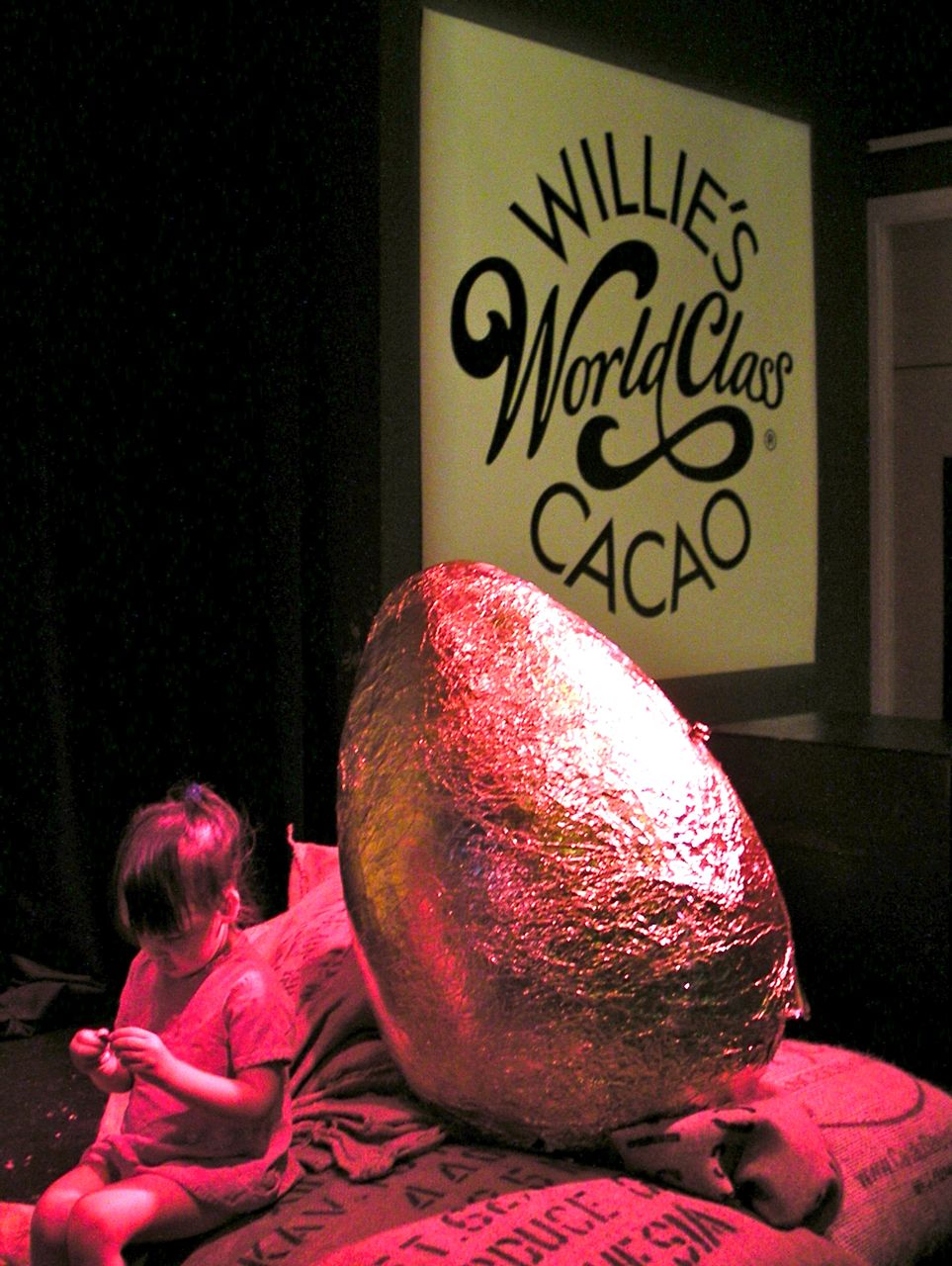
Just before Easter I attended Willie Harcourt-Cooze’s “Easter Egg Factory” event in central London. I wasn’t invited, but managed to sneak in to the party disguised as a chocolatier’s wife.
It was a fun event, with live music, canapes, cocktails and chocolate fountains. The food was great, the music was loud and the chocolate fountains actually tasted of chocolate. Most importantly, everyone got to have a go at making their own Easter eggs. Unsurprisingly, mine came out wonky.

This was part charity event and part designed to promote Willie’s new book, and last week Willie was kind enough to send me a copy along with a box packed with chocolate (which I’ll be scoffing reviewing soon).
The book is over 300 pages long with over 150 recipes, mixed with stories about the history of chocolate and Willie’s own journey to becoming one of only two people in the UK making chocolate from the bean.
The first thing to say about it is that it’s absolutely jam packed with information. There are loads of pictures, but it’s much more text-heavy than the Chococo cookbook I wrote about recently.
There’s a huge variety of chocolate-based recipes here, both sweet and savoury. One thing to note is that many of the dishes – particularly the savoury ones – require 100% cacao, which is obviously not quite as easy to come by as your every day 70% bar. But it is, of course, what Willie is best known for making, and you’ll find it for sale on his website, as well as places like Waitrose, so it’s not too difficult to find. Even if you can’t, there’s still plenty of recipes that just require 70% dark chocolate or cocoa powder.

What I liked best about this book though, is that even if you’re not much of a cook (like me), you can still sit down and read it cover to cover. The stories are a great mix of Willie’s personal experiences, the history of chocolate, and how it’s made. I thoroughly enjoyed it.
If you love chocolate, then this is one book you really need to have in your collection.

There’s no denying that San Francisco’s Poco Dolce make some elegant, good looking chocolate. There’s something very appealing about their minimalistic packaging, and the large crystals of grey sea salt they sprinkle liberally on their chocolate tiles is just the icing on the cake, so to speak.

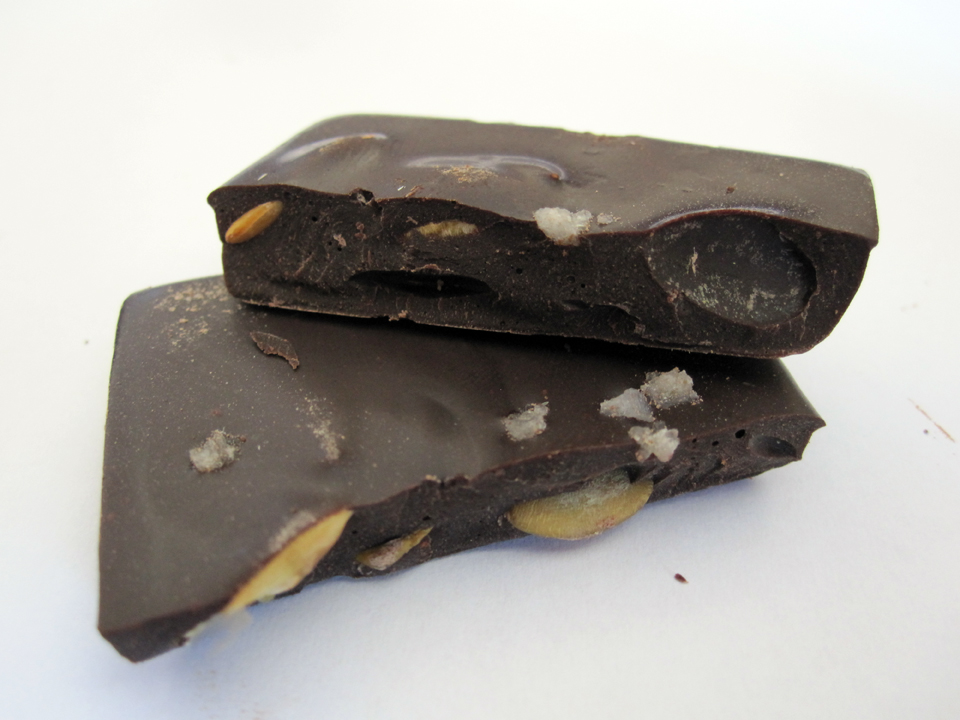
Their Bittersweet Chocolate Tiles are like mini bars of chocolates, and with seven different flavours in the range, there’s no shortage of choice. The Assorted box that found its way into my hands had four of those varieties: Ginger, Almond, Burnt Caramel and Aztec Chile. They don’t share the percentage of the chocolate they use, but the “Bittersweet” moniker and the taste suggests it is about 55-ish.
The Ginger Tiles have very generous huge pieces of candied ginger which provide a lovely tang to every bite. It isn’t very subtle but like most ginger lovers, I really don’t want to be handled with kid gloves – I want a tingling mouth once I’m finished and that’s what I got. Consider me satisfied.

The Almond Tiles are the least exciting because all they have are a few almonds thrown into the chocolate. Rather ordinary because it is exactly what the name suggests and nothing more.
The Burnt Caramel Tiles have some large pieces of their wonderful butter toffee hidden within. The toffee really does taste like it is right on the edge of being burnt, with strong tones of dark, dark brown sugar that slowly gives away to the sea salt. Poco Dolce’s butter toffee makes me very, very happy indeed.

The Aztec Chile starts off with a hint of cinnamon in the chocolate before the chili comes barrelling in and dominates in a satisfyingly burning manner. The only distraction from the heat are crunchy pumpkin seeds that give a bit of welcome texture to the tile, but this really is all about the ground chilli and there’s no restraint here. One for the lovers of spicy chocolate.
All in all, a good mix of tastes with the focus on big, bold flavours that balance out the sweeter chocolate well, although I could have done without the Almond Tile which was a bit on the dull side. Everything else I could happily eat again thanks to the not-too-sweet thing that Poco Dolce do so well.

Abanico Chocolat is a French chocolatier, with a shop in Paris. They were kind enough to send me a rather beautiful box of chocolates to review, which weighs in at 37 Euros.

Of course, the first thing you’ll notice about them is the packaging. Slide the purple sleeve off the box and you’re presented with a multicoloured fan of chocolates.
Each layer has a different kind of chocolate (dark ganache, milk ganache, dark praline & milk praline), and although they’re all the same size and shape, every chocolate is different. In fact, this collection represents Abanico’s entire range.

I just love the way these are presented. Not only is the box beautiful, but it’s also incredibly practical. The layers are simply bolted together, so bigger and smaller boxes can be created simply by adding or removing layers. Fan the layers out and each layer has a little card telling you what the chocolate underneath is.
Of course, my French isn’t very good, so I went for the ‘stuff them all in my mouth and see which ones I like’ option. The answer was ‘all of them’.

The flavours are typically French. Subtle and sophisticated rather than experimental. Everything is excited with a wonderful attention to detail, and the flavours – while not exotic or challenging – are perfectly balanced.

I’m not going to go into detail on every flavour – partly because many of them are so similar, but mainly because I scoffed them all before I’d even thought about translating the text on the box. Suffice to say they’re beautiful and delicious. Definitely worth seeking out – and they’ll happily deliver across Europe, so you’ve really no excuse.
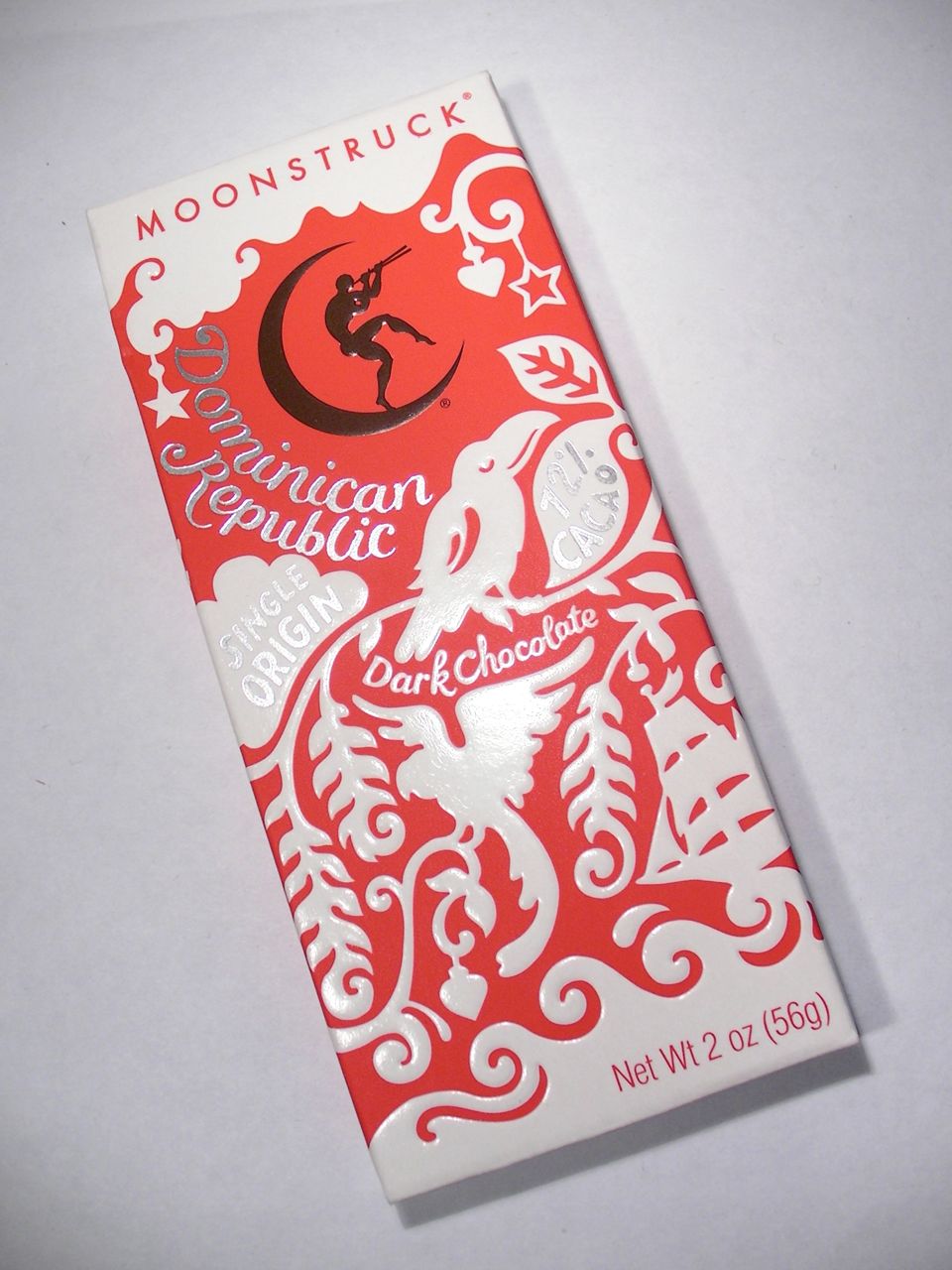
Moonstruck are a chocolate company based in Portland, Oregon, with several shops around the area. I chose this single origin Dominican Republic bar primarily because I wanted to compare it to the outstanding Amano Dos Rios that I tried recently. I didn’t really expect they’d be in any way similar, but I thought it would be fun to taste them side by side anyway.
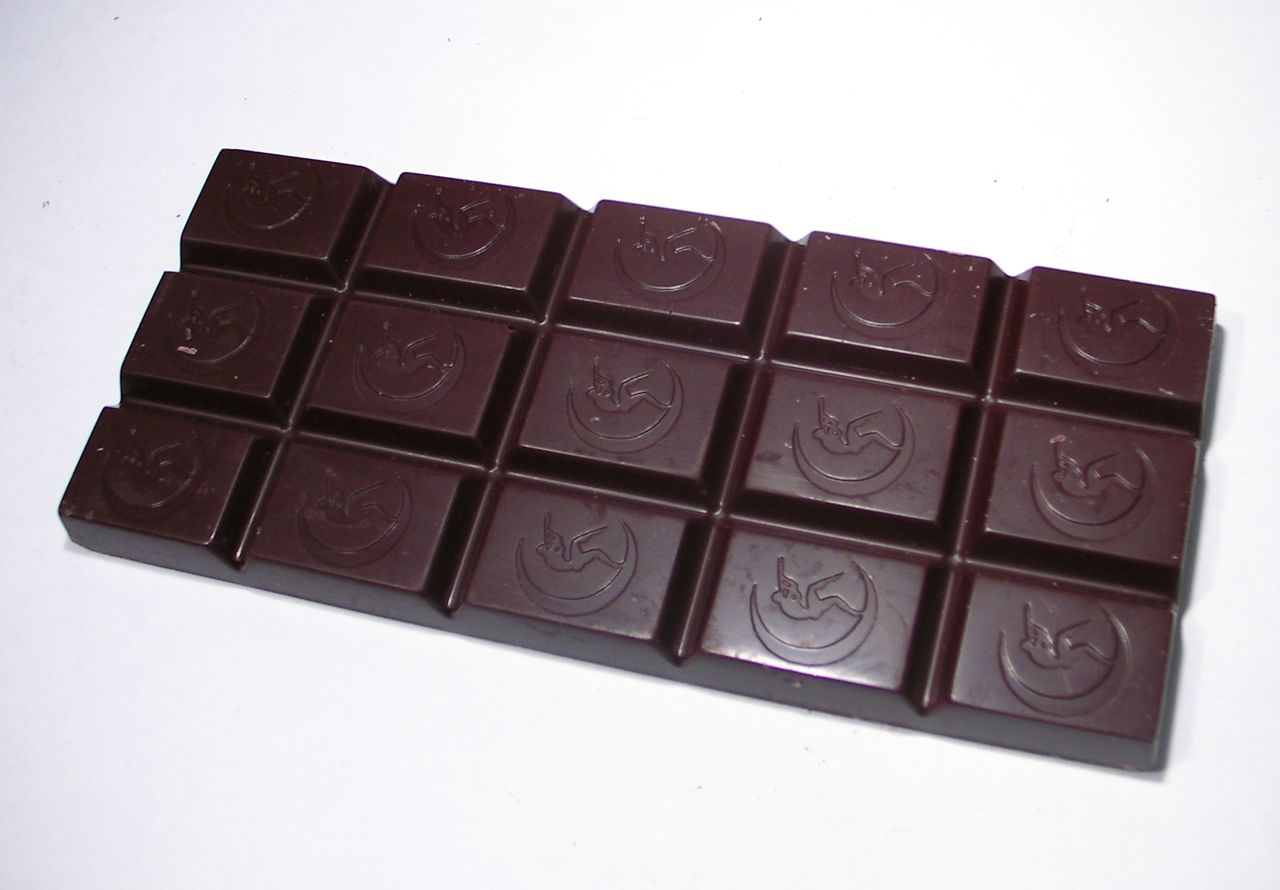
Appearance-wise, there’s very little difference between the two bars. They’re a similar shade of deep, reddish-brown, have a nice gloss and a good clean snap. The flavours though, are quite different.
Where the Amano has complex spicy and flowery notes, this is a much simpler and sweeter chocolate. But one I still enjoyed in its own right.
The tasting notes say
“…orange zest and citrusy accents. Middle notes include robust red wine with dried prunes and blackberries, rounded out with a complex floral finish”
and while I certainly wouldn’t disagree with the citrussy accents, I didn’t pick up a lot in the way of floral notes, and it’s nowhere near as complex as the Amano. But given the work that went into sourcing the beans and producing the Dos Rios, that shouldn’t really be surprising.
So while this bar didn’t blow me away, it was still a very pleasant little nibble, and something I’d happily buy again.