We’ve made no bones about it at Chocablog – we like Toronto’s Soma Chocolatemaker an awful lot. Their Chuao bar was our top dark chocolate of 2010, and I would happily give up my first born (when or if that ever happens…) for a few bars of their incredible cinnamon and chilli concoction, Dark Fire. So I naturally look forward to anything new from them to cross my path.
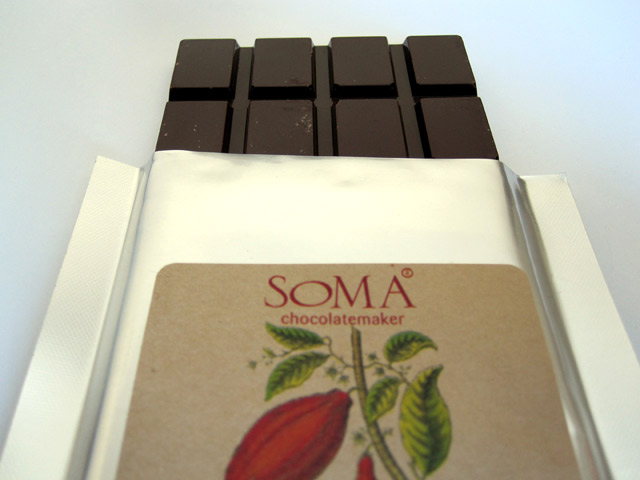
Enter the Three Amigos bar which, not surprisingly, beings together three different varieties of chocolate – the legendary Chuao from Venezuela, Bolivia’s Alto Beni and Elvesia which hails from the Dominican Republic. Of course, my first reaction is complete dismay that anybody would want to disguise or dilute the almighty Chuao with anything else, but Soma usually know what they are doing so I decide to trust their judgement. And that turns out to be a good plan because Three Amigos is a very well-balanced bar of chocolate.

The Chuao gives an initial burst of fruitiness which I still can’t enough of, but it subsides faster than anticipated and turns into something a bit more conventional. Or at least conventional in the world of Soma which still makes it stand head and shoulders above the majority of the pack. The tasting notes on the wrapper suggest roasted nuts and honey but to be honest, I just get a flood of good rich chocolate flavour after the opening salvo has faded away. Not a bad thing.
The one thing that Three Amigos really has going for it is subtlety. It pleads its case quietly and doesn’t push too hard even though it does have a lovely restrained flavour. But despite that, I wouldn’t recommend it because Soma have better wares to offer although I certainly wouldn’t say no if they had run out of my other favourites. Otherwise, stick with the Chuao.

This is another raw chocolate kit, in the same vein as the Choc Chick Kit that Simon reviewed a couple of years ago.
The idea is simple, you’re given some cocoa solids and some natural sweetener, you melt them all together and you make your own raw chocolates.

There are some differences to the Choc Chick kit though. The first one is the price. The Choc Chick kit costs £11.99 and weighs 350g of chocolate, whereas the Chocolution kit weighs in at £13.99 for 200g. That’s a bit steep, if you ask me.
There are differences in how the kits are put together too. Where the Choc Chick kit contains separate bags of cocoa powder and cocoa butter, this one contains ‘pre-mixed’ cocoa solids and cocoa butter. That may seem insignificant, but it does take a little bit of the fun out of mixing the two together and experimenting with different ratios of cocoa powder and butter.

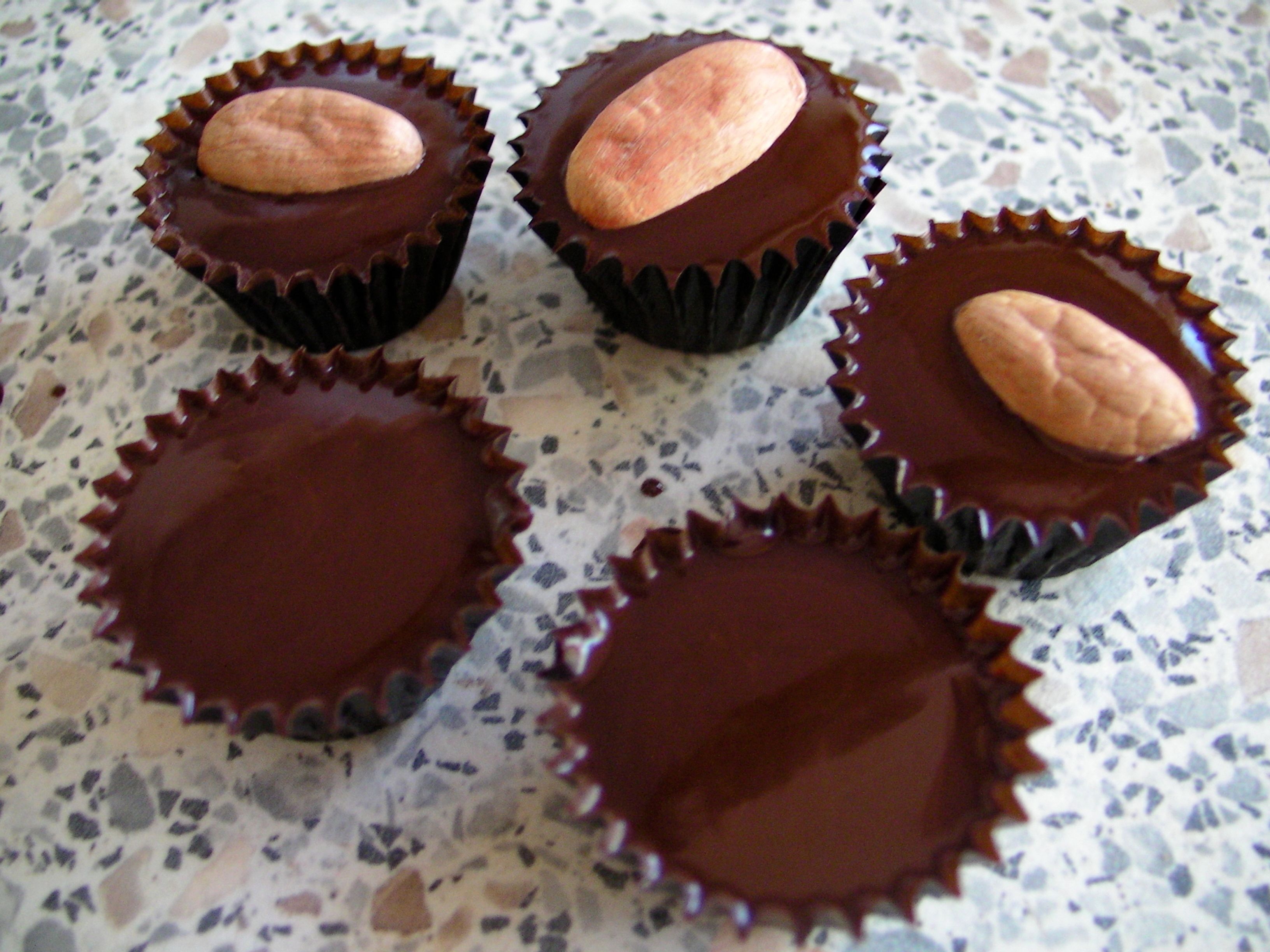
But the process of making the ‘chocolate’ is much the same. Heat the cocoa solids and agave nectar sweetener in a bowl until everything has melted, then pour the mixture into a mould. In this case, I used the paper cases included, but you could equally use an ice cube tray. You then whack it in the fridge and leave it to cool.

Of course, that’s not quite how ‘real’ chocolate is made, and if you’re not used to raw chocolate, you might find the results a little disappointing. The texture is rough and the chocolates have a tendency to melt the moment they leave the fridge and touch human skin.
But the flavour is quite acceptable, and you do get a few cocoa beans to throw into the mix, along with some suggestions for other flavours.

Is it worth the price? I don’t know. It could certainly be a fun (and healthy) snack to make with the kids, but the Choc Chick kit is both cheaper and provides more options, so that’s the one I’d go for myself.

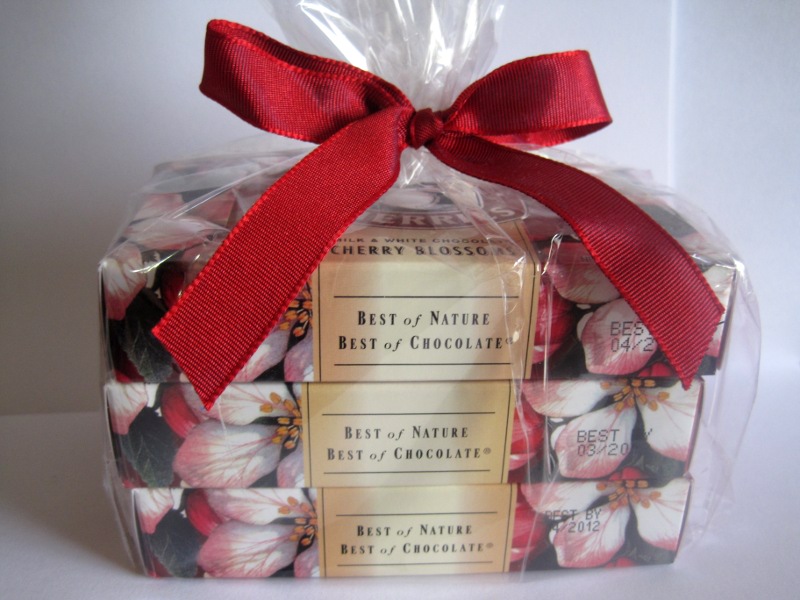
From the people at Chukar Cherries comes their Cherry Blossom Trio, which is a collection of three boxes of milk and white chocolate covered cherries. The boxes are nice and colorful, headed off with a logo of nothing other than a chukar bird (which, though apparently in the pheasant family, somehow reminds me of an eagle). Chukar Cherries is located in the Pacific Northwest, where they sell a variety of dried berries, nuts and fruits, and some chocolate products like these. The thing I like is their belief in drying berries without using artificial preservatives.

Now, in approaching this box, I think it’s something you can happily pick up on a trip to Washington, either to have while traveling or to bring back home. The overall look of it has the right balance between a local and established product.
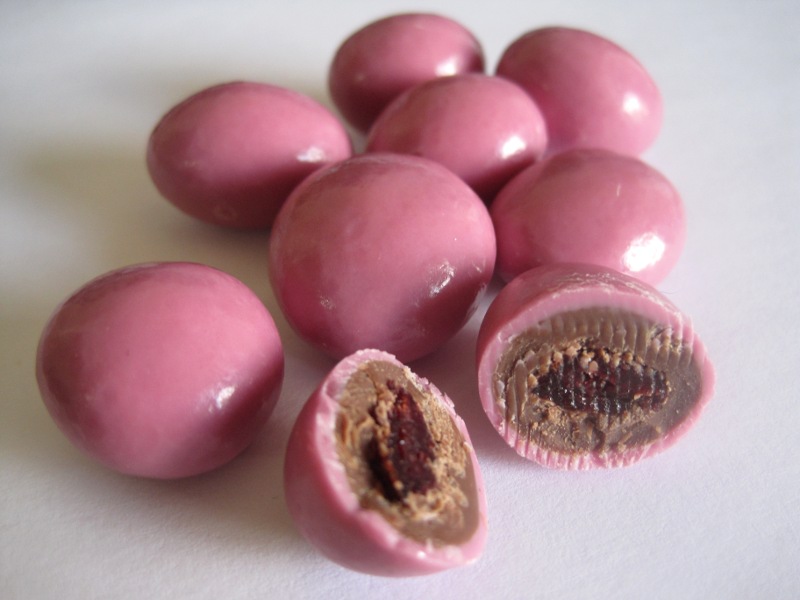
The cherries themselves are not a variety of both milk chocolates and white chocolates as I at first expected, but rather have a layer of each. The pink color comes from the outer layer of white chocolate; the milk chocolate layer is of about the same thickness.

The ratio between these two and the cherry in the middle is also about right. I’m enjoying that the inherent tartness in the cherries is not glossed over; instead, it’s embraced and enfolded by the chocolate, which has enough of its own sweetness to share. But I do have to pick on the white chocolate a little. You have to work to make me enjoy white chocolate, and the one here just felt like a placeholder, adding no real flavor of its own to the experience. I’m not opposed to the milk and white layering – I just think that this is an area for improvement.
After all, it is the cherries themselves that started it all – since they work well, I trust that the chocolate will follow suit, too, and in the meantime, I’ll just go ahead and open the next box.

Elisabeth Chocolatier has a special place in my memory for one particular reason. It was where I bought my first wasabe truffle, which in turn inspired me to experiment with wasabe and chocolate at home, with surprisingly good results.

I was recently fortunate enough to have a day off in Brussels and made relocating the Elisabeth shop a priority. As it turned out it was very simple indeed, as the shop is right on the way into the main square.

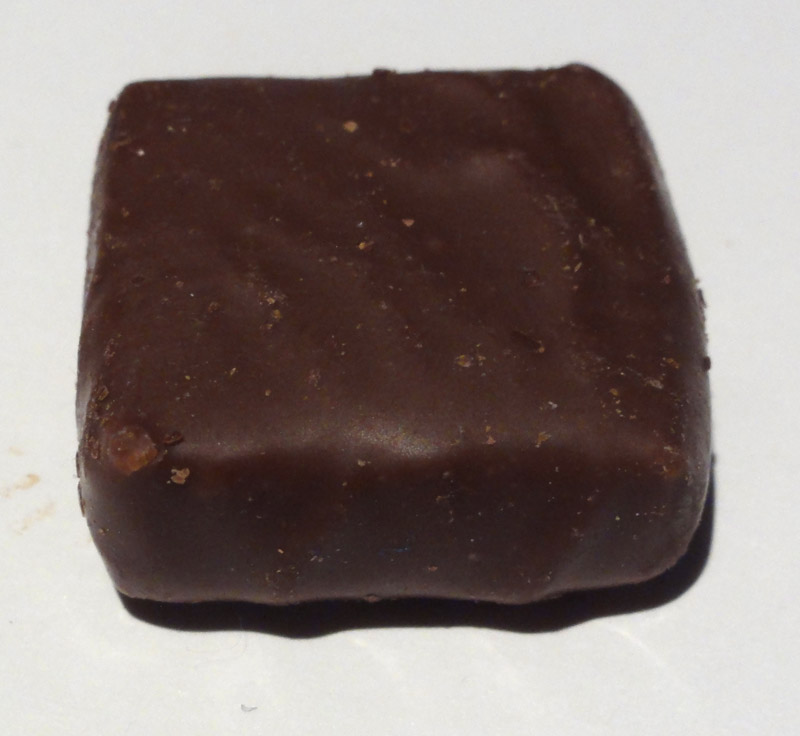
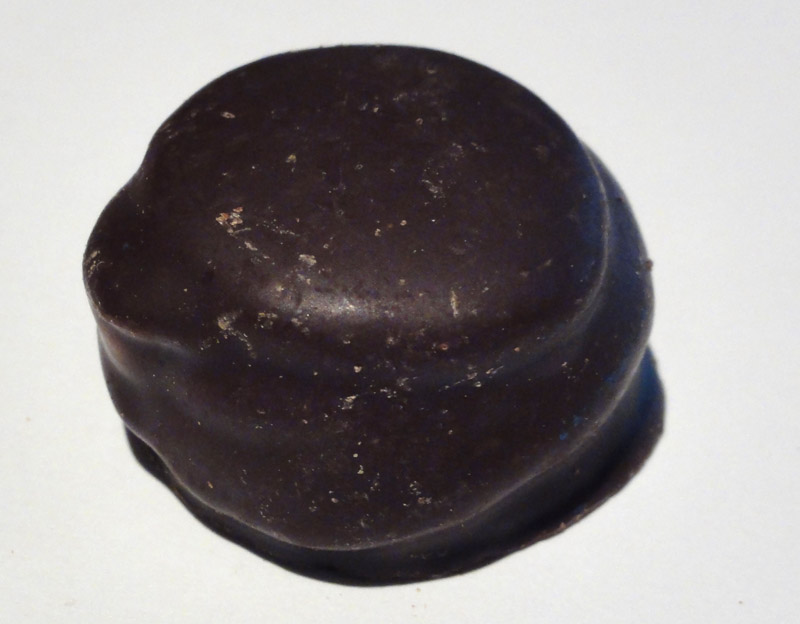
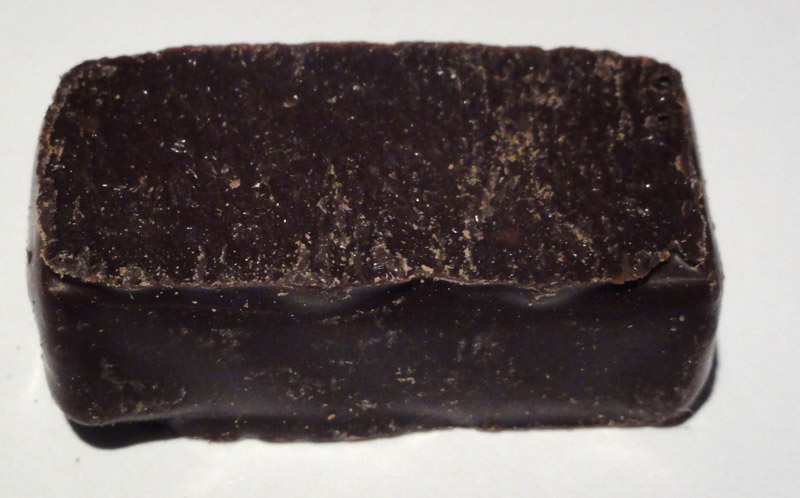
It’s a really well laid out store, quite densely stocked, with a wall of high display shelves to the left and a small back room bursting with hot chocolate on a stick in a myriad of flavours. I decided to limit myself to half a dozen or so individual chocolates and eventually managed to whittle that down to five, of which only the Lemon Ganache was a milk chocolate. It was creamy, quite chewy, and once the centre began to melt it delivered a bright, acidic kick of lemon which cuts into the sweetness of the chocolate and provides a clean, light finish.

Next up was an Orange Ganache topped with a feuillatine wafer and a light, slightly sweet orange jam. The bittersweet dark chocolate combines well with the orange in the ganache and the occasional extra hit of sweeter orange adds little highlights as you eat it. It was a light, quite floral orange flavour which balanced well and allowed the chocolate room.

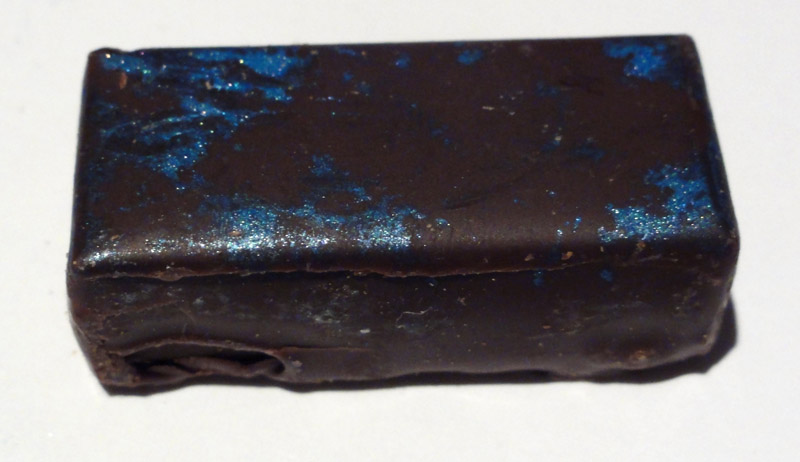
The rather lovely looking blue-topped Jasmine Ganache was another light, floral balancing act. Deep, dark ganache held light flowery jasmine which developed as the centre melted away. Not a particular favourite of mine, but definitely authentic flavours. If you like Jasmine chocolates, this is wrth trying.

I love cardamom, so the dark chocolate Cardamom Ganache was always going to be a choice. The same dark, bittersweet centre held a slow-release cardamom bomb which I could happily have taken more of, but it was becoming apparent that these were refined, well balanced chocolates. This is readily apparent with the Wasabe Ganache, where the naturally sweet undertones of the wasabe are allowed to develop through the chocolate, resulting in a warm, exotic sweetness which builds gently in tandem with the dark cocoa flavours of the centre.
Every one of these chocolates was a delicately balanced combination of cocoa, cream, and the chosen added flavour. All of the chocolates are faithful to their flavour, and all have good , well rounded cocoa flavours supporting them. Classic Belgian style ganaches done very well.