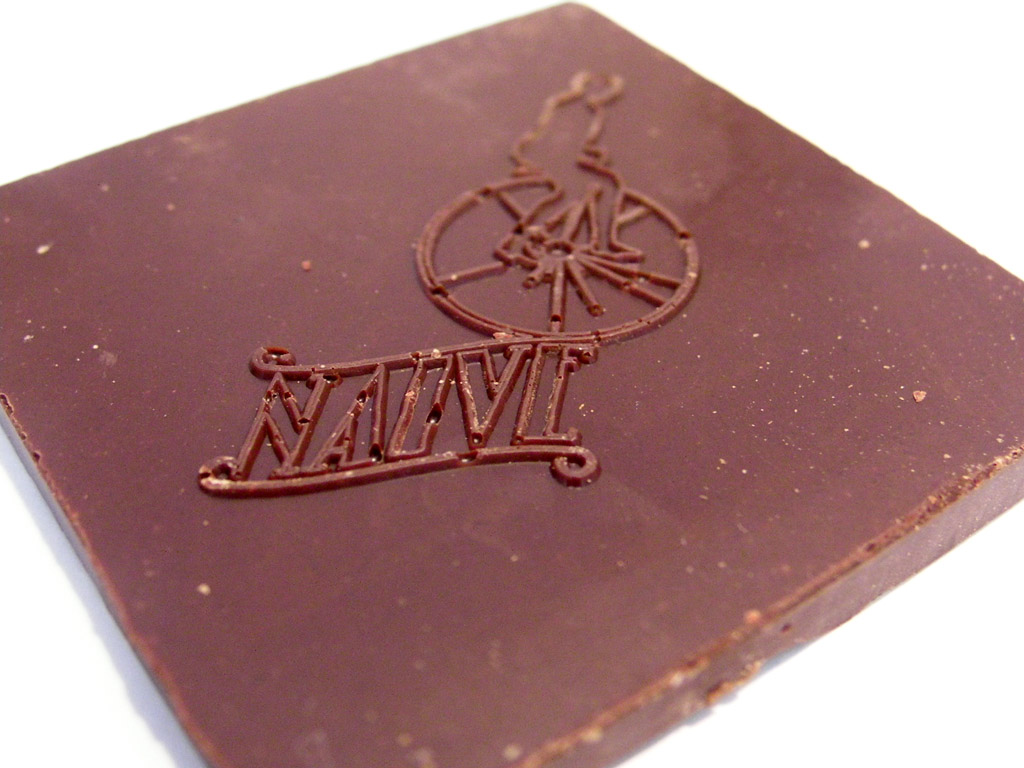
Mitzi Blue is a brand of Zotter, the slightly mad Austrian chocolate maker. The Mitzi Blue range all follow a standard format – discs of chocolate, usually flavoured with spices and petals. They’re often just as wacky as the main Zotter range. Some of them even have nipples.
Thankfully this bar is nipple-free, but it does come with a healthy dose of spices and rose petals.

I’ll say it right out, I’m not convinced by the look of the Mitzi Blue bars. Sure, decorating chocolate with petals is going to make it look exotic, but the prospect of eating flowers with your chocolate isn’t going to appeal to everyone.
The texture can be a little off-putting too. I don’t mind it in general, but sometimes you’ll get a slightly harder pieces of dried rose petal stuck in your teeth, which detracts from the whole idea of an indulgent chocolate experience somewhat.

That aside, I did enjoy the chocolate. It’s a rich, 39% milk chocolate, and like all Zotter chocolate, it’s organic, Fair Trade and bean-to-bar. It’s flavoured with almond, cardamom and orange blossom oil. The almond gets a little lost, with the cardamom winning the battle for flavour domination here – and rightly so. I actually love the flavour of the chocolate, and find myself breaking off chunk after chunk without realising.
But the more I have, the more I find those petals annoy me. They just don’t add anything to this smooth, creamy and gently spicy chocolate.
I know the petals are the Mitzi Blue trademark, but I’d rather have it without.

That said, they’re really just a minor annoyance. Whether or not you like this bar really comes down to how much you like cardamom in chocolate. I’m a bit of a fan, although it’s not something I’d want every day. That’s something that could be said for a lot of the Zotter range though.

Even though it is part of Canada, Newfoundland has always seemed somehow more exotic to me. Part of that is due to the relative inaccessibility from where I live – getting there involves either overpriced airplane tickets or a sizeable drive followed by lengthy ferry trip. But the thing that really does it for me is the fact that they have their own time zone which is 30 minutes ahead of Atlantic Time. Yup, when it is 8pm here, it is 8:30pm in Newfoundland. Craziness.
The Newfoundland Chocolate Company have been making chocolates in St. John’s for five years now. Headed by husband and wife team Brent Smith and Christina Dove, they try to bring the nest of Newfoundland into everything they make.

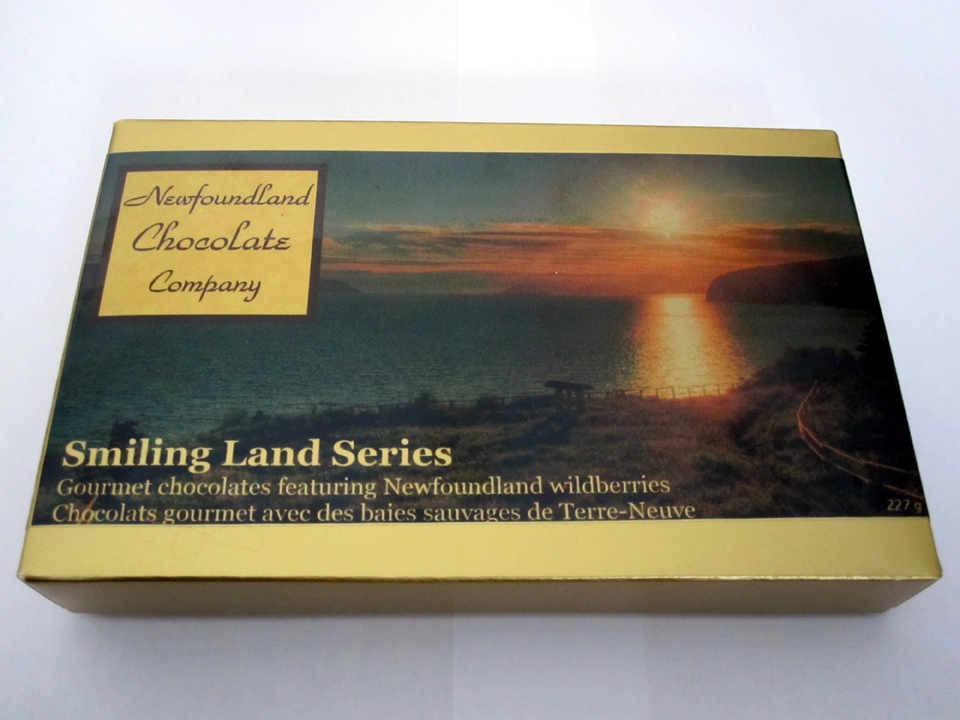
The packaging for their boxes look like they was designed to really appeal to tourists, with its picturesque photographs of Newfoundland – it would make a lovely souvenir of a holiday. And to be perfectly honest, that brings with it certain expectations which don’t necessarily include good quality chocolate or imaginative flavours. Yet opening up the golden box reveals a very attractive collection of chocolates which is definitely better than your average box of souvenir chocolates, suggesting that preconceptions based on the box itself are wrong. It goes further than that too – these are handmade chocolates, with no preservatives and lots of local ingredients too. So once that book judging by the cover thing is gone, there are chocolates to be eaten.

The first collection I tried was the Smiling Land Series. It is apparently the company’s most popular, and has Newfoundland wildberries featured in each and every chocolate, such as blueberries, partridgeberries, cranberries and some more conventional ones too. That translates into a box which leans on the sweeter side, especially because they use a mix of all white, mild and dark chocolate. And the box is adorned with a photo of a glorious sunset or sunrise; not sure which. It is very pretty either way.

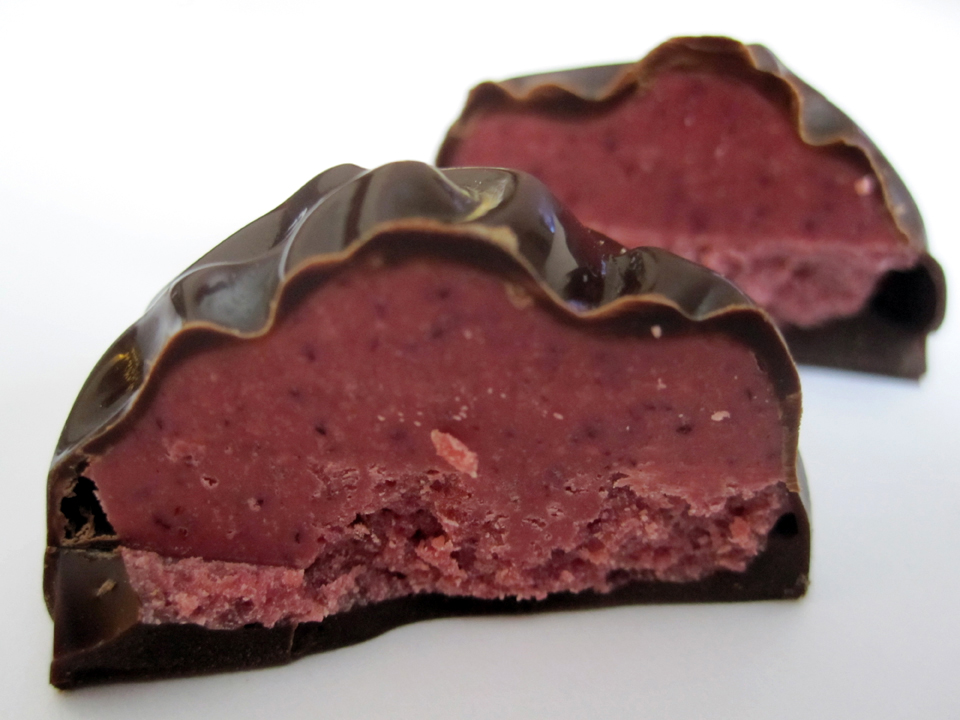
Inside the box, the celebration of Newfoundland continues. The foldout card which identifies each chocolate is actually a map of Newfoundland, and each chocolate is named after a part of the province, such as Sandbanks Provincial Park (milk chocolate and blackcurrants) and Bay D’Espoir (strawberries with coconut in milk chocolate). A little unusual, but a cute idea. Although there appears to be a decent selection in the box, the majority of them fall into the “berries in chocolate” category and that pretty much dictates how you’ll feel about the box – if you like berries and chocolate, this will be the perfect collection for you.

The most straight-forward chocolates with just a mix of berries and chocolate are a mixed bunch because some of the berries, such as blueberries, are easily overwhelmed by the chocolate. There’s no doubt that they are still in there because of the texture, but they tend to take an inevitable backseat. What they do add is sweetness to overall experience and quite a few in the box were definitely a little too sweet for me although not everyone who tried these agreed.

The other box I sampled – the Rum Runners & Rogues Series – follows a similar template, at least on the outside. This time, the golden box is decorated with a pirate ship and the contents within highlights Newfoundland spirits and liqueurs. Each chocolate is named after some kind of criminal or reprobate such as Al Capone, Captain Kidd and a surprising number of Newfoundland politicians – a nice touch.

These are much more to my taste – the alcohol is handled with kid gloves, especially compared to some of the chocolates I’ve been writing about lately, but it makes for some interesting combinations of flavours. For example, the D’lberville which has a lovely warm mix of vodka and cherries in dark chocolate. There are a few that could happily fit in the Smiling Land box, such as the Alfred Valdmanis which brings together white chocolate, wildberries and plum brandy although it works better in a box where berries are used for sparingly. But the pick of the litter is the Danny (named after former Newfoundland Premier Danny Williams) which has a centre of dark, spiced rum and caramel, with some sea salt thrown in for good measure. I happily worked my way through the box in less time than anticipated.
The Newfoundland Chocolate Company have no shortage of ambition, and that is reflected in their vast range. But within each collection, the chocolates do have a tendency to blend together although that is probably why they are all in the same box. But it means if things aren’t clicking for you by the third chocolate then it isn’t going to happen, so pick carefully. When it does match your tastes, however, there’s very little to complain about – these are fine boxes of very-easy-to-eat chocolates.
We visit the island of Anglesey with Green & Black’s to discover how the salt for their new Sea Salt bar is made.

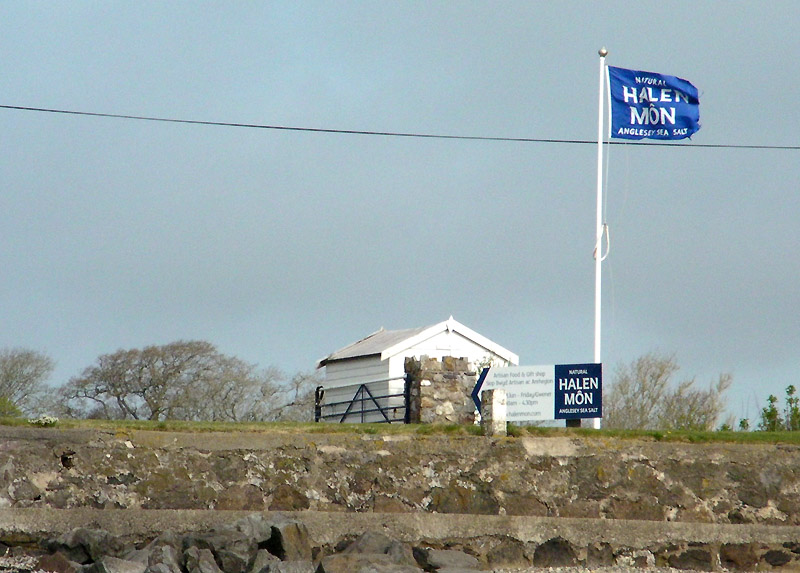
The story of Halen Môn, The Anglesey Sea Salt Company reflects that of many an artisan chocolatier. Driven by passion, a sense of adventure and continuous experimentation, founders David and Alison Lea-Wilson have turned a small business into a world class product, enjoyed by the likes of Heston Blumenthal and even President Obama.
But it wasn’t just a love of salt that drove them. It was the love of the island of Anglesey off the North Wales coast, and their desire to build a business there that would support them and give something back to the community.
David & Alison started out growing oysters. That business evolved into a sea-life zoo where tourists could come and see the local marine life, but tourism is very seasonal and they needed something that could bring in money all year round.
In 1996, they hit on the idea of making sea salt, starting out experimenting with a saucepan of sea water on the family Aga. Since then, they’ve perfected the process and grown into an internationally recognised brand employing 15 people, while maintaining their artisan roots.

Others have tried to replicate their success, but David believes they have the perfect location for salt making. The Gulf Stream brings in fresh Atlantic water where the tide funnels it up the Menai Strait twice a day. The lack of industry in the area and natural filtering provided by a sand bank and mussel bed mean that nature has already done a lot of the hard work for them. The finished product is pure, white crystals that have a sweet edge and no chemical harshness.
With their salt sold around the world and used by 8 of the 50 top chefs in the world, it’s no surprise that big brands are keen to talk to them. But the couple were still excited with Green & Black’s came knocking on the door during the development of their Sea Salt bar.
The chocolate company had quite specific requirements that meant Halen Môn had to come up with a bespoke salt flake size just for this bar. But just how do you make salt crystals to such a precise specification? More to the point, how do you get salt crystals out of sea water in the first place?

This is a question that has fascinated me for a while, so I jumped at the chance to visit Halen Môn with the Green & Black’s team to find out for myself.
It turns out that it’s not pure magic and faerie dust. It takes science, skill and a lot of water.
The salt making process
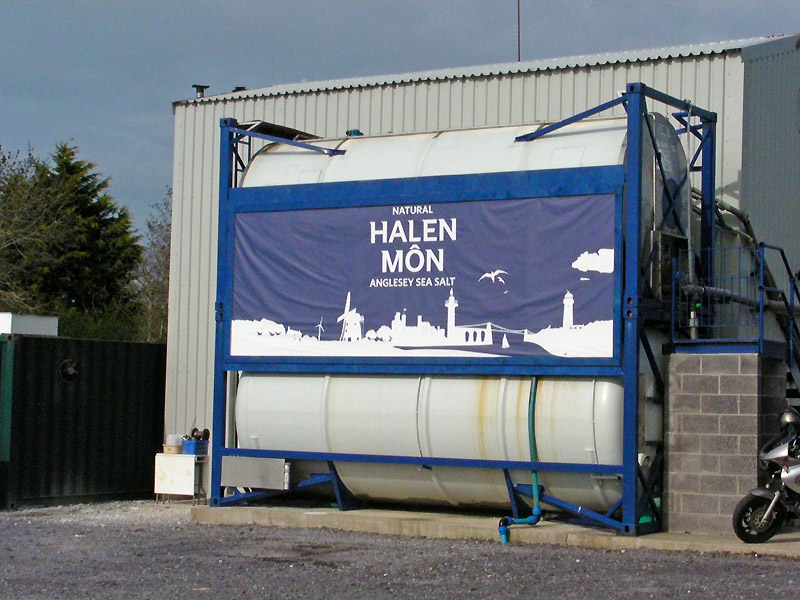
Every day, Halen Môn pump the equivalent of a swimming pool full of water through two small pipes that extend out into the Menai Strait. The water is fresh from the North Atlantic and already naturally filtered thanks to the sand bank and mussel bed. Inside the factory, it passes through carbon and UV filters before being passed to two large tanks.
Here the water is heated under a vacuum, concentrating the salt water. Before salt crystals have a chance to form, it then gets transferred into shallow evaporation tanks. These are heated from above in a room that feels something like a hot sauna. The water evaporates slowly until it reaches the point where crystals start to form on the surface.

The crystals grow so large that eventually they sink to the bottom of the tanks. After a day, the salt is carefully harvested from the bottom with shovels.
One of the secrets of Halen Môn’s success is the way they then rinse the salt crystals. This is carefully done by hand; a repetitive and time consuming task but an essential part of the process. Doing it manually also gives the salt maker a chance to inspect and carefully remove any tiny impurities that may have made it through. The result of this rinsing process are flakes of salt that glisten and shine like jewels in the light.

The salt flakes are then left to drain for about a day, before being transferred into low ovens to drive off remaining moisture.
The precise temperature of the evaporation tanks has an effect on the flake size, but to get crystals of exactly they right size for Green & Black’s, the salt needs to be sieved by hand. This is another time consuming process, but they found it worked much better than using machinery. The smaller salt crystals required simply fall through the sieve, leaving behind larger flakes which can be used in other products, or simply redisolved into brine.

Taste the difference
Green & Black’s did a lot of testing of different salts and crystal sizes for their new bar. Micah Carr-Hill is Head Of Taste at Green & Black’s and took us through a very simple taste test to prove the point. We tried a square of milk chocolate with table salt, rock salt, large Halen Môn crystals, and finally smaller crystals.

The first thing we noticed was the huge difference in flavour between the table salt, rock salt and Halen Môn. The first two were harsh and bitter, while the sea salt had a sweetness to it that enhanced the flavour of the chocolate rather than fought against it.
The crystal size made a big difference to the overall flavour. The larger flakes give a more intense salty burst, which I personally quite liked, but the smaller crystals give a much more even flavour, which most people will find more appealing.
The choice of chocolate is vital too. There’s already a healthy selection of dark chocolate bars with sea salt on the market, but Micah believes milk chocolate works better. Green & Black’s use a 37% Dominican Republic origin milk chocolate, and the salt helps cut through some of the sweetness, but also enhances the natural caramel notes in the chocolate. I use Halen Môn’s Vanilla Salt to make my own salted caramels for exactly this reason.
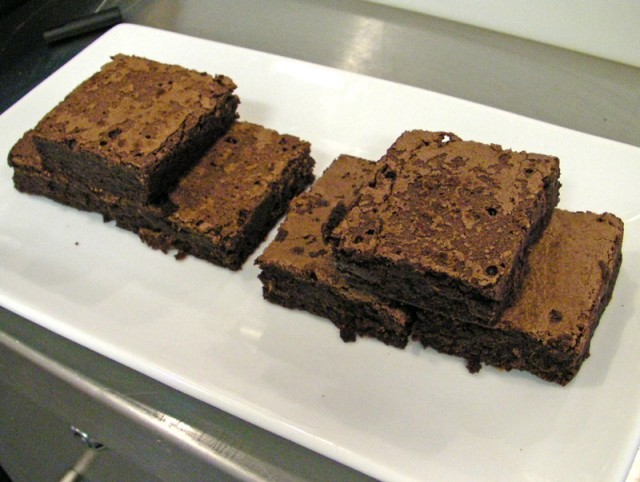
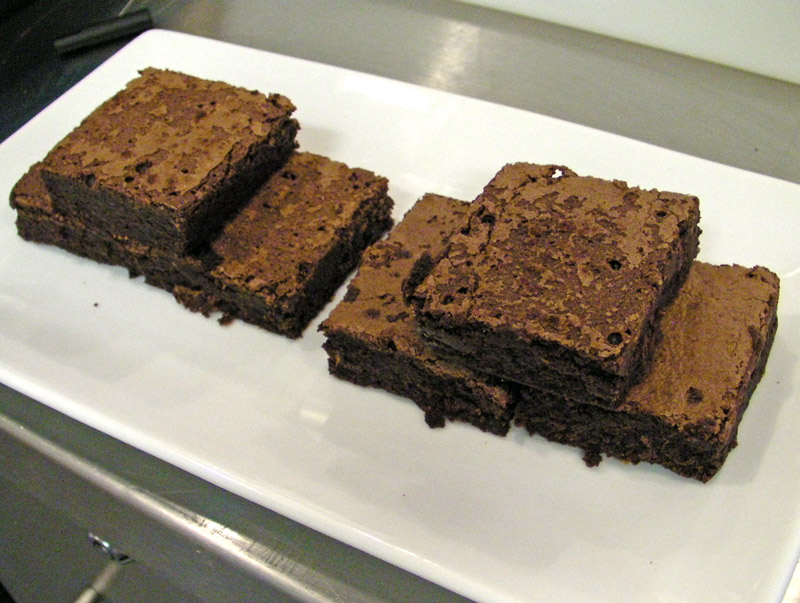
Brandt Maybury, Green & Black’s Taste Specialist prepared some samples to illustrate the difference. Along with some salt water ganache truffles, he prepared two batches of brownies; one with sea salt, one without. They were both great brownies but the difference was clear, with the salted brownie having a much fuller, more interesting flavour.
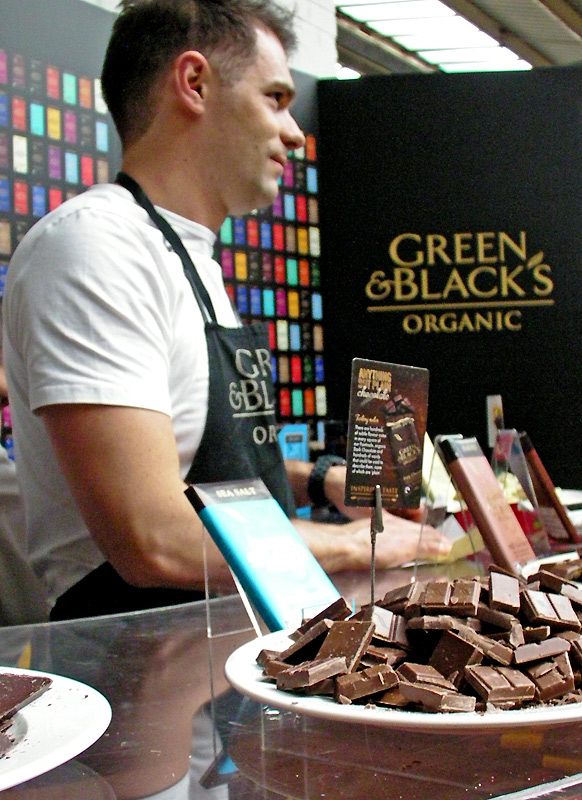
The combination of chocolate and salt is still new to many people of course, but it’s one of those things you only need to try once to be hooked. Brandt tells me he saw this first hand at the London Coffee Festival last weekend, where the company had a stand. Many visitors thought it was an odd thing to add to chocolate – until they tried it. By the end of the four day festival, it was clear the Sea Salt bar was one of the biggest sellers.
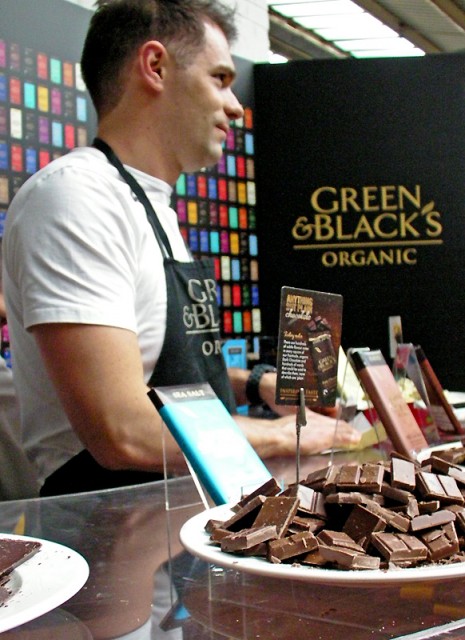
Of course the great thing about Green & Black’s is that it’s available just about everywhere. You’ll find the Sea Salt bar in your local supermarket and a myriad of places online.
If you’re new to the idea of chocolate & salt, then it’s well worth trying – as is the rest of Halen Môn’s wonderful artisan salt range. You’ll find that for sale on their website, but if you’re visiting Anglesey – and you really should, it’s a beautiful island – then you can stop by their on-site shop where a full range is available to buy.
Photo Gallery
With thanks to Micah Carr-Hill and Brandt Maybury of Green & Black’s and David and Alison Lea-Wilson of The Anglesey Sea Salt Company for their wonderful hospitality.

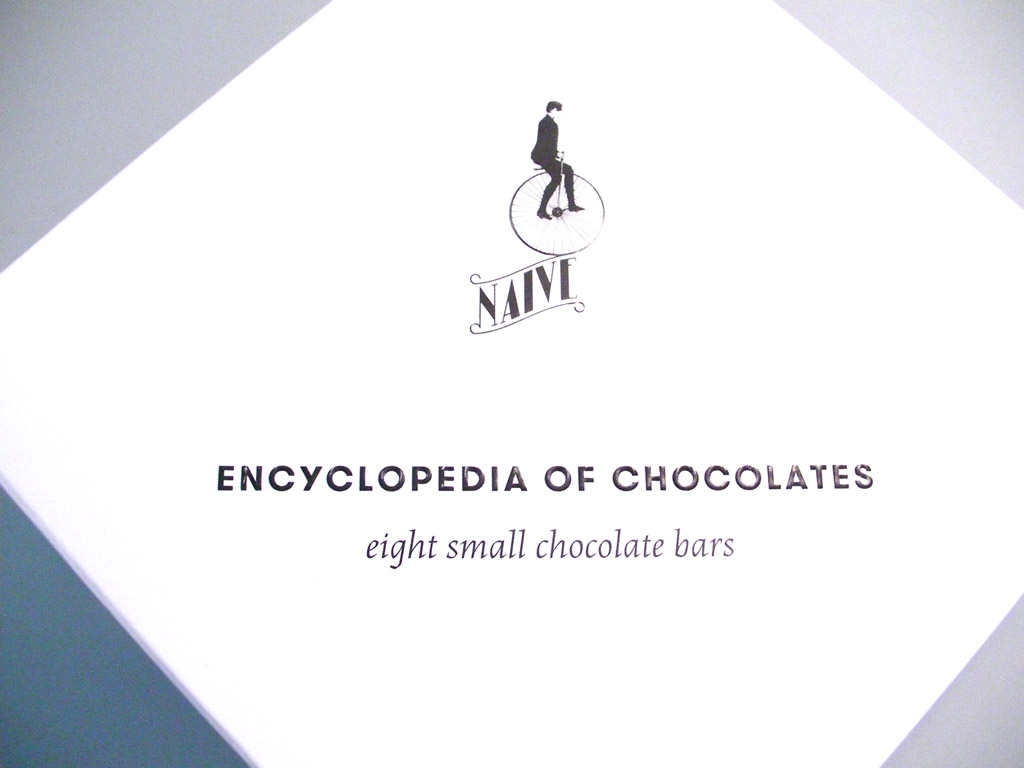
We’ve reviewed quite a few bars from Naive now. The Lithuanian bean-to-bar chocolate makers have built a reputation for their simple, quality chocolate and attention to detail. So I was very excited when they got in touch to ask if they could send over their latest creation for review.
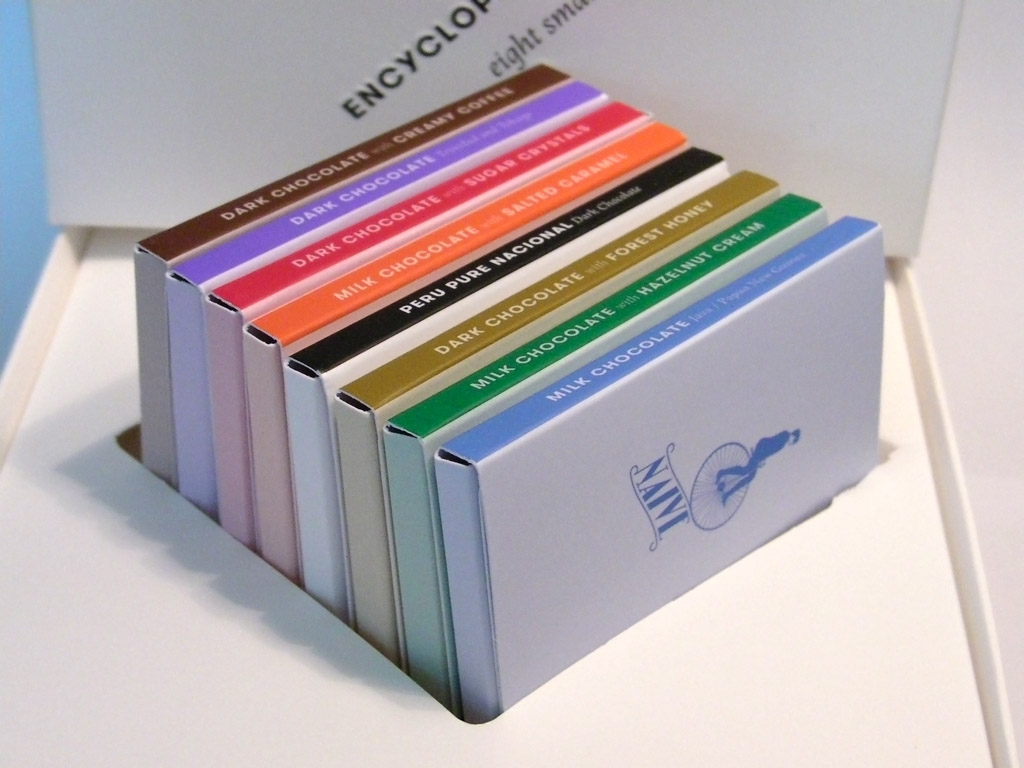
As you can see from the photos, the Naive Encyclopedia Of Chocolate is just a little bit special.

Inside this simple white box are eight colour coded mini bars. It’s incredibly simple, but completely beautiful. The packaging sums up Naive’s attitude to chocolate perfectly. It’s very clean and unfussy, but it’s clear a lot of thought has gone into making it look so good.
And for the chocolate lover, there’s lots of interesting information that you won’t normally find, even on bean to bar chocolate. The back of each bar gives the conch time, roast, cacao percentage and even the bean variety. It’s presented in such an elegant way, that even if you don’t know what they mean, you’ll probably end up comparing individual bars and working out the differences for yourself. That’s the beauty of having a collection like this, as opposed to a single bar.

The bars are:
Dark Chocolate – Trinidad & Tobago
A simple 70% dark chocolate with what the wrapper describes as a “labyrinthine” flavour profile. I can’t argue with that. Not my favourite dark chocolate in the collection, but the richness of the cacao is balanced by a real sweetness that makes it very easy to eat.
Milk Chocolate With Hazelnut Cream
More of a gianduja than a chocolate, this is made with fresh, toasted hazelnuts which are added to the milk chocolate. The result is a very soft bar that is smooth, creamy, nutty and simply delicious.

Peru Pure Nacional
The wrapper describes this as the ’embodiment of Chocolate Naive’, and it’s easy to see why. It’s beautiful, with a glossy, smooth texture and deep, fruity, smoky flavour notes. This could well be the one bar in the box that makes you wish you’d bought more.
Dark Chocolate Coffee Cream
A 60% Nicaraguan chocolate combined with Lithuanian royal coffee. An interesting and unusual take on coffee chocolate. Enjoyable, but I think I would have preferred a rich milk chocolate for this one.
Milk Chocolate With Salted Caramel
This bar is made by combining cacao butter with milk and cane sugar and caramelising with the chocolate before adding a little salt and vanilla. However, something here just doesn’t quite work for me – an unsual note in the milk, I think. Interesting, but not my cup of tea.

Dark Chocolate With Forest Honey
A 67% Madagascan bean ‘infused’ with Lithuanian honey and possibly my favourite chocolate of the collection. The fruitiness of the cacao combined with the subtle honey notes creates a flavour all of its own. Difficult to describe, and even more difficult to stop eating!
Milk Chocolate – Java / Papua New Guinea
A rich and creamy milk chocolate with a hefty 53% cocoa solids. A full and intense flavour, but still very approachable. Very enjoyable.
Dark Chocolate With Sugar Crystals
This bar is all about textures. Small crystals of unrefined cane sugar in the chocolate give it a slight crunch. The chocolate itself is rich and intense, with just a little extra sweetness from the sugar.

One of the things I like best about this collection is that it shows Naive don’t just understand chocolate, they understand people. I love that they’ve mixed milk with dark chocolates, and flavoured with unflavoured. It means that this really is a collection of chocolate bars that anyone can enjoy.
I’m really excited to see that Naive are selling online and delivering worldwide now. So really there’s no excuse not to click the link at the bottom of this post and pick yourself up a box. Go and buy some!
Information
- Buy it online from:
- Contains dark chocolate, milk chocolate (33, 38, 53, 65, 67, 70, 78% cocoa solids).
- Cacao Origin: Indonesia, Madagascar, Nicaragua, Papua New Guinea, Peru, Trinidad and Tobago, Venezuela
- Filed under caramel, coffee, hazelnut, honey, lithuania, naive.