Unless you are (or know) someone with a food allergy, you probably don’t give much thought to alternative versions of certain products. Lactose intolerance affects many people, and this generally means that most forms of chocolate are off the menu (a terrible thought, I know). Thankfully there are a few companies out there who have bothered to address this, creating alternative recipes for those who cannot eat ‘normal’ chocolate, and Josef Zotter has come up with this Labooko double pack of soy chocolate bars – one ‘dark’ and one white.
The packaging and form of the bars follows the standard Labooko format. Two bars in the familiar mould with the majority of ingredients being fair trade, organic – or both. Zotter make a point of emphasising that their soya is organic and GMO free, as one might expect.

So what do they taste like? I tried the ‘dark’ bar first. With 40% cacao, unrefined sugar and a little sesame it delivers quite a good cacao hit with an underlying sweetness, but it remains a little ‘flat’ on the palate. The lack of milk means that the rich creamy aspects of a high cacao content milk chocolate never really develop. The cacao flavours are there but they never really seem to ‘lift off’ in they way standard chocolate does.

This is more obvious with the white bar. I took a piece of this one immediately after I tasted the dark bar, and it was quite hard to think of it as chocolate! There’s a floral, earthy flavour to this bar that I didn’t really like much at all as it seemed to sit above any cacao flavours that this bar might have contained. It wasn’t completely unpleasant but it certainly didn’t make me want to go back for a second try.
These two bars put me in mind of the ‘ersatz’ chocolate bars from Europe that my Polish grandmother would give us in the seventies. It’s trying to be chocolate but doesn’t actually get there, leaving me feeling slightly disappointed. of course, I am not lactose intolerant and so have been able to sample all manner of wonderful chocolate creations which knock these bars into any number of cocked hats. For all I know Zotter could have produced the best milk free chocolate in the world – all I need is a suitably allergic guinea pig to test them out on (but the person I had in mind hasn’t been available to date). I tried these bars out on several people (none of whom were allergic to milk) and the verdict was universal – dark bar good, white bar not so good. I think we need opinions from the non-chocolate eating community for the full picture, but for the time being I’d say if you can eat ‘ordinary’ chocolate, you’d be wasting your time on this.

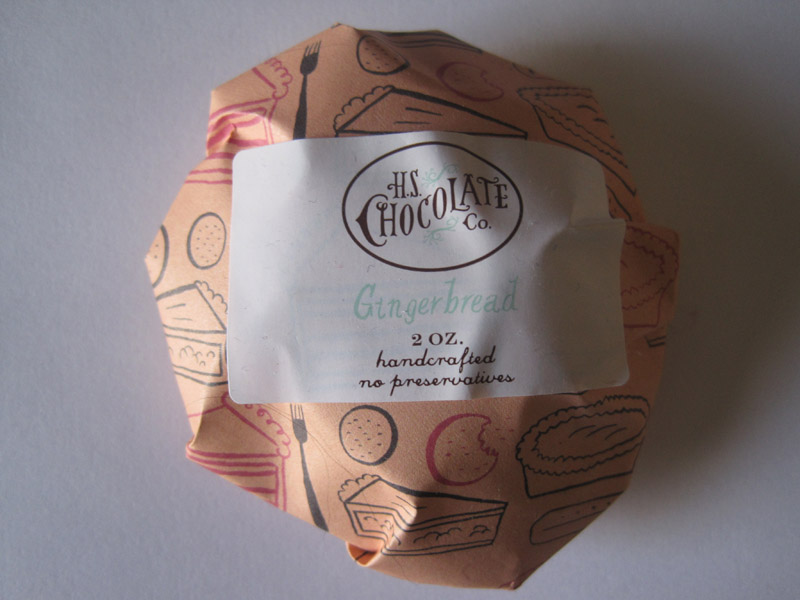
When MaryAnne Hoekstra-Shekar got in touch and asked if there were any specific samples I’d like from her company, H.S. Chocolate Co., I pointed out the peanut butter and gingerbread filled chocolates and gourmet candy bars. The candy bar I will look at next time, focusing on the first two for now.
First impressions for H.S. Chocolate are good. Light, pastel kinds of colors are set against dark brown in the logo and packaging. The paper wrapped around the chocolates is patterned in a way to remind me of scrap-booking. The look is old-fashioned, but new not old, handmade, and a touch arts-and-crafts. All of these observations fit in with the company’s aim to “blend an old-fashioned sweet shoppe sensibility with the modern and exotic flavor profiles of today.” They also don’t forget about the importance of fresh ingredients, local ingredients when possible, and small batches.
I asked for the peanut butter, or Fluffernutter, chocolate because I have been having such a wonderful exploration of peanut butter type chocolates lately–it’s a great combination and everyone does it differently. I’ve never seen something quite like the Fluffernutter. This thing could be a cult classic.

First, it’s definitely on the big size; it’s around 1 1/2 inches or 3 centimeters tall and rather wider. Its composition includes a kind of peanut butter fluff inside of milk chocolate, with a few peanuts also added in. The consistency of the fluff is perfect, sort of like a marshmallow’s but not so stiff or solid. to compare to the Reese’s filling, it has a little less salt and noticeably better ingredients. Because this is rather big, I suppose the peanuts add some solidity to all the fluff. The edges of plain chocolate allowed me to get a taste of it alone–all I know is that this is Belgian chocolate, but it speaks for its quality on its own. It’s rich with caramel notes, and is just another reason to love the Fluffernutter. I exaggerate not, I truly love this chocolate.

The concept of the Gingerbread filled chocolate appealed to me because of the holidays. This one isn’t so big as the Fluffernutter, being much flatter and more like a chocolate patty than a cluster. Molasses, ginger, cinnamon, nutmeg, and cloves are all in the ingredients. I believe the chocolate here is a little darker, likely to match the richness of the spices. It’s a very different experience from the previous chocolate, but still a pleasant one. There is enough chocolate to still enjoy it, and also enough of the gingerbread filling to taste it in each bite.

Comparing the not inexpensive price tag of $3.50 per chocolate to the normal price of $2 or $2.50 for many (smaller) truffles out there, the cost isn’t unreasonable. These are quality pieces, ones I can give the great compliment that they make me happy.

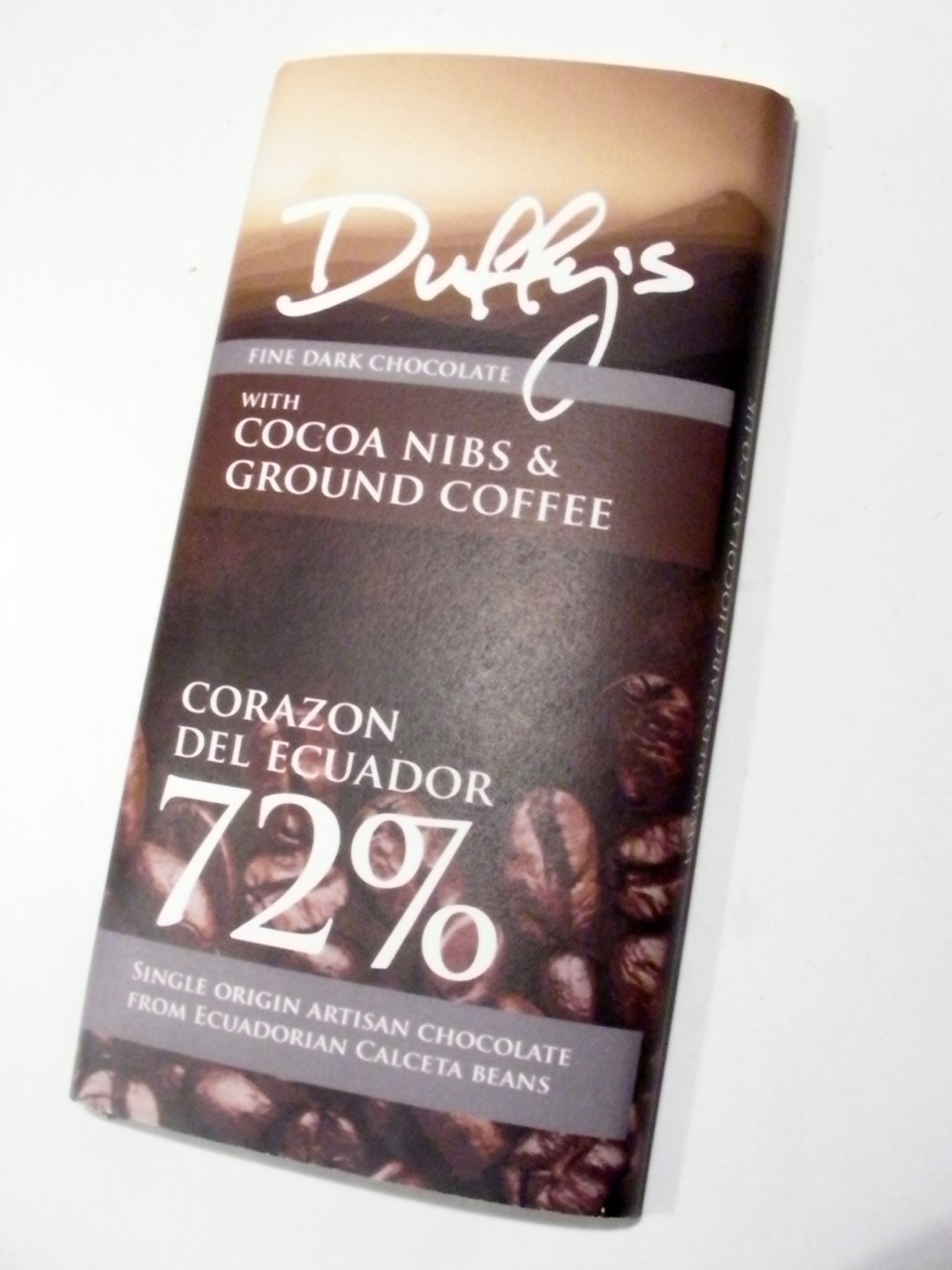
There are just two British bean-to-bar chocolate makers at the moment, and both Willie Harcourt-Cooze and Duffy Sheardown seem to be branching out into flavoured chocolate. Back in September, Simon reviewed Duffy’s first flavoured bar, an Ecuadorian chocolate with oak smoked sea salt and nibs. This bar uses the same beans in a dark chocolate, with real ground coffee rather than salt.
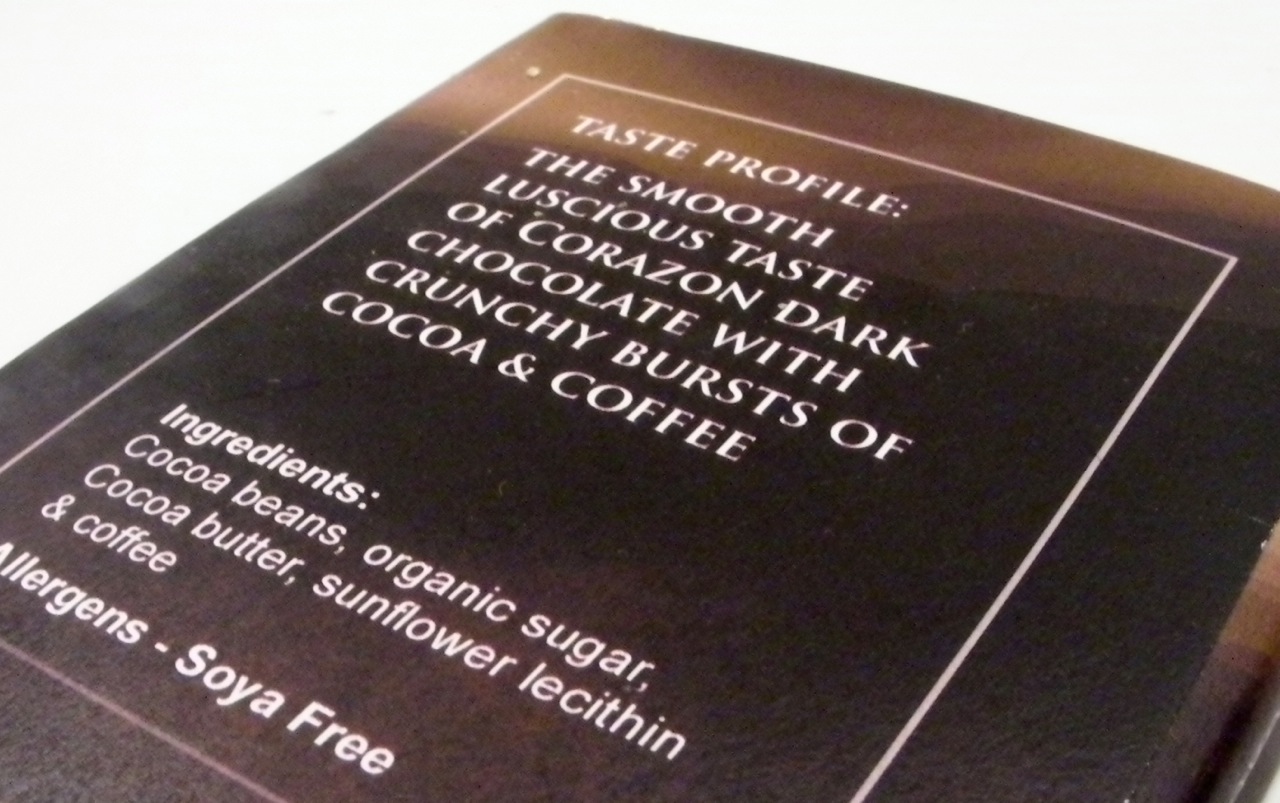
As you can see from the ingredients list, that’s pretty much all there is to this bar. Even with two added flavours, there’s still just five ingredients listed – that’s always a good sign. The other interesting thing to note is the use of sunflower lecithin rather than soya lecithin, something which means that those with soya allergies can also enjoy it.

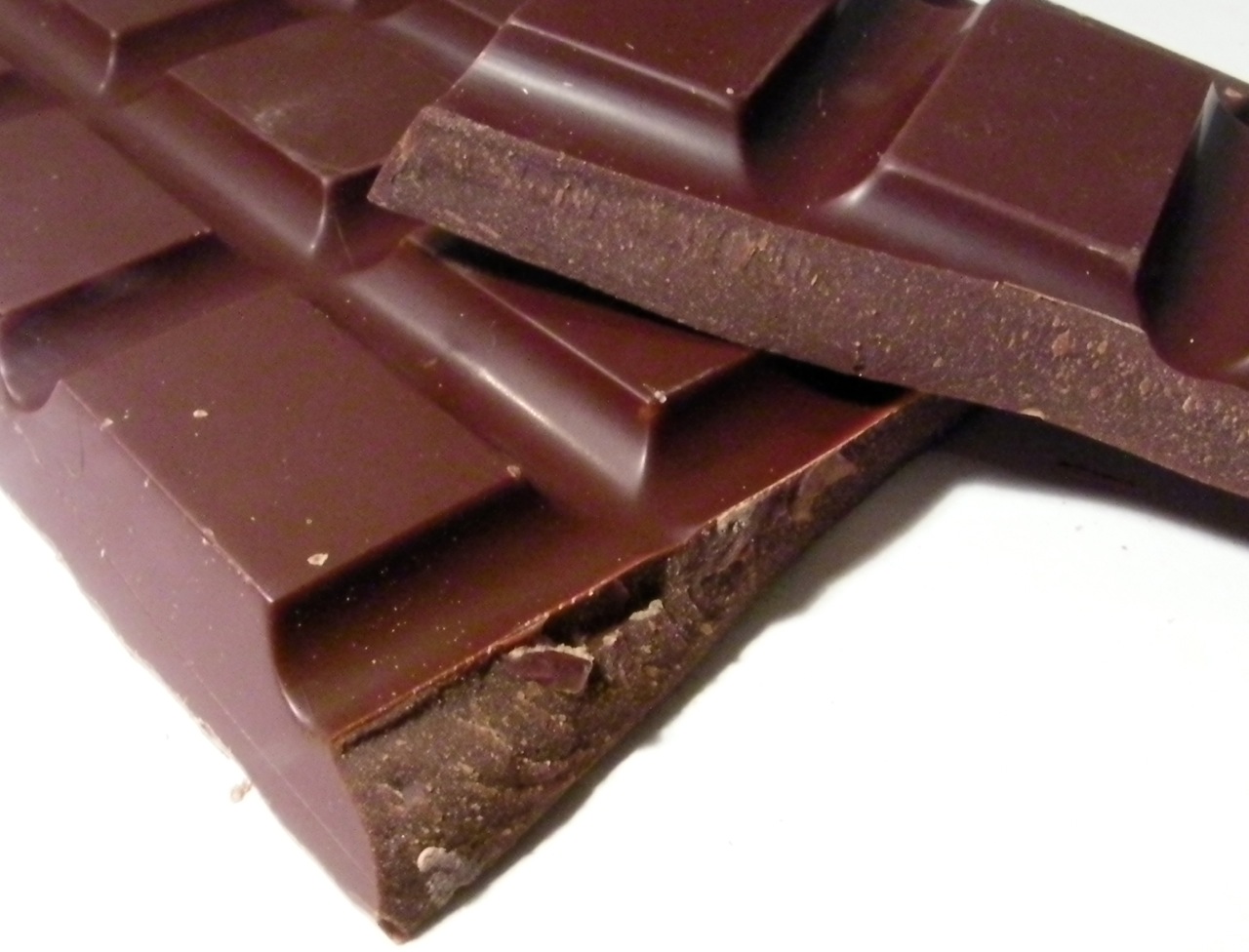
Obviously, coffee is a much stronger flavour than smoked sea salt, and that’s apparent from the moment the chocolate hits your tongue. There’s probably not very much coffee at all in the chocolate, but the fact that it’s made with real ground coffee beans means the flavour bursts through right away.

After the initial burst of flavour, the sweetness of the chocolate comes through, along with the crunch of the cocoa nibs.
Although the coffee flavour overwhelms any of the subtle flavour notes in the chocolate, you still get all the sweet chocolateyness you’d expect. The coffee is strong and natural, but it’s never too strong or overpowering (unlike some coffee chocolate bars I could mention).
It may be hand made bean-to-bar chocolate made with the finest ingredients, but it’s uncomplicated, tasty and very easy to eat. It’s one of those chocolate bars I have to hide from myself, or I’ll end up devouring it all within a few minutes. It’s very different from the amazing flavours of Duffy’s award winning Honduras Indio Rojo bar, and obviously a coffee flavoured chocolate won’t appeal to everyone. But I really enjoyed it.

For me, what makes Duffy so great is his completely unpretentious approach to chocolate making. He’s not one to talk at length about flavour profiles and tasting notes, he’ll just try something and if he likes it, he’ll sell it. He makes fine chocolate accessible to everyone simply by using quality ingredients and doing what feels right.
I love the fact that this totally down to earth approach won him the Academy of Chocolate prize for the best chocolate in the world last year, and I’m really looking forward to seeing what he comes up with in the year ahead. In fact, why not treat yourself to a bar or two right now. If you need any further convincing, check out this video interview we did with him for World Chocolate Guide.

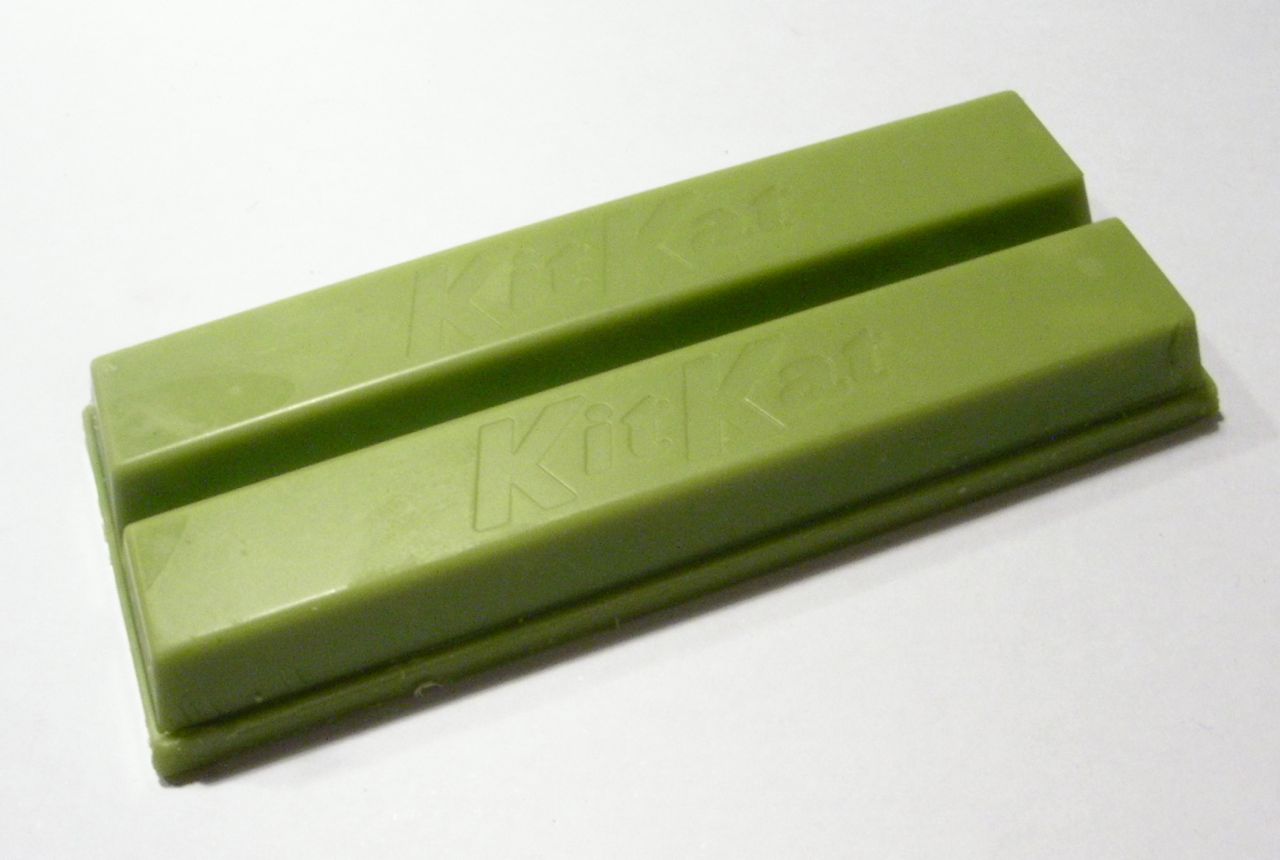
Ah yes, KitKat, That weird Japanese obsession.
We’ve reviewed plenty of variations on this theme before – in fact, a couple of years ago we spent an entire week reviewing Japanese oddities primarily made of of KitKats in weird and wonderful (but mostly weird) flavours. We never got around to writing about this particular flavour though – white chocolate KitKat with matcha green tea.
A few weeks ago, I was given two of these bars by different friends quite independently (Thanks MiMi & Peter!), which is obviously some kind of sign that it needed to be reviewed. So here goes.

As with many of the Japanese KitKats, the colour is quite striking. The bright green isn’t the most appetising colour in the world, but by KitKat standards it’s still quite restrained. The flavour is also quite subtle – in fact, it’s difficult to discern much flavour at all at first. It’s not too sweet, but there’s no real flavour from the chocolate.

But right at the end you’re greeted by a subtle matcha flavour. It’s a flavour that stays with you long after the KitKat has gone and then just seems to get stronger. What starts off as quite a pleasant flavour develops into something that hangs around just a little too long, like garlic. In fact, the only way I found to get rid of the aftertaste was to have another piece of KitKat – clearly part of Nestlé’s master plan to make me eat more.
Having said that, it’s certainly not the most offensive chocolate I’ve ever had, and although it’s not something I’d buy for myself, it’s an interesting introduction to the world of crazy KitKats. If you’re into that kind of thing.