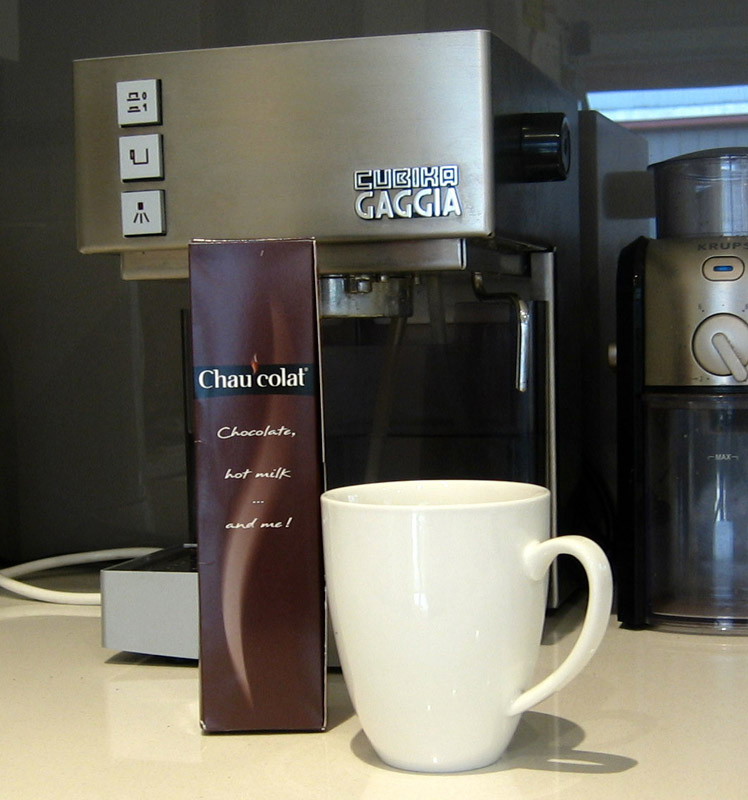
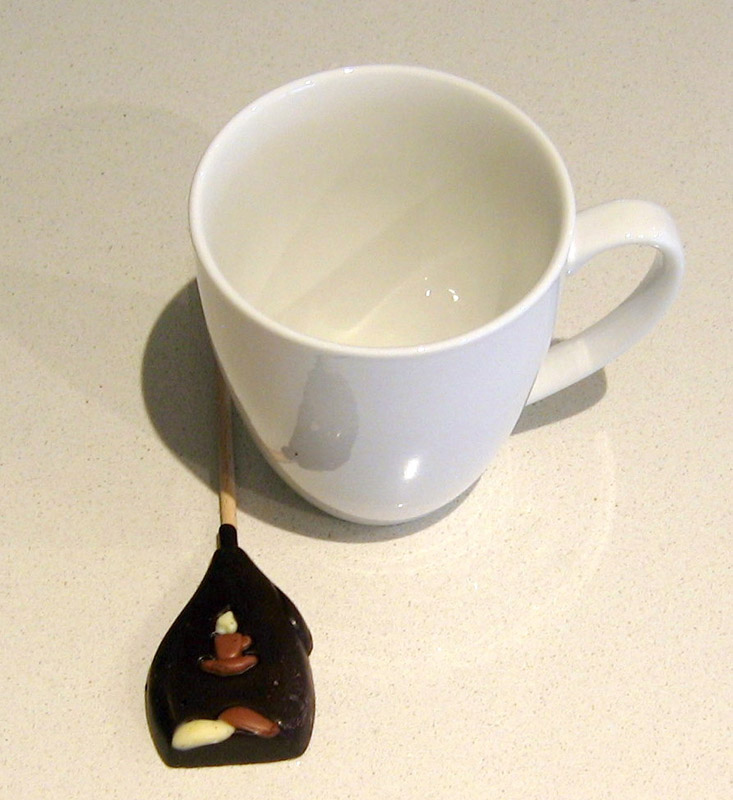
Courtesy of Rainer and Oliver from Premier Food and Beverages is this lovely little chocolate spoon called Chau Colat from Belgium.
It was morning tea time, so I rejected my usual choice of coffee to follow the instructions on how to make a Chau Colat hot chocolate. Details about this product are sketchy, other than it’s made by ChocDecor, who specialise in creating 3D characters and painting them in chocolate. There’s no mention of the cocoa content but when opened it smelled like strong bittersweet chocolate consisting of approximately 50% cocoa solids.
Trouble is, the chocolate spoon looked too pretty to submerge in hot milk:
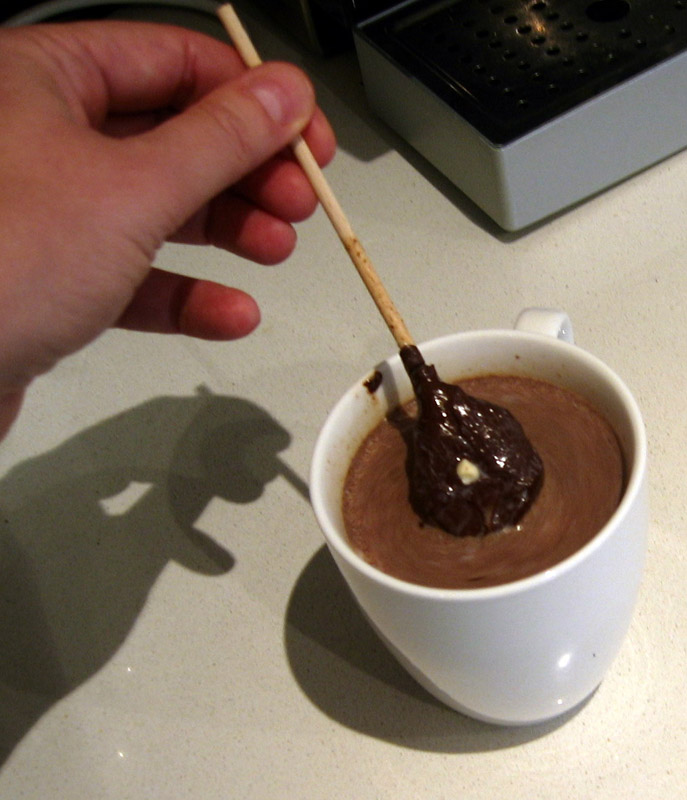
In the interests of Chocablog however, I swallowed my misgivings (and hopefully soon, some melted hot chocolate) and ploughed on. I liked that their instructions suggested to microwave the milk as I wasn’t too keen on having to get out saucepan and muck around and office workers would be even less inclined to do so. When the milk was hot enough, the spoon was swirled through. It started melting into little grainy pieces at first and every now and then I’ll admit to taking the spoon out and giving the melted remains a lick or two.
The end result – achieved in less than a minute – was a not-too-strong hot chocolate that didn’t need any sugar added. I left the stick in the cup to keep the chocolate blobs from sinking to the bottom and took my first sips.
Very nice, and not too creamy or sickly. It is still sweet, but acceptably so with a slightly coffee-tinged bitter flavour that suggests good quality dark chocolate is present. A cup of this was very satisfying and kept me going until lunchtime. This would also be very nice in the evening when you’re snuggled up on the sofa in front of a good DVD.
Another bar from the Malagasy chocolate company, this 73% cocoa chocolate bar won a Silver Award from the Academy of Chocolate and is described as ‘a true origin fine chocolate’. Like its sister bar, the Sambirano, the cocoa beans for this bar are grown, dried, fermented and processed in Madagascar. The Malagasy website has more information about the range of products and ethics.

As you can see, this bar has all the classic hallmarks of top quality chocolate. It’s glossy, with a deep reddish brown hue. The scent of it is all top end cocoa notes, citrussy and slightly woody with undercurrents of richer flavours to come. On the palate it’s a slightly different story. The chocolate is very quick to melt, beginning with a slight bittersweet note which is followed by a wave of dark cocoa flavour. It has an excellent mouthfeel and delivers lots of rich, full flavour without ever becoming heavy or cloying in any way. At the finish it remains light on the palate but full of taste – in other words classic ‘posh chocolate’.
Chocolate produced this way (and following the Equitrade ethos) does of course come with a fairly hefty price tag – you won’t be buying two or three of these a week to nibble on after lunch – but if you’re partial to a square or two of exceptional dark chocolate, then this is well worth checking out. After all, the AOC don’t give out awards for no reason, do they?
At the recent Melbourne Food and Wine Festival was a day called Wicked, in which the ‘Melt’ chocolate hall was my very first – and most important – port of call.
Amongst the divine range of chocolates on offer to taste, talk about, purchase and admire, was a range that was almost hiding amongst bottles of Spanish olive oil and 12 year-old balsamic vinegars. We had a taste of the vinegar first, which the proprietor of Oliveria, Morri, said is drunk with hot water in Japan and drizzled over breads, salads, meats and fish by Aussie enthusiasts. Love Chunks commented that it was ‘Fine enough to drink on its own.’
However, it was the three hand-made chocolate flavours that were next to the deli items that intrigued me enough to buy a box.
The first one was the Balsamico Blance de Espana (green dot on top) which combines dark chocolate, virgin olive oil and muscatel dessert wine grapes.
The second (yellow dot on top) was the Limon Siciliana, blending macerated organic Sicilian lemons that have been pressed together with Ligurian olives into an extra-virgin olive oil and white balsamic vinegar.
The third (gold) was Fig Smyrna, presenting figs, olive oil and balsamic vinegar in dark chocolate.
The gentle scent of olive oil was present when they were cut open and the Balsamico tasted first of olive, then the balsamic followed by the dried-apricot chewiness and sweetness of the muscatel grapes inside. On the bottom half of the chocolate was a ganache of 70% dark and crème fraiche that partnered up with the subtleness of the olive oil to perfection.
We eagerly reached for the Limon Siciliana, which Morri told us is his most popular one sold in his Prahan store. The lemon flavour sang out first, but not too strongly, with a marmaladey tang accompanying the olive oil, ganache and smooth chocolate outer shell. Absolutely lovely.
Lastly, the Fig Smyrna. This was a delicious combination of dried figs, olive oil, vinegar and ganache that despite the oddness of the ingredients, made the chocolate taste smooth, sweet, creamy and tangy all at the same time. The figs were hard to detect as anything other than a chewy fruit but they contributed a dusky and earthy flavour as the ganache quickly melted away on the tongue.
I never thought that olive oil, balsamic vinegar and chocolate could be combined so brilliantly and was even more intrigued to hear Morri say that the new flavours of sun dried tomato and anchovy were being created and will be available to try soon. Stay tuned.
I seem to have stumbled on another Spanish company. But this time, what drew me to it wasn’t the country of origin, it was the addition of banana. Banana and chocolate are paired often in shakes and ice cream, but not so often in a chocolate bar. It’s a first for me, at least.
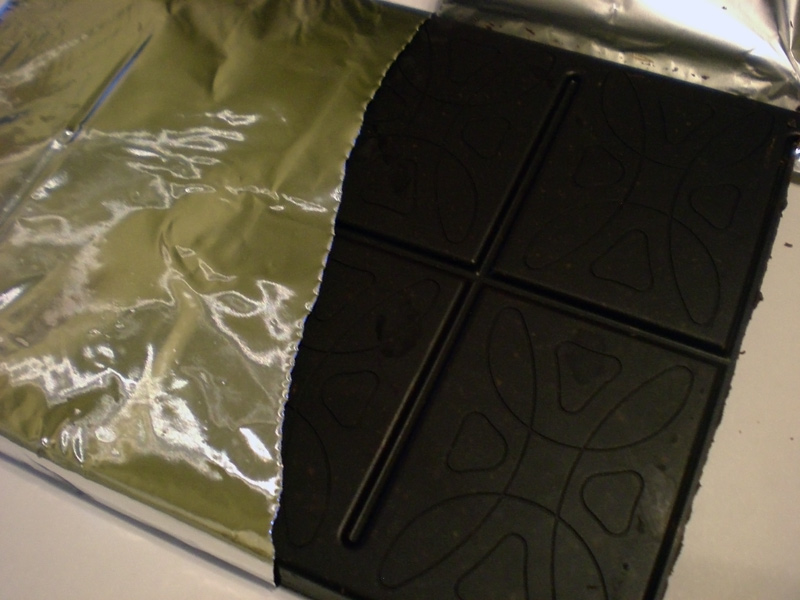
Beneath its silver foil, the chocolate is nearly as dark as the black outer box, with a fine-lined pattern on each of the dozen pieces.
A glance at the ingredients, which are very helpfully in eight languages since English (U.S.) never lists these percentages, shows that there is 0.7% of banana pulp in here. So it’s a real and fresh taste, not artificial. It’s also the perfect part of the flavor, probably split evenly with the chocolate, though your focus goes more to the banana. It maintains its strength throughout. I’m kind of getting the idea that this wouldn’t be my absolute favorite chocolate on its own. It’s hard to isolate it and it is nice and smooth, but I’m wondering if I’d find it too bland. Of course, that’s only a conjecture. It’s a perfect partner to the banana, so my guess is hopefully wrong.
My companions for the tasting dubbed it “a good dessert chocolate,” which is an apt name. Its dessert sweetness is of the fruit kind that a real banana has, coming across in a calm symbiosis with the dark chocolate that you can slowly enjoy after a meal.