The two bars I’ve previously reviewed saw me liking the Dagoba Chai and disliking the Dagoba Seeds bar.
However, today, I had two guest reviewers, one of whom, Juliet, urged me to try Dagoba’s Lavender Blueberry and then their milk chocolate.
…and with faces like these, how could I resist? Plus, they had chocolate to try!
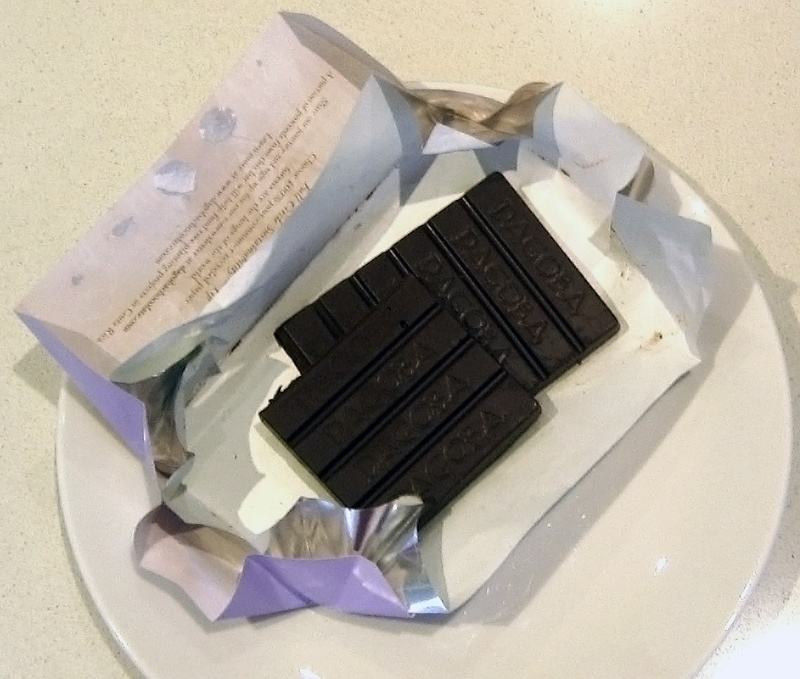
First up was the Dagoba Lavender Blueberry, with 59% cocoa solids. When unwrapped we could detect the faintest whiff of lavender which was rather inviting.
This time, the dark chocolate did an excellent job of perfectly pairing up with tiny pieces of organic blueberry and the subtle lavender oil. Juliet’s view was, “It first just tastes like dark chocolate, then you chew it and the lavender flavour kicks in.” Carly added, “It’s a nice mild lavender taste – any more would ruin the taste of the chocolate which is very velvety on the inside.” Not bad for nine years old, are they?
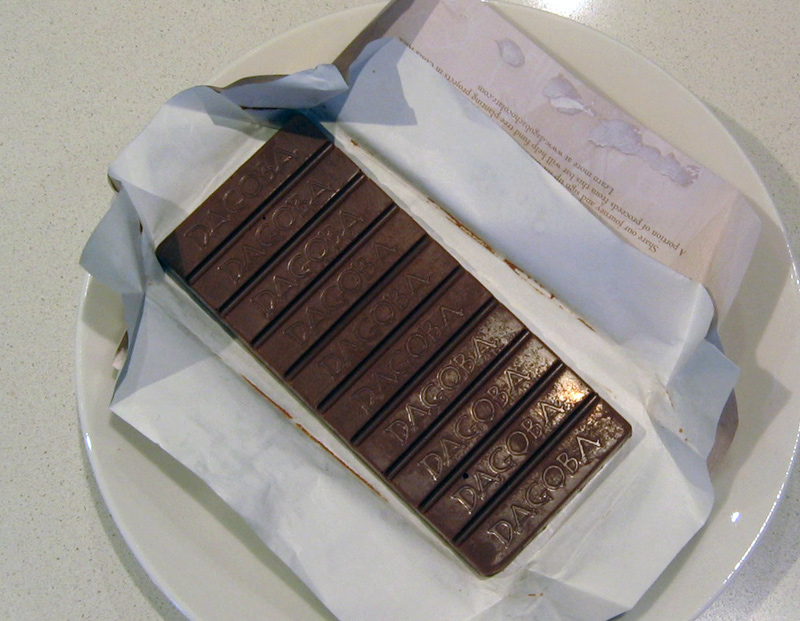
Next came Dagoba’s 37% Milk Chocolate block.
Firstly, the 37% cocoa solids impressed me for a so-called organic milk chocolate bar, especially when other, larger manufacturers of milk chocolates consider 20% enough.
This bar was a revelation. Normally I find milk bars to be very sweet first with the creamy undertones emerging as the second flavour. This time however, the creaminess was decadently dominant and there wasn’t the sickly sweet factor that can sometimes put off Dark Side Dwellers. This is a puzzle to me because the first ingredient remains cane sugar, but somehow the cacao butter and milk have combined to produce something exquisitely velvety and creamy.
Carly summed it up as, “This is much creamier than the lavender. It reminds me of Cadbury’s Eight Moments.” Juliet nodded, adding that “Being slightly melted really helps the flavour of this one because I already know that it’s always better to keep chocolate in the pantry rather than the fridge.”
Their favourites? “Oh the milk, definitely”, said Carly, “But the lavender would make a nice present that’s a bit unusual for someone.”
Juliet was torn. “It’s too hard to pick between milk and dark chocolate because they are just too different.”
Wise words from two very eager guest tasters.
Milo, it seems, is sold pretty much everywhere except Europe. In fact, it’s so common in some parts of the world that my Ghanaian friend insisted it was an African thing… until I showed him this bag (from Malaysia) and pointed him to the Wikipedia article which states it’s actually originally from Australia.
So where better place for me to pick up this bag of nuggets than my local Tesco. In North London.
Originally a chocolate malt drink, Nestlé introduced Milo Bars about 10 years ago, but this is the first time I’ve seen this ‘nugget’ form.
As you can see, they don’t look particularly special, but inside those chocolate droppings is a sweet, malty honeycomb centre. For UK readers who have never had Milo before, these little nuggets can be summed up in three words:
Maltesers on LSD.
They’re weird, deformed and utterly delicious.
The malted honeycomb centre is darker than Maltesers and has a bit of chocolate flavour to it, but so far as overall taste and texture goes, they’re very similar. Yet somehow I prefer these little nuggets. They seem that little bit more crunchy and chocolatey. And they melt away just that bit quicker.
But mostly I like the shape. They may look a little like they have been expelled by a small woodland creature, but I much prefer that to the shiny, uniform Maltesery spheres.
So the message is clear. If you’re a Maltesers fan, go and pick up a bag of these from the ‘weird food from foreign places aisle‘ at your local Tesco and give them a go.
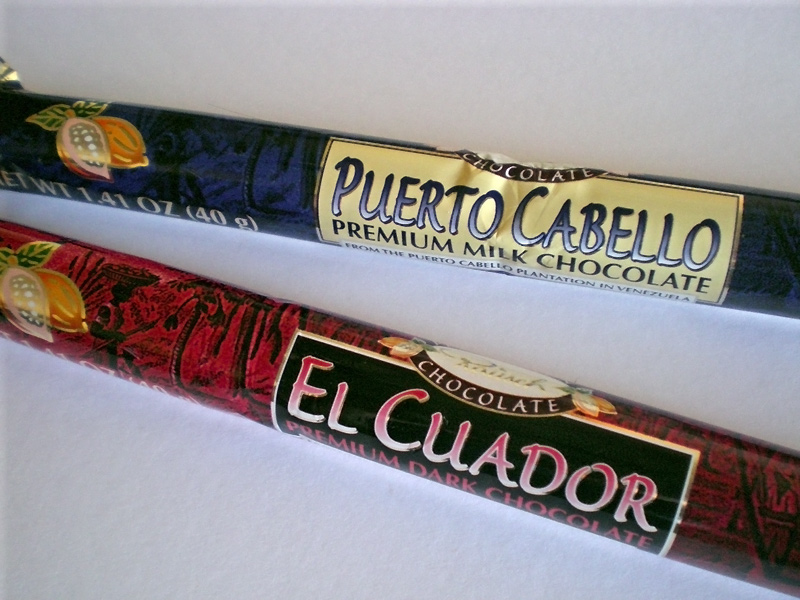
These two very thin 40 gram bars are German (despite the Spanish plantation names), with each being divided into six pieces. I found them in a handy sale, but seem to have made a mistake in not buying more. I’ll just pretend I was purposefully exercising self-control by only getting these two.
The 43% Puerto Cabello (Venezuela origin) has a very good amount of flavors for a milk chocolate. Berries and vanilla and a pretty strong milky taste for being so high up in percentage. I’ve had some wonderful milk chocolates, but never one so intriguingly flavorful as this one. Both bars are described as having a “full bodied mild taste,” and I have to agree with that slight irony.
The 70% El Cuador (Ecuador origin) only has three ingredients: chocolate liquor, cane sugar, and cocoa butter. So it naturally tastes a lot like cocoa powder. Dark, yet not bitter. It also has a slight banana taste as it finishes off. I’m not quite as keen on this one, but it’s still not bad.
I’m probably not going to run into Rausch again anytime soon, but if I do, some more investigation will be necessary. Both of these bars are very simple, but still different from the average find and quite worthwhile. Especially all the depth that manages to make its way into the creaminess of the milk chocolate.
Over the years, we’ve reviewed many bars made from beans of Ghanaian origin, but we’ve never actually reviewed a bar from Ghana. So when a Ghanaian friend recently went home for a holiday, I made sure he bought back some of the local chocolates.
Golden Tree is the brand name of the Cocoa Processing Company Limited – a mostly state owned company with a mission to process some of Ghana’s cacao locally rather than exporting it all to foreign chocolate manufacturers. That has to be a good thing.
This particular bar is a 35% milk chocolate with 15% milk solids.
As you can see, the chocolate itself looks a little dull, with small holes in the corners where the chocolate hasn’t reached the edge of the mold. There’s no real shine to it and I don’t think that’s just down to the long journey from Accra.
On the other hand, it may not look great but it does have a rather nice aroma which hits you and fills the room the moment you open the wrapper.
But that dullness is more than just cosmetic. The chocolate has a dry, grainy texture and it just doesn’t melt in the mouth like it should. My Ghanaian friend insists this is by design and that local chocolate is designed not to melt in the heat, but I’m not so sure. I think it’s more likely that there’s something not quite right with their conching process.
The actual flavours of the bar are quite interesting though. It’s sweet, but the cocoa flavour itself is strong, and actually very nice. More interestingly, there’s a very noticeable coffee note going on that I haven’t tasted in other milk chocolates. The cynic in me thinks that that may have something to do with the fact that they make a coffee flavoured milk chocolate bar at the same factory, and it’s not actually meant to taste that way.
Overall, I think it’s great that Ghana is producing chocolate from its own crop, but this has a long way to go before it’s going to be up to the standards that we expect from a good quality milk chocolate here in Europe. I have some more Golden Tree chocolates to review and I’m really hoping for a little more from those. We shall see.