I have had this box sitting at the top of my bookshelf, awaiting attention, for much too long, though ironically since it is quite an appealing box for one like myself who gets much too excited over boxes.
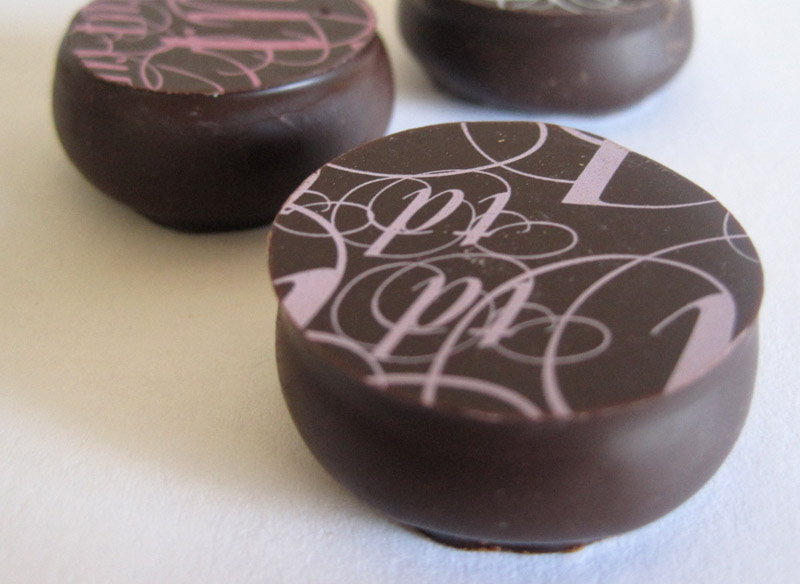
It is something like a small hatbox of faux leather, with brown sides and a pink top; there is just enough femininity without being frilly or overwrought. For this endeavor maybe could have become too easily too girly as it is a Lady Chefs collection given me by Neuhaus, showcasing nine pralines by nine, well, lady chefs. There are two of each, marked by their initials, which are carefully embedded into lacy designs. There are as follows:
Léa Linster, Luxemburg – Almond praline and candied orange peel on almond nougatine enrobed with milk chocolate. This is a soft chocolate, right from the prevalence of the orange to the combined textures. Pleasant, but not evoking a “wow” reaction.
Annie Féolde, Italy & Japan – Praline with walnuts and ganache with orange, cinnamon and coriander, coated in milk chocolate. These particular spices make this chocolate like a rich bread. The milk chocolate keeps it sweet, while the dark ganache/praline gives richness. It’s quite nice, with strong flavors that don’t overpower.
Arabelle Meirlaen, Belgium – Sancho pepper ganache and crispy gianduja coated in milk chocolate. The milk chocolate and hazelnut flavors are most prominent, but with a slight tang from the pepper. Subtle, yet innovative.
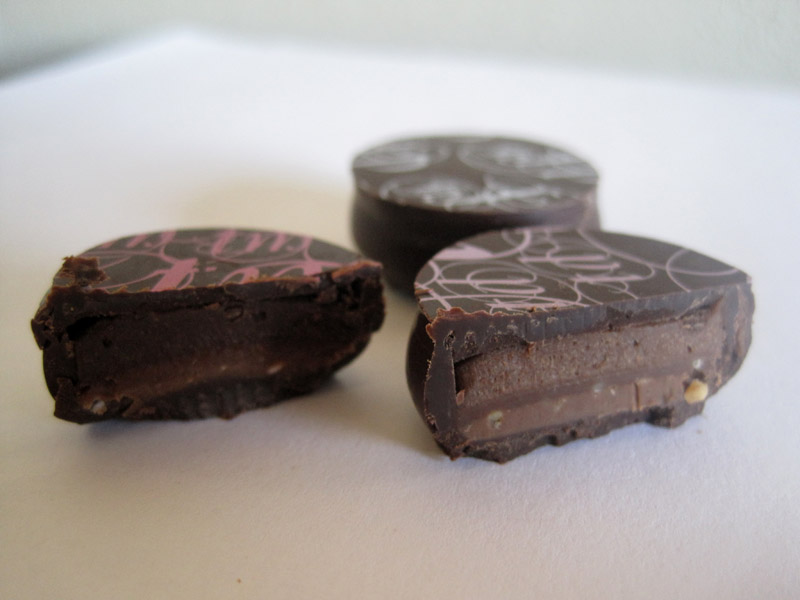
Trish Deseine, Ireland – Gianduja with shortbread and ganache with caramel with “fleur de sel,” coated in dark chocolate. All the layers here remind me of s’mores. Teeny, knobbly bits of biscuit are there to munch on and the caramel perhaps makes it milkier, but really, the focus is on the whole, not its parts–it comes together well.
Sofie Dumont, Belgium – Ganache with marizpan, a bit of olive oil, and cocoa nibs enrobed in dark chocolate. Lucky Ms. Dumont’s chocolate has center stage in the box, perhaps because it packs in a lot of richness. The marizpan is better than whatever other small sampling I’ve had before. A dark ganache layer is also there, with some nibs for texture; the olive oil’s presence comes on you like a wave. A most interesting specimen.
Fina Puigdevall, Spain – Ganache with walnuts and aromatic herbs coated in dark chocolate. Sorry, but I can’t identify the individual flavors at work, though I can say Fina was successful in creating a chocolate “inspired by nature,” as she puts it. All the same, it’s perhaps not as exciting as some of the rest of these.
Hélène Darroze, France & United Kingdom – Intense ganache with a hint of “piment d’Esplette” and refreshing raspberries, enrobed in dark chocolate. This ganache has a great texture, and while I’m not a fan of raspberries, I will say that their flavor is balanced so as to bring out the chocolate, as well, instead of just letting it sit in the sidelines.
Patricia Desmedt, Belgium – Ganache with Jalapeno chili and gianduja with nougatine coated in dark chocolate. There is a gentle warmth to the ganache, with the spice coming, still rather gently, after it melts. The nuttiness serves to complement and unite all. I like the use of the jalapeno: it’s unique to other chili combinations.
Thomasina Miers, United Kingdom – Praline with nougat and a hint of orange and dark chocolate ganache with chili, coated in dark chocolate. A stronger chili feels strange in conjunction with the orange; the unexpected taste and texture of nougat add to the weirdness. While not bad, this one still isn’t a winner for me.
Overall, though, I’m pleased. There is enough experimentation and variation to keep me interested, but nothing too far out. There are softer flavors alongside bolder ones. The concept, as well, of the collection in general I enjoyed. It allows a quick look at how much a chocolate-maker’s individual style will mean for a product’s final outcome.
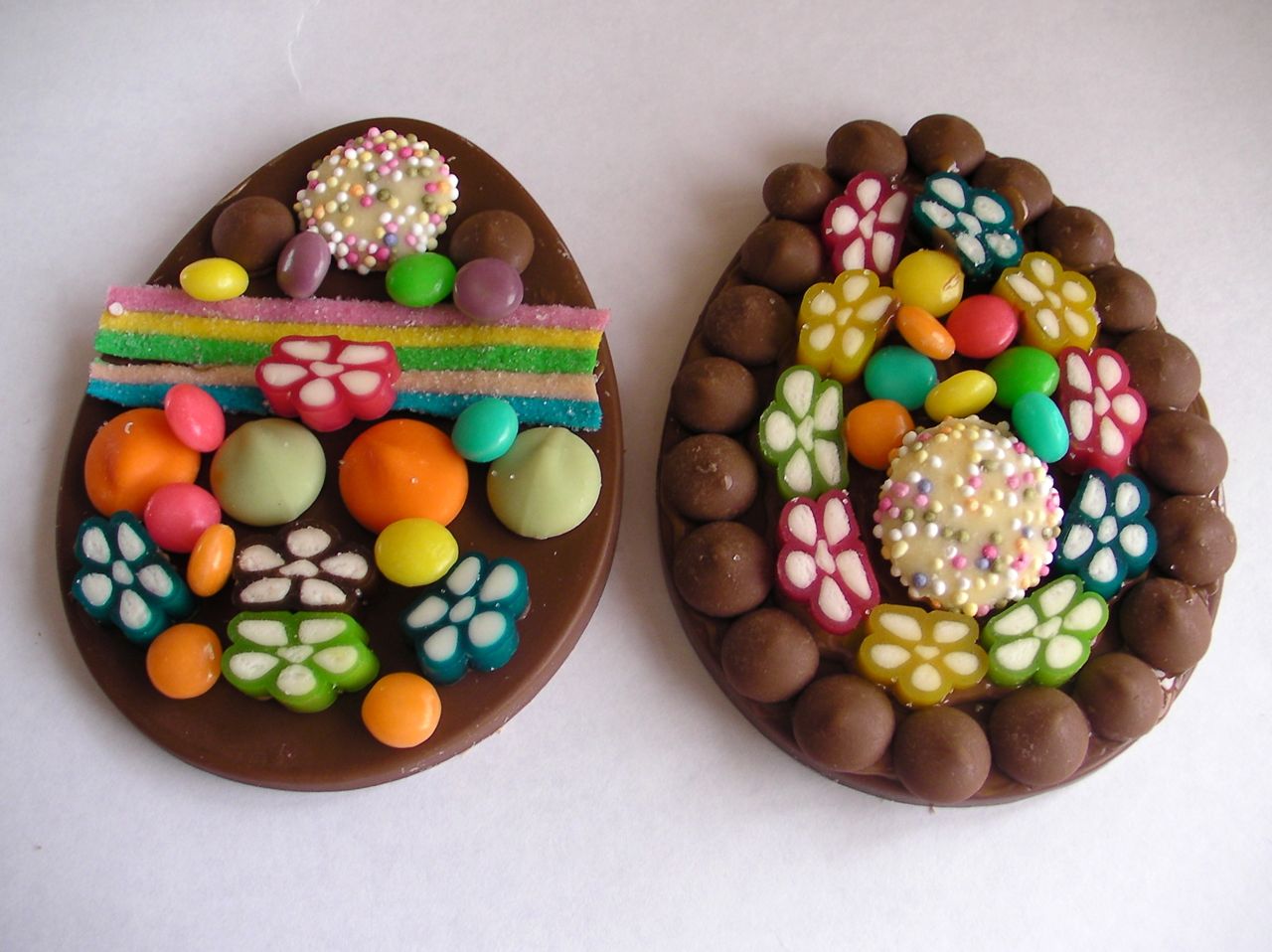
Regular Chocablog readers will remember they DIY Christmas Tree kit from Cocoapod and how much fun it was. So you can imagine how excited I was when this Easter Egg kit arrived on my doorstep – complete with big bag of brightly coloured sweets. Yes, I am a child.
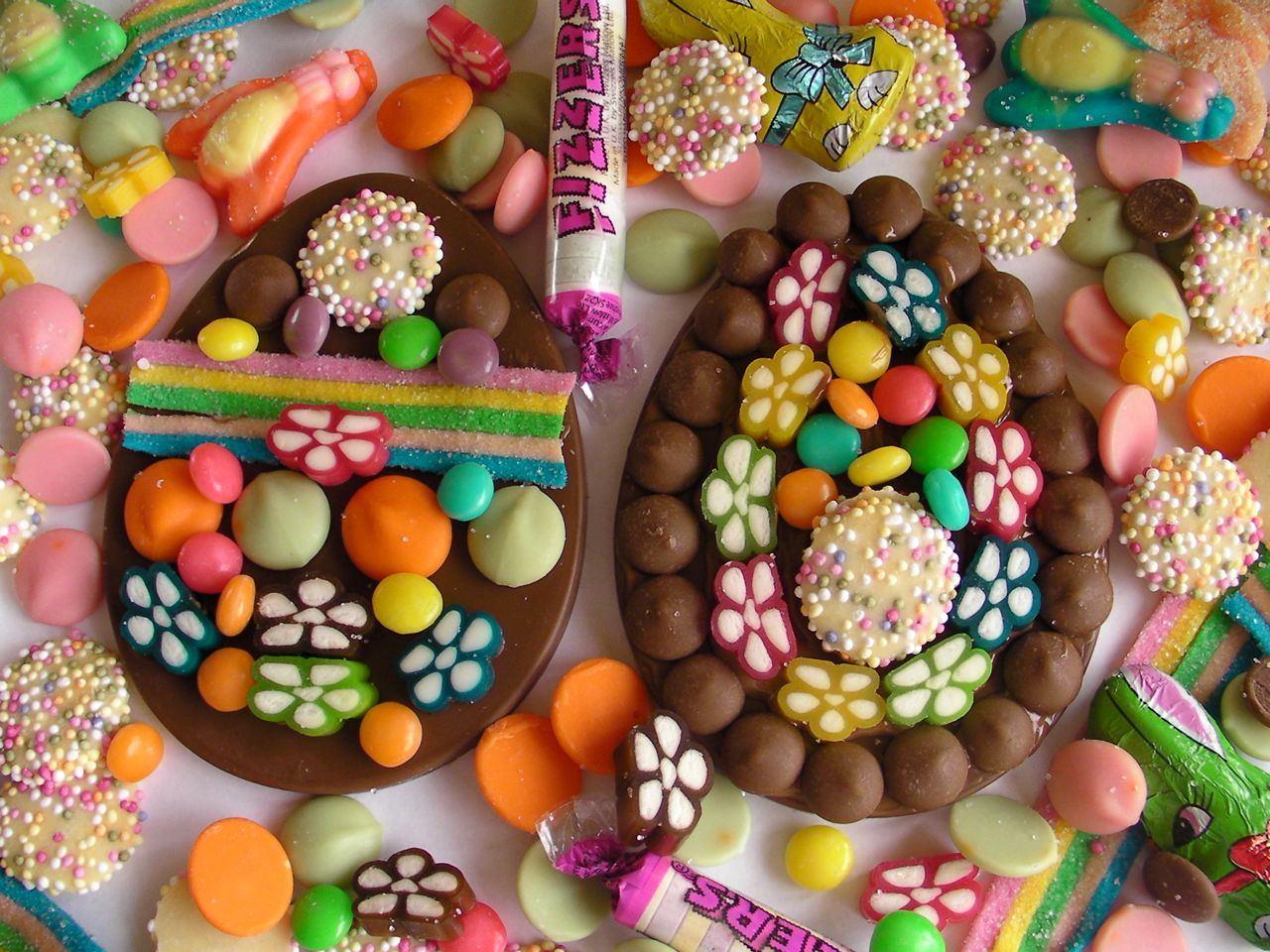
In this kit, you get four flat egg-shaped slabs of milk chocolate, a big bag of mixed sweeties, a bag of small chocolate buttons for melting (and sticking said sweeties to said eggs), and a some miniature paintbrushes to help make the whole process even easier.
Unfortunately, the first thing I did was drop the pack containing the eggs, breaking two of them, so I decided just to decorate the two remaining eggs.
This is (one of the many reasons) why I’m not a chocolatier.
I quickly realised that even if I hadn’t broken two of the eggs, there would have been loads of sweeties and chocolate buttons left over anyway, meaning that if you buy these kits for your kids to make for friends & family, they’ll still end up with a treat at the end.
Clearly this isn’t fine chocolate, and there’s obviously loads of sugar and artificial colours in those sweeties. But it’s decent quality Belgian milk chocolate, and most importantly, it’s a lot of fun. Recommended either to create gifts, or as a way for the kids to make their own Easter Eggs and keep them quiet on Easter Sunday.
Whenever I travel I’m naturally on the lookout for interesting, good quality chocolate to bring back and review. Well, I also like to pop into a supermarket to see what the bigger names brands are doing in other parts of the world, and this 35g mini bar is the result of just such a foray.
In case you didn’t already know, Côte d’Or went the way of Cadbury is part of the food-Borg that is Kraft.
The milk chocolate is 40% cocoa solids but something of a disappointment. Not that it never had a chance in the face of an onslaught of overly sugared fig ‘pieces’ (basically figs soaked in sugar, dried, then sprayed with more sugar, or so it seemed). The fig pieces felt freeze dried but were obviously over sweetened, and tat was about the size of it. There was chocolate and almond fragments in there, but they were completely overwhelmed by the perfumey sweet overkill of the fig.
I have to confess to being somewhat disappointed. Côte d’Or have produced some fairly passable bars in the past, but this seemed like one of those cheap ‘copy’ bars you might find in budget supermarkets rather than the product of a Belgian chocolate maker with some years of experience. Definitely needs a rethink as far as I’m concerned.
Cadbury, Rowntree, Fry, Hershey, Mars, Terry’s… half of these names have long been swallowed up by global corporations. Even here in the depths of the former British colonies, we had all but Terry’s. Hershey seems to be a US company with its occasional forays to Australia not leading to much. And Mars – you’d have to live on another planet (pardon the pun) if you’d never heard of them. In Australia the big local firms MacRobertson, Hoadleys and others have been acquired by the major players and the names are gone.
I first came across Deborah Cadbury, with Seven Wonders of the Industrial World – an exceptional work for a geek who likes the history of technology and its advances (me!). At the time I wondered if she was any relation to the chocolate family. Years later, my question has been answered.
httpv://www.youtube.com/watch?v=lWq0SJiWJE4
I’d heard stories over the years of the Quakers and their involvement in commerce, food and chocolate. Until this book I had no idea of the values, scale or the huge influence of the Quakers. I likewise had not the faintest inkling of the way that the Cadbury, Fry and Rowntree families and companies operated through the late 1800’s and early 1900’s – and eventually through the war years. In the US, Milton Hershey had similar ideas and values. This book is a revelation, not only for the description of the times, the rivalries, the passion to succeed, but also for its description of the people involved, their beliefs, morals, courage and patience.
When we consider today that chocolate and cocoa are cheap mass produced items available to all it is hard to believe that companies began making and selling a basic cocoa drink primarily made from ground roasted cocoa beans. At the time a method of separating the fatty cocoa butter had not been discovered, so imagine a coarse chocolate drink with globs of fat floating on top, and you have a rough idea of drinking cocoa in the late 1800’s. It all sounds rather unappetising. Fillers like starches were used to absorb the fat, so further imaging drinking a heavy, floury, stodgy, fatty, chocolatey kind of porridge. If that seems unpleasant, then it gets worse with some other practices of the times: using other fillers such as red lead or brick dust.
The invention by Van Houten of the press for separating the fat led to an improved drinking chocolate with less fat, and so less need for binders or fillers. The conching process discovered by Lindt led to a smoother, less gritty chocolate into which the excess cocoa butter left over from cocoa manufacture could be used, producing a chocolate bar that was not dry or crumbly. Naturally, a little industrial espionage – or just plain buying the process saw these practices spread. Not everything came easily, or by mere buying of technique. Who today would have thought that for some, it took 15 years to find a method to make milk chocolate? In modern times, how many business owners, boards, or accountants would allow a research or product development phase of such duration?
Perhaps most astonishing though, is the use to which the profits of the Quaker chocolate businesses of England and the US were put. A fundamental belief that money should be used for the betterment of society saw companies like Cadbury and Hershey build model factories away from the middle of big cities; include subsidised housing for the workers; playing fields; health and dental services; meals; the list of social needs provided by the companies is jaw dropping in its breadth and scale.
The values that saw Cadburys, Rowntrees, Frys and Hershey give away most of their fortunes for the improvement of society found their way, especially in England, into the modern ideas of a minimum wage, unemployment benefits/insurance, state health systems, and so on; all with the objective of alleviating the suffering of the poorest of people. We have much to be thankful for – the people who made the chocolate we all know today had a huge influence on the social systems we now take for granted.
This book describes the desperation, tenacity and beliefs of the chocolate businesses, and the way businesses and values change. Now that Cadbury is owned by Kraft, who knows if the values of the past will be considered important, or even relevant.
Since the day I heard this book had been published, I’d been itching to get a copy. I’m glad I did. I have a new found respect and admiration for the people who spent their lives giving us the chocolate we enjoy at low prices, and who changed whole societies in doing so. By contrast I look in horror at the modern business that cares only of profit, obtained as quickly as possible and frequently irrespective of the human cost.
If you can beg, borrow, buy or steal this book, do so.