If you read my write-up about my recent trip to Halen Môn in Anglesey, you’ll know I’m a bit of a fan of the chocolate and sea salt combination. A good quality salt has the amazing ability to lift the natural flavour notes in chocolate to new levels, be it milk or dark.
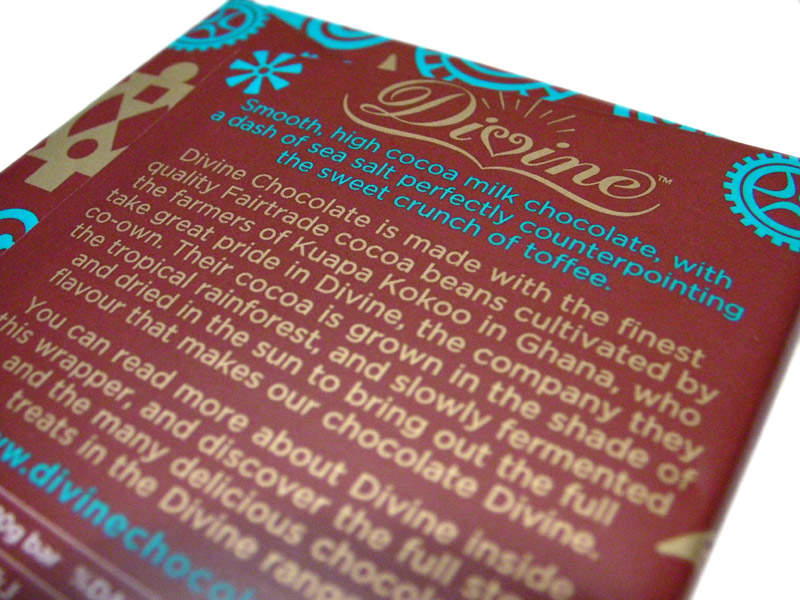
Divine Chocolate have chosen to use a 38% milk chocolate and small pieces of toffee for this bar. There’s no indication of where the sea salt comes from in this case though.
The chocolate – as with all Divine products – is Fairtrade certified and comes from the Kuapa Kokoo co-operative in Ghana. The co-operative owns a stake in Divine, so even though I’m not a great fan of the Fairtrade system for chocolate as a whole, Divine always scores very highly when it comes to ethics.

As you might expect from a milk chocolate with toffee pieces, it’s very sweet. I do like the occasional sweet treat though, and managed to eat a fair amount of this bar. Eventually though it did prove just a little bit too sweet for my liking. The Ghanaian cocoa doesn’t have a particularly intense flavour anyway, so the sugar can become overwhelming.
The toffee pieces add an interesting texture, and there’s just the right amount of salt to add an interesting edge, but it’s still too sweet for my tastes.

That said, this is a confectionery chocolate designed for those with a much sweeter tooth than me, and that’s how you should judge it.
Personally I prefer the Green & Black’s Sea Salt bar that’s made with Dominican Republic chocolate and fantastic Anglesey sea salt, but if you absolutely must have your sugar fix, this is probably the one for you.

Here’s something a little bit ‘dangerous’ for you – that tricky combination of banana and chocolate. In theory the humble banana was made for chocolate and of course fresh bananas are great with chocolate. The problem seems to come about when chocolate makers try & put banana into a bar. At worst it can taste either totally artificial in a ‘perfumey’ way, or at other times the banana seems almost alcoholic.
I picked this Cavalier Banana Cocoanibs bar up in Egypt but it happens to be Belgian in origin. Oh, and note the ‘no added sugar’ label. There’s malitol in this bar. Oh, and while we’re on the subject of ingredients, I started to get a little worried when reading the list on the wrapper. When a chocolate bar’s first three listed ingredients are ‘sweetener (Malitol), vegetable fat, milk powder’ I tend to find myself rapidly downgrading my expectations!
Further down the list I discovered that the actual cacao content of this milk chocolate covered bar was 37% which cheered me up a bit – that’s Green & Blacks levels. The addition of cacao nibs for a little crunch and extra flavour seemed like a wise move as well, although that would very much depend on how you feel about little chunks of cacao nib floating around in your mouth. It all boiled down to the filling really – could this be one of those rare occasions when a banana and chocolate combination didn’t disappoint?
I hate to say this, but it was okay. Just okay really. The chocolate and cacao nibs added enough flavour to mean that the banana cream filling didn’t overwhelm, and for me that’s about as good as a banana and chocolate combination is going to get. It’s certainly one of the better versions I’ve tasted. The quest continues for the ultimate banana chocolate though.

Here’s something interesting from our favourite Belgian bean-to-bar chocolate maker, Pierre Marcolini.
It’s a single origin block of 70% dark chocolate from Cameroon. The first time we’ve reviewed any single origin chocolate from this West African country. The beans grown in this part of Africa are often of the Forastero variety and generally end up in bulk confectionery products rather than fine chocolate. Because they don’t always have the interesting flavour notes of other bean varieties, it’s unusual to see African beans in a product like this.
The beans used in this bar are form a small (2 hectare) plantation and grown exclusively for Marcolini. That means that the chocolate maker can influence how the beans are treated from the tree all the way to the bar, and the finished product is much more likely to get the very best from the beans.
Marcolini has also chosen to add cocoa nibs to this bar to add a little extra flavour and texture, but everything is from the same plantation. It’s a chocolate with only three ingredients – cocoa beans, sugar and soy lecithin.
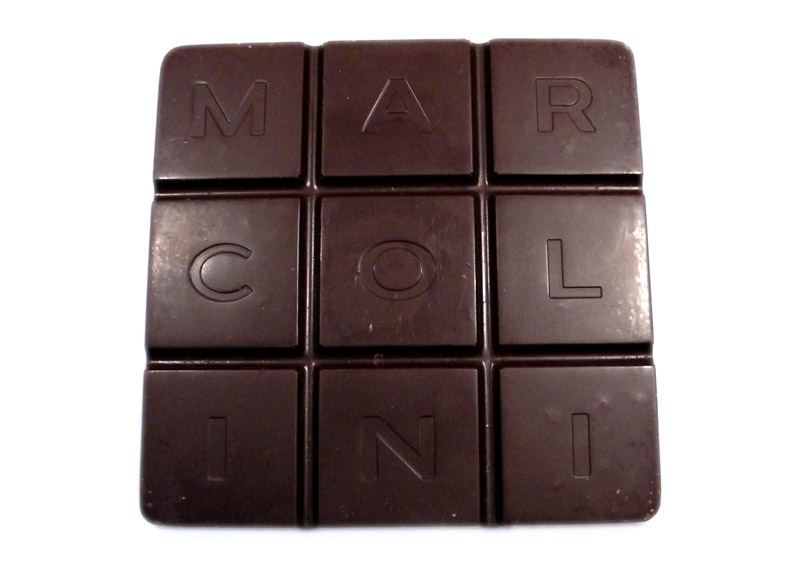
The chocolate has an intense aroma that fills the air the moment you unwrap it.
The flavour is equally intense. It’s fruity and woody with a slightly acidic edge, a little like wine. The cocoa nib pieces enhance those notes as well as adding a great texture to the bar. It’s not sweet, but that’s just the way I like it.
Had I not known that this is a simple African Forastero, I probably wouldn’t have believed it, simply because it’s so interesting. It’s not my favourite chocolate in the world, but I like it a lot and it certainly shows how the skill of the chocolate maker can enhance the flavour of any cocoa. I found the bar disappeared very quickly – perhaps more quickly than is entirely healthy!
Marcolini ship throughout Europe and you can buy this bar from their online boutique (link below). I highly recommend giving it a try.

It’s been a while since I’ve had any Bonnat chocolate, so I wasn’t sure what to expect from this bar. It’s been in my collection for a while and I thought it was about time I scoffed sampled it.
It’s a hefty 100g bar, but perhaps the reason it has gone ignored in my stash for so long is Bonnat’s slightly old fashioned packaging. Inside there may be a bean to bar chocolate made with fine beans, but the thin paper sleeve and foil paper inner wrapper don’t shout quality to me. Perhaps I’ve been spoiled by the wonderfully enticing packaging on modern bean to bar chocolate wrappers like the Marou range, but first impressions really do count.

Bonnat Apotequil claims to be made from a rare Porcelana variety of beans from Peru, but people I’ve spoken to suggest that it may not strictly be a Porcelana bean. My cacao genetics is a bit rusty, so I have to take the claims at face value.
Unwrapped, the chocolate has a rich, dark and glossy appearance, divded into small chunks, not unlike a Green & Black’s bar. You can tell from the moment you pick it up that it’s high in cocoa butter as it feels glossy in the hand.
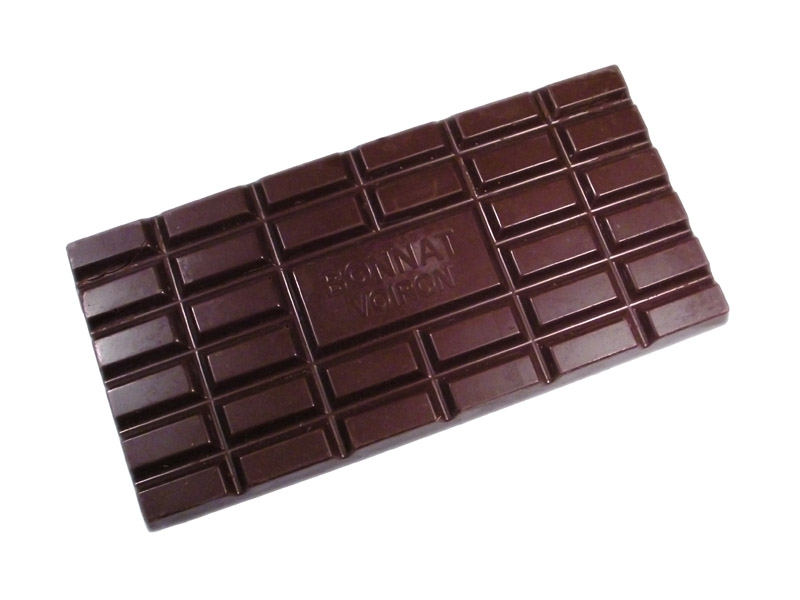
That added cocoa butter has a big impact on the flavour of this bar – or at least how the flavour develops. Because it takes a few seconds to melt, first thing you get when you pop a chunk in your mouth is… nothing. There’s an incredibly smooth, buttery texture but it takes several seconds for any flavour to come through.
When the flavour does arrive, it’s sweet but not particularly complex. There’s a fruitiness to it, moving towards slightly citrus notes, but I find myself wondering if it was actually worth the wait. It’s pleasant, but it’s not a chocolate I would go out of my way for.
My opinion of this chocolate is strongly influenced by the cocoa butter content. There are bars such as Pralus Le 100 where I love the texture a little more added cocoa butter provides, but in this case it doesn’t work for me.