This is a tale of two chocolates. One good and one… less so.
But let’s begin at the beginning. Szántó Tibor is a Hungarian bean-to-bar chocolate maker. I’ve reviewed one of his chocolates before – a rather tasty number with almonds and paprika, so I was quite excited to try more.
The first bar I was given to try was an 80% Madagascan, which seems to be made with the same moulds that Duffy Sheardown uses for his smaller bars. It’s a nice design, but the Szántó Tibor bar clearly has imperfections on the surface.

The chocolate is in date, the moulding is clean and it has a nice snap to it, but that’s where the good news ends unfortunately. The aroma is slightly fruity but astringent, and the flavour is horribly bitter. I don’t know if it’s an issue with the roasting or something else, but it’s gritty, astringent and very difficult to eat.

I can’t believe this is by design, but how a bar this bad got through any kind of quality control is a mystery to me. I didn’t manage to eat more than a couple of small pieces of this bar.
Moving on. Next up we have the “House Blend” 70% Grand Cru Venezuela. The English part of the label helpfully tells me this is blend of Maracaibo Classificado and Sur del Lago criollo beans. The tasting notes tell me to look out for “black berry fruits, roasted walnuts and fine cacao aromas”.

Out of the box, this is a much better looking chocolate. It’s glossy and really quite attractive. The marks on the front are simply where the cellophane inner wrapper had stuck to the chocolate slightly.
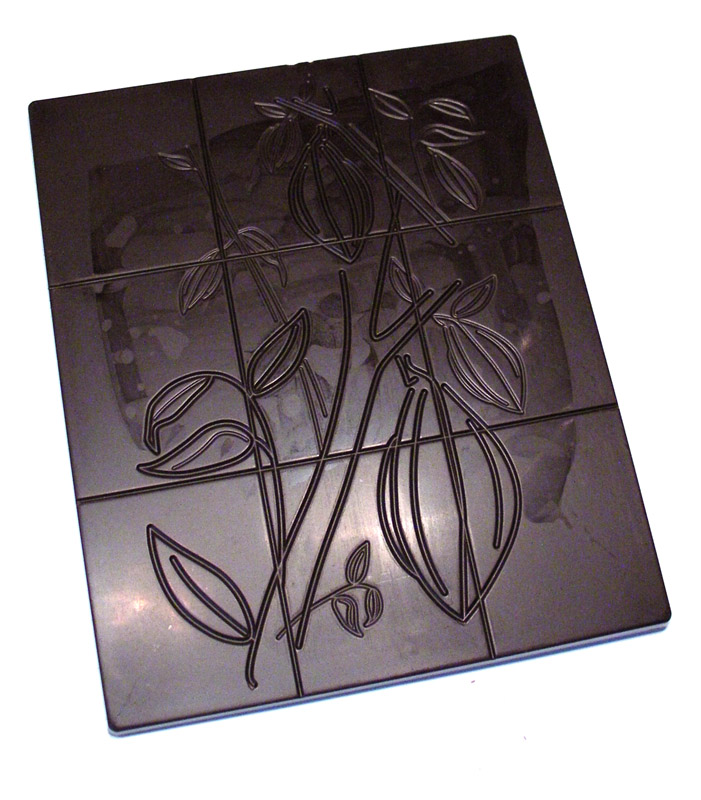
This is the complete opposite of the Madagascar bar. Immediately, the roasted notes make themselves known. If anything, it’s probably roasted a little too much, but I happen to like that flavour. As the tasting notes say, there’s distinct nuttiness to it too, although for me it’s more peanuts than walnuts – something very unusual.
This is a very easy to eat bar and such a contrast to the Madagascar.

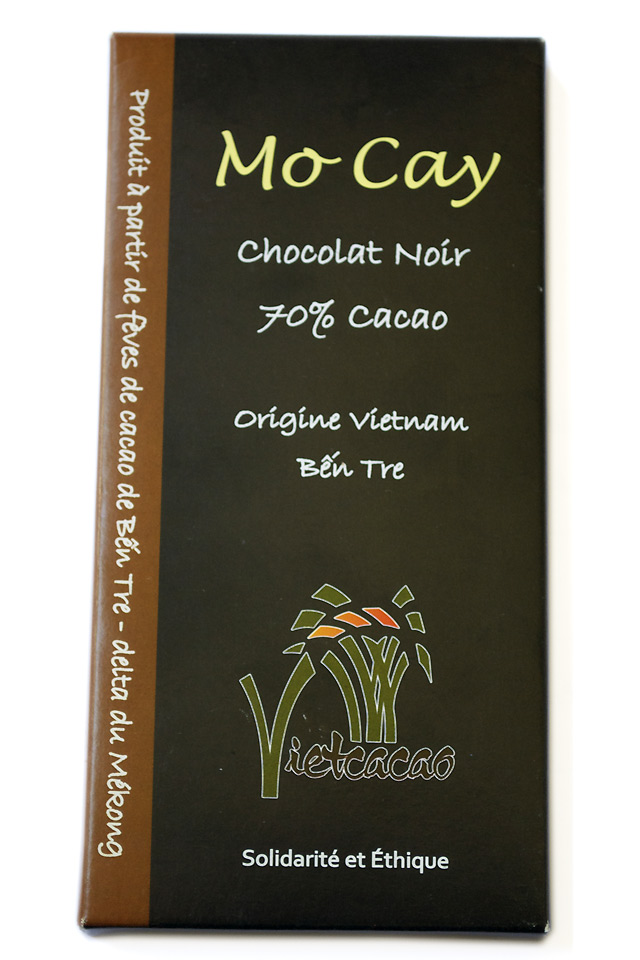
It’s not really necessary to go into great detail about where this bar has it’s origins (The Mekong Delta in Vietnam) but the origins of Vietcacao are worth a paragraph or two.
The company has been active for five years now but was six years in the making before that. André Stengel – the founder – decided to get involved in Vietnamese cacao after a somewhat illustrious career as both head of a high school and VP of the French Confectioners & Chocolatiers Association. France was the first country to colonise Vietnam and the country was producing cacao until the Vietnam War disrupted both cultivation & supply. Vietcacao is also engaged in an ethical and sustainable development programme, with the company investing profits back into the local community. One particularly notable project involves the installation of equipment and provision of training for pupils in a school for handicapped people.
With support coming from (mainly French) companies and chocolatiers, Vietcacao continues to build on early success. In the UK Marc Demarquette is both a supporter and importer of their products and it was he who supplied this bar for review.
The chocolate itself is a deep reddish brown in colour with a light, vibrant scent suggesting fruity/floral notes which is borne out in the tasting. Good acidity and lots of bright, fruity cacao notes precede the deeper red fruits and woodier low notes. It has a long, clean finish and an excellent soft mouthfeel. At seventy percent cacao this bar doesn’t overwhelm in any way – it’s a light, bright tangy chocolate with a great range of flavours. I suppose one way to describe this bar would be ‘unsurprising’, which is in no way an insult. It has all the right qualities for a good chocolate but doesn’t surprise in anyway. You get bright, lively acidity sitting over moderate dark notes, a hint of bitterness and a long, clean finish and that’s all good.
It’s good to see someone taking the time and trouble to resurrect the cacao growing industry in Vietnam – as is happening all over the world – and the ethical credentials of this chocolate (plus the taste) make it very desirable. A great ‘everyday’ chocolate for those who like something that isn’t too aggressive or ‘wacky’.

Just off Notting Hill’s bustling Portobello Road lies a small oasis of chocolate. Somewhere to escape the tourists, drink tea and immerse yourself in an extensive selection of chocolate from around the world.
Alexeeva & Jones feels like a continental chocolate shop even before you walk through the door.
The shop window is elegant and minimal and some carefully placed tables & chairs outside provide a place to stop and watch the world go by. Walk inside and the feeling of relaxed sophistication surrounds you. Loose chocolates are beautifully displayed in marble and glass boxes and the walls are covered in some of the best chocolate bars in the world.
It feels stylish and welcoming, without being overly formal. I feel like I could spend a couple of hours here. And that’s exactly what I end up doing.

Retail manager Helen greets me as I enter. Helen is a veteran of chocolate retail in the UK, having been store manager at the likes of William Curley, La Maison du Chocolat and Rococo. What she doesn’t know about chocolate isn’t worth knowing, and that’s immediately obvious. She can tell you every detail about each and every chocolate, bringing the stories to life – and unfortunately making me want to buy everything.

Loose Chocolate Collections
The beautiful displays of loose chocolates are the focal point of the shop. Eight international chocolatiers are featured, some of which you may have heard of, others that might be new to you. Not being reliant on a single chocolatier means that they can vary the collections depending on season and quickly introduce new chocolatiers.
Currently, they have a house selection, along with chocolates from Davenport’s, Franck Daubos, Centho, Beschle and British chocolatiers Paul Wayne Gregory, Damian Alsopp and Iain Burnett. It’s a great mix, with something for everyone, from Davenport’s sweet fondants to Damian Allsop’s divine water ganaches with a healthy dose of European sophistication in between.
I have to admit, I found the choice a little overwhelming, but I tried a small selection from the Franck Daubos and Centho, two European chocolatiers I hadn’t encountered before and found them impressive.

Bars Of The World
I’m very much into artisan bars at the moment, so as beautiful as the displays of chocolates are, I was most excited to see a range of bars from some of the world’s best chocolate makers on display along the wall. I don’t know of anywhere else in London – or the UK for that matter – where you can buy the likes of Friis Holm, Åkessons, Pacari and Amano under one roof.
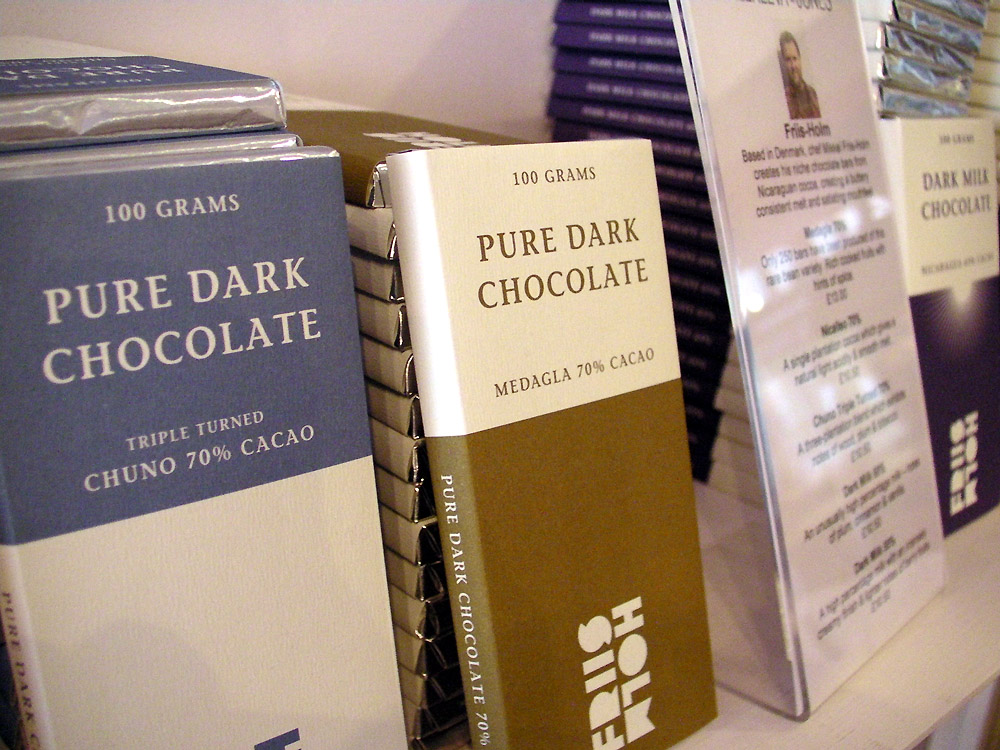
Some of my favourite bars like Friis Holm’s Chuno and Amano’s fantastically powerful Morobe are there, along with others like Larent Gerbaud’s beautiful looking bars that I’d not yet had a chance to try. I quickly realised that a single visit to Alexeeva & Jones wasn’t going to be enough.
I couldn’t leave without buying a bar of Morobe along with a Laurent Gerbaud yuzu bar and a couple of Damian Allsop’s “Eat London” range.
Needless to say, I left satisfied.

Notting Hill is fast becoming a chocolate destination in itself, with the likes of Melt and Artisan du Chocolat just around the corner. It has a different vibe from some of London’s more well known chocolateries, but if you’re into artisan chocolate, the area – and Alexeeva & Jones in particular – is well worth a visit.
Alexeeva & Jones
297 Westbourne Grove,
Notting Hill
London
W11 2QA
www.alexeevaandjones.com

Just over three years ago (when Dom still liked sugary treats) he reviewed a similar bar to this, made by the same company, Goldkenn, and containing Grand Marnier.
Well it’s my turn to test a Goldkenn liqueur bar, and it happens to contain what is possibly my least favourite ‘whiskey’ – Jack Daniel’s. Like Harley Davidson, Jack Daniel’s seems to have been aggressively marketed to the point where the brand can be seen on everything from mouse mats to wallets, so it’s hardly surprising that this bar was conceived.
In essence it’s the same chocolate as the Grand Marnier bar – 37% cacao milk chocolate made in the classic Swiss style. It also has the same thick, crunchy sugar shell inside the chocolate to keep the liquid centre from spoiling the chocolate. And the filling? Alas, not Jack Daniel’s, but a “Jack Daniel’s Syrup” – yep, more sugar.

The effect of this accumulation of sweetness is fairly obvious. Nothing stands out much at all other than the sugar. There’s a hint of alcohol mixed with sugar, some chocolate mixed with sugar, and a mouthful of sugar pieces to contend with at the finish.
Still, I suppose brand loyalty will mean that this sells reasonably well, but as an example of good chocolate it fails miserably. Perhaps one of our artisan chocolate maker friends should have a go at making a ‘proper’ version of this (although I would take one of Paul A Young’s Bourbon truffles over a bar of this sickly stuff any day).
Buy it for your Dad/Boyfriend if you can’t think of anything else. Otherwise, why bother?