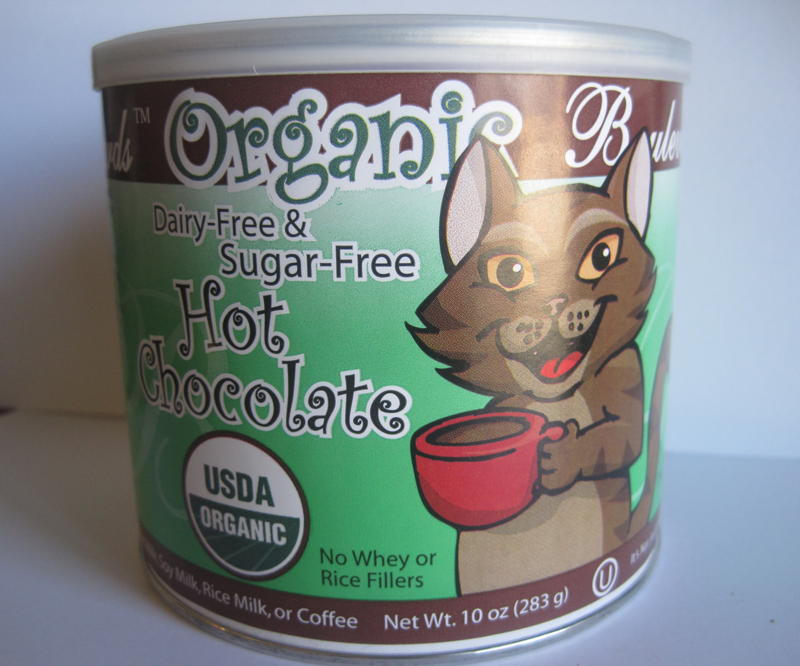
Would someone tell me why there is so much rainy weather in Arizona in January? I just don’t understand it. The only advantage it has for me is an increased enjoyment of such life’s comforts as warm hats and hot chocolate. Truly ideal timing for Steven Meyers from Boulevards to send me over some of their dairy-free, sugar-free hot chocolate. In existence since just 2005, Boulevards has a line of hot chocolate mixes (with cold mixes coming in the spring) designed to present this pleasurable beverage with quality ingredients that stay on the healthy side.
Hence all the labels and logos on the container: USDA Organic, dairy-free, sugar-free, Kosher, and no whey or rice fillers. It can all be a little heavy if you aren’t asking for all these qualities, but it was the cat that got more of my attention. Maybe I’m just a sucker for animals, but he has that spark of naughtiness in his open-mouthed smile that makes him a worthy mascot. Turn the container around and you’ll find the brief ingredients list: organic erythritol, organic cocoa, organic maltodextrin, organic guar gum. Erythritol is the naturally-occurring sweetener used in place of sugar.

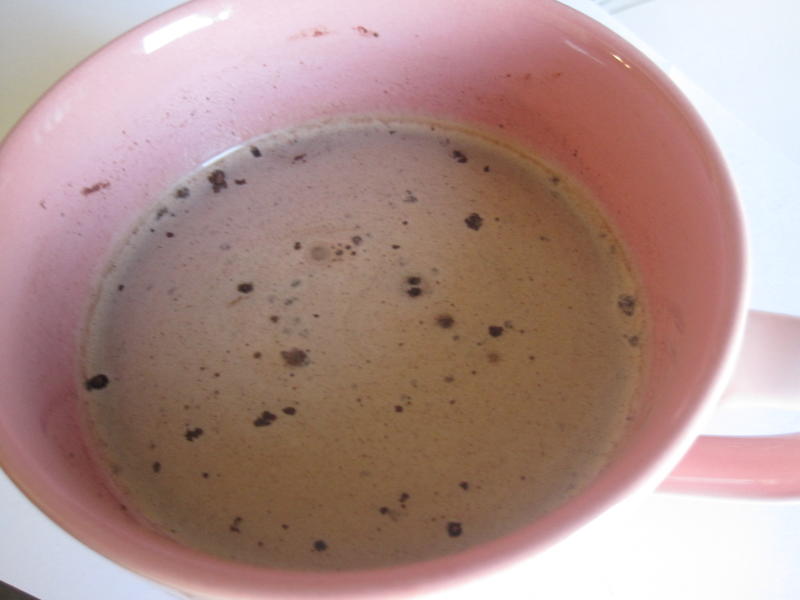
Peeling off the lid, the mix is a rough powder with little sugar-look-alike crystals. It smells something like Ovaltine, if my memory serves correctly, a sweeter cocoa powder smell. The directions instruct one tablespoon per cup (making 20 servings). I filled my mug to what I guessed was about a cup, but the tablespoon didn’t seem enough, so being too lazy to get a second spoon, I just poured a little more mix in. And then I chided my laziness when too much powder fell into the cup, worried that I had ruined my tasting. Yet I had no reason to fear. Being prone to add extra mix to my hot chocolate, this excess ended up the right amount.

The mix has a tendency to clump up as you stir it in, yet a small layer of welcoming foam forms on top after it’s all mixed. The taste is creamy, light on chocolate. This is the mild-flavored one, though; there are also dark versions. The erythritol gives it, to me, a slight odd smell and taste, but it’s preferable to stevia, not so strong as that. This chocolate feels good to drink, in the end. No sugar/sweet rush, no chocolate overkill if that’s something you avoid.
So it works. A standard hot chocolate that will meet your not-so-standard needs or wants with at least one of those numerous labels.
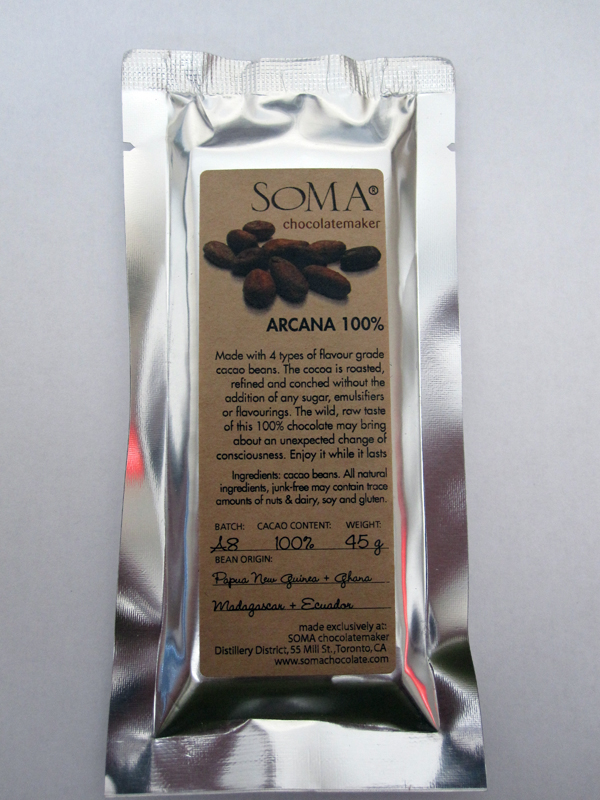
From what I’ve tasted so far, I’ve come to really appreciate Soma Chocolatemaker with their rather splendid bars created from small batches of chocolate made in their Toronto factory. Nevertheless, there is still something really intimidating about any 100% chocolate. Just that number and the realisation that there is nothing to dull or sweeten the flavour of the cocoa beans. This is a really thin line to walk along because disaster lies on either side. There is absolutely no room for error. And Soma absolutely nails it with their Arcana 100% bar.
Even from the outside, it looks like a special bar of chocolate. Their futuristic, space-food-esque packaging is rather appealing, not to mention it does make sure that the contents are fresh too. And once it is torn open, the rich, rich aroma comes flooding out in an almost overwhelming way. A good time to pause and consider if you really want to do this. My nose says yes.
The bar might be a little on the small side at a mere 45 grams, but this isn’t the kind of chocolate that you wolf down. It has a nice high gloss and when snapped, it breaks cleanly without much crumbling, suggesting that this isn’t going to be overly dry like some high percentage bars. In fact, it is a remarkably smooth and satisfying chocolate that doesn’t quite hide its pedigree but doesn’t scream 100% either.
Soma use four different types of beans from Papua New Guinea, Ghana, Madagascar and Ecuador, and that is reflected in the complexity of the flavour. It starts off, not surprisingly, with a rush of bitterness that doesn’t last nearly as long as expected. Instead, it changes into a second wave of burnt fruitiness with warm, leathery undertones that continue to shift in surprisingly subtle ways. And those almost constant shifts are what will keep you coming back for nibble after nibble until the whole bar is gone. Eating a 100% bar really shouldn’t be this easy.
And now it’s all gone and I find myself still wanting more, signifying that this is an extraordinary bar of chocolate. If you are feel the need to experiment with the darkest and purest of chocolate, you should search some Arcana 100% out because you will not be disappointed.
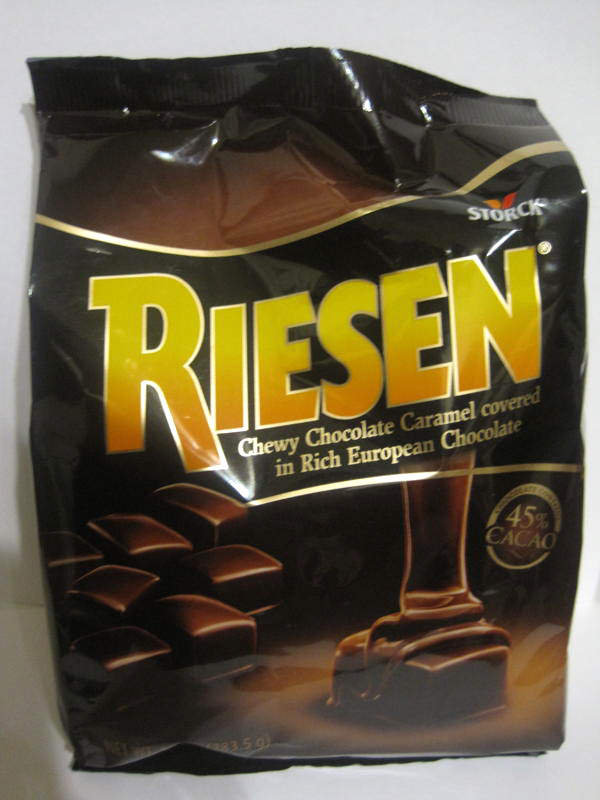
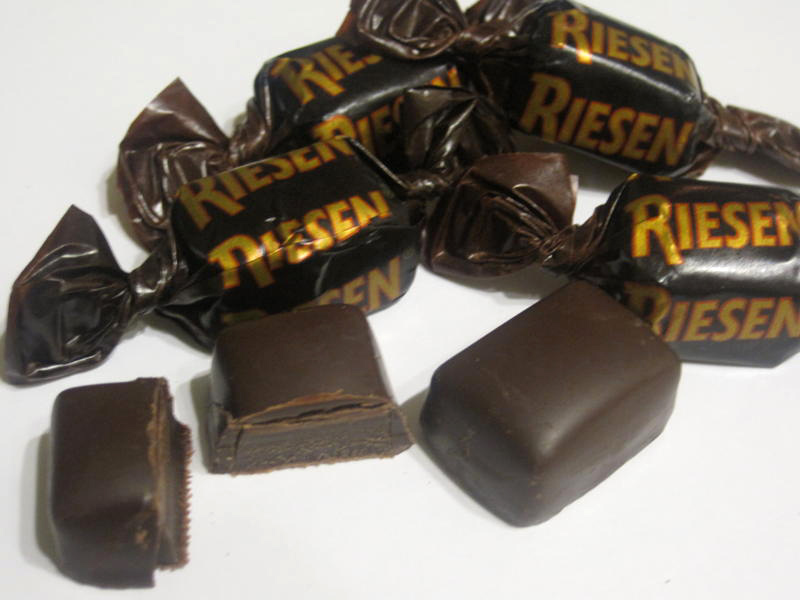
I used to think of Riesens as, if not gourmet, rich treats to be easily had in the candy isle. Chewy, chocolaty caramel was and is plenty pleasing to my palate on idea alone. I did not, however, know anything before about the company that makes Riesen, August Storck KG. It’s a German company that’s listed as Germany’s top candy and confectionary producer. They’re the same people who make the Werther’s Original hard candies.

Coming in a bag both basic and bland, the quality of these caramels is nothing sensational. Nothing worth particular note. Except. When you put one in your mouth, you fight away your criticism. The chocolate caramel is stiff, very stiff, and the chocolate coating melts quickly. Yet in this case, these two facts turn out to be positives. The chocolate is less than satisfactory, so who would want to taste more of it, anyway? Stiff caramel means it lingers, slowly softening, allowing you to alternate between sucking on it as with a hard candy and lightly chewing it as with a gum. My personal beliefs tell me this is the only way to eat a Riesen. A single one can last so long like this.
I find it amusing that the caramel has a better chocolate taste than the chocolate itself. It has a deep taste, a flavor close to cocoa powder, with any sweetness branching off from there and therefore kept to a minimum. There are light milky undertones from the caramel, but that’s it. Which seems to be part of the Riesen’s charm. How many caramel chocolates are out there? The only one I can think of is Amella, and what they do is very different, so it isn’t too common an idea. Then, chocolate and caramel could so easily make a sickly combination, but they don’t in a Riesen. Plus, they’re one of those things you can bring with you anywhere. To enjoy at the bus stop, at the mall, at the office, in between classes, wherever you are.
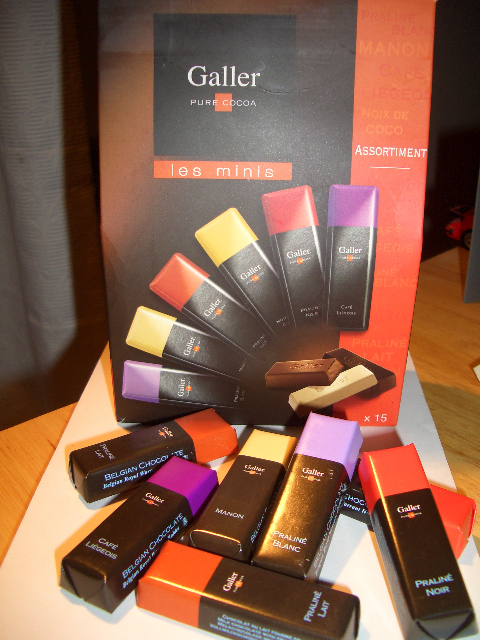
Another in the seemingly endless parade of Galler chocolates, these minis are a step up from the previously reviewed Bouchée bars in terms of taste. Here we have that perfect little treat to go with your morning coffee, or possibly something dark to enjoy alongside a post prandial espresso?
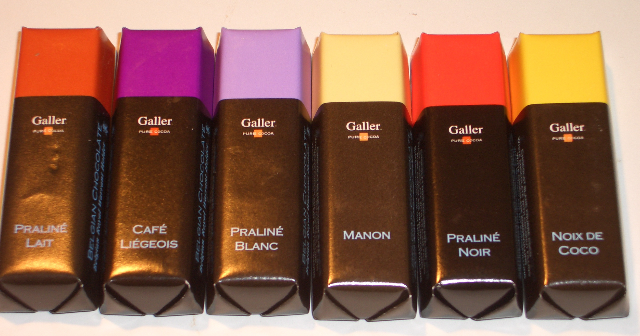
The three most obvious flavours are the pralines. Noir at 60% cocoa, a milk, and a creamy white chocolate. Each in itself a fine example, and really the only matter is personal preference. I enjoyed the milk, disliked the white, and preferred the dark. No surprises there then.
The Café Liégeois turned out to be a dark chocolate exterior which was home to a mild (and very light) coffee mousse filling. The filling worked as a great counterpoint to the bittersweetness of the chocolate.
I could almost have taken a dislike to the Noix de Coco on sight. A white chocolate shell and coconut filling – hardly my cup of tea now. However I was pleasantly surprised by a dark filling housing toasted coconut which was never too sweet. The rich cocoa flavours were enough to balance the sweetness, and the flavours of the toasted coconut were natural and refreshingly bright.
Another white exterior/dark interior pairing which turned out to be a surprise winner was the Manon. It was sweeter than the coconut version and the filling was very busy with fruit and nut pieces held in a coffee flavoured centre. Something I could see working with a good strong coffee.

So just who are these chocolates aimed at? I can only imagine groups of women on the continent having friends over in the late morning for proper, authentic coffee served in small cups, each accompanied by one of these mini bars balanced on the saucer in place of the more usual brown biscuit. Similarly, I might consider using these to serve with coffee at the end of a meal. They’ve clearly been created to have with a coffee. The question is, will customers get into the habit of having the odd naughty Belgian chocolate treat with their mid morning pick-me-up? These are still quite pricey chocolates at around 45p per piece, and as such they strike me as being the preserve of the wealthier chocolate lover, or as an indulgence or gift for the coffee drinker in your life. They’d certainly make a change from socks for Dad, and why shouldn’t men get chocolate gifts as well?