Melba’s Chocolate Factory at Woodside is one of those places you go on a tourist drive through the Adelaide Hills; or you take a busload of kids there for a school excursion.
Having been once before, some years ago, I was impressed that they have resurrected some of the old machinery that was used by the Australian chocolate makers of times gone by. If you are interested in chocolate making and machinery – be warned, the operation is very small. Mostly they seem to sell confectionery, and the range is substantial. On the chocolate front they do have some novelty items, such as the Cow Pat – which looks much like the name says it should.
The chocolate room and panning room are probably the most interesting places to stick your head into, because real stuff is being made in front of you. In the panning room, in particular, they coat things like peanuts, sultanas, and so on – the old fashioned way.
Recently, The Lady of House was in Woodside and dropped in, bringing home a small haul of Melba’s dark chocolate scorched peanuts and coffee beans. My initial reaction was “oh, goodo, we’ll just eat those”. I had no intention of photographing and writing these up.
That all changed one evening, sitting back in front of the TV watching old episodes of “Taggart”. I opened the pack of the dark scorched peanuts, ate a couple, promptly said “oh wow… eat some of these”, and set them aside to photograph and write up.

The peanuts in particular are coated with a very dark, very rich chocolate with a flavour unlike any of the things you buy for a couple of bucks in the local supermarket. Melba’s don’t make their own chocolate from beans, so they buy the chocolate. I made a discreet enquiry about what it is, and they replied that it is a special blend and is available only from them. In other words – the chocolate used is like Coca Cola – built on a Secret Recipe. Whatever it is, these are good – really, really good. If you are in the area, get some. At $4 for a 180g bag, these are good value as well.
The dark chocolate coated coffee beans are not quite as outstanding. The reason is pretty simple: the coffee beans tend to overpower the chocolate, which becomes a bit lost. Chocolate coffee beans tend to be one of those things people love or hate. Those who like them will find nothing here offensive, it’s a very nice quality product, it just does not have the outstanding “wow” factor.

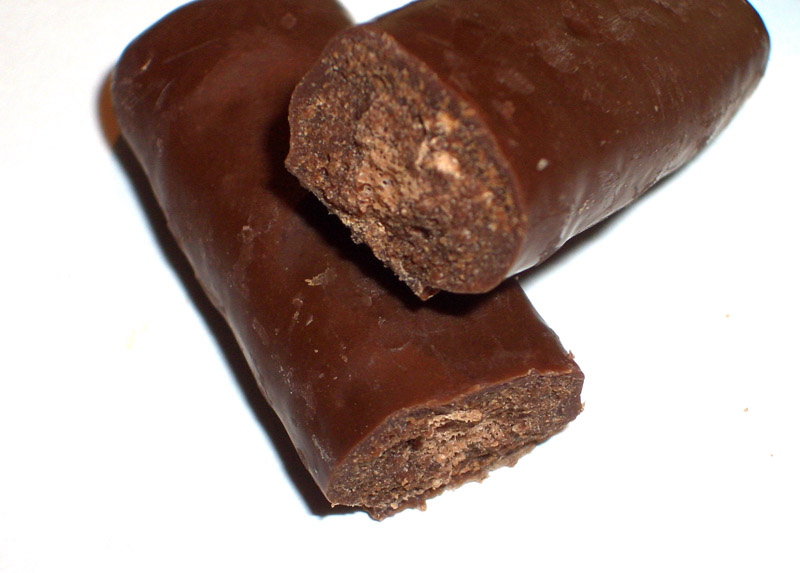
It’s been a while since I tasted anything from Japan and so I got hold of these chocolate coated biscuit fingers from Meiji. Previous Meiji chocolate experiences haven’t been all that great. Indeed the general conclusion here at Chocablog seems to be that most mass produced Japanese chocolate is of a pretty average quality, meaning I didn’t have the highest of hopes for these little chocolate coated biscuit fingers. When I say ‘little’ I mean they’re about a centimetre wide and five or six centimetres long. Not huge, but there are eight of them in the box.

At first glance I thought they might have been covered in dark chocolate, but when it came to tasting them, I was in no doubt about the quality of the coating. It’s tat slightly greasy, shiny chocolate that probably contains the dreaded palm oil (but since the ingredients and all of the product information is in Japanese I couldn’t be completely sure) and delivers very little in the way of good cocoa flavour.
The biscuit appears to have some additional cocoa content and had a slightly grainy texture which seemed to as much to do with the presence of sugar as it did with the actual ‘crunch’. Unfortunately I preferred the biscuit to the chocolate coating, which isn’t really what you want to hear from a chocolate review!
These (and a lot of other Meiji products) are available in the UK as imports but of course that means you’ll be paying a premium for what are essentially pretty average (but nicely crunchy) biscuits with a distinctly less than average chocolate coating. There are definitely better ways to spend your money.

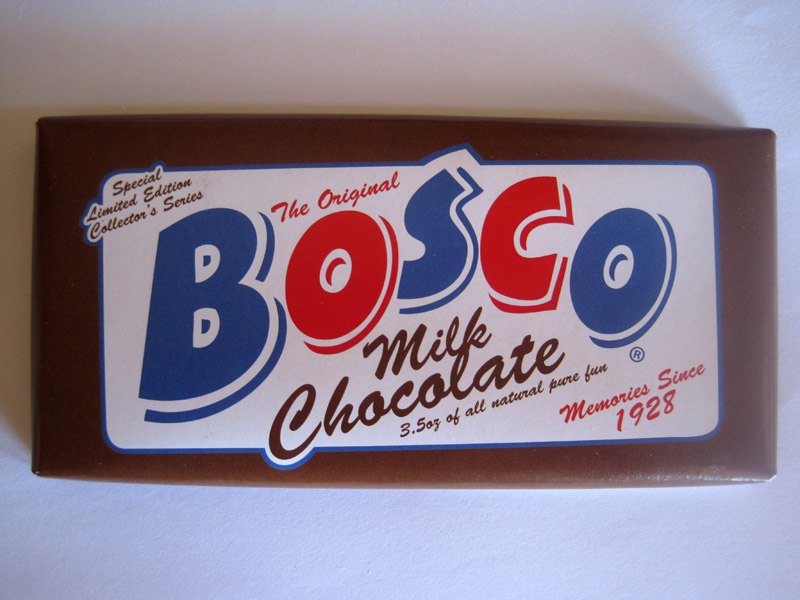
Apparently Bosco, according to this packaging, is “America’s most beloved chocolate syrup brand… originally inroduced in 1928,” even if I am completely unfamiliar with the brand.
When I sighted this Bosco bar at World Market, however, I was drawn to the vintage style. Included in the display were also bottles of the chocolate syrup itself, which would be nice to have side by side for the sake of comparison, though I didn’t purchase any of them.

No surprises that sugar is the first thing in the ingredients, but there aren’t any fillers and the vanilla isn’t artificial. The dozen pieces of light milk chocolate are set in a basic mold with thin, diagonal stripes on their surface. While I cannot compare the taste of this chocolate bar to the original syrup, it does have a taste that is believable for a chocolate syrup. First of all, all that sugar shows up with strength. Further, the chocolate flavor tastes old-fashioned to me, like what you would come across at a vintage soda fountain. It has much of the vanilla flavor and not so much of caramel as other milk chocolates. The texture is the rougher kind that most standard candy bar milk chocolates stick to.
So it isn’t an overly special chocolate in itself; I wouldn’t feel I had missed out had I never seen it. Yet even though I had never heard of Bosco, I do enjoy vintage-style candy. This is also supposed to be a limited edition bar, meaning that it pops up for a time just for the fun of it. Enjoy its novelty, end of story.

Every once in a while, something unexpectedly exciting arrives on my doorstep. This rather attractive little box caught my attention, as the quality is above average for simple handmade chocolates.
But the chocolates inside are even more interesting.

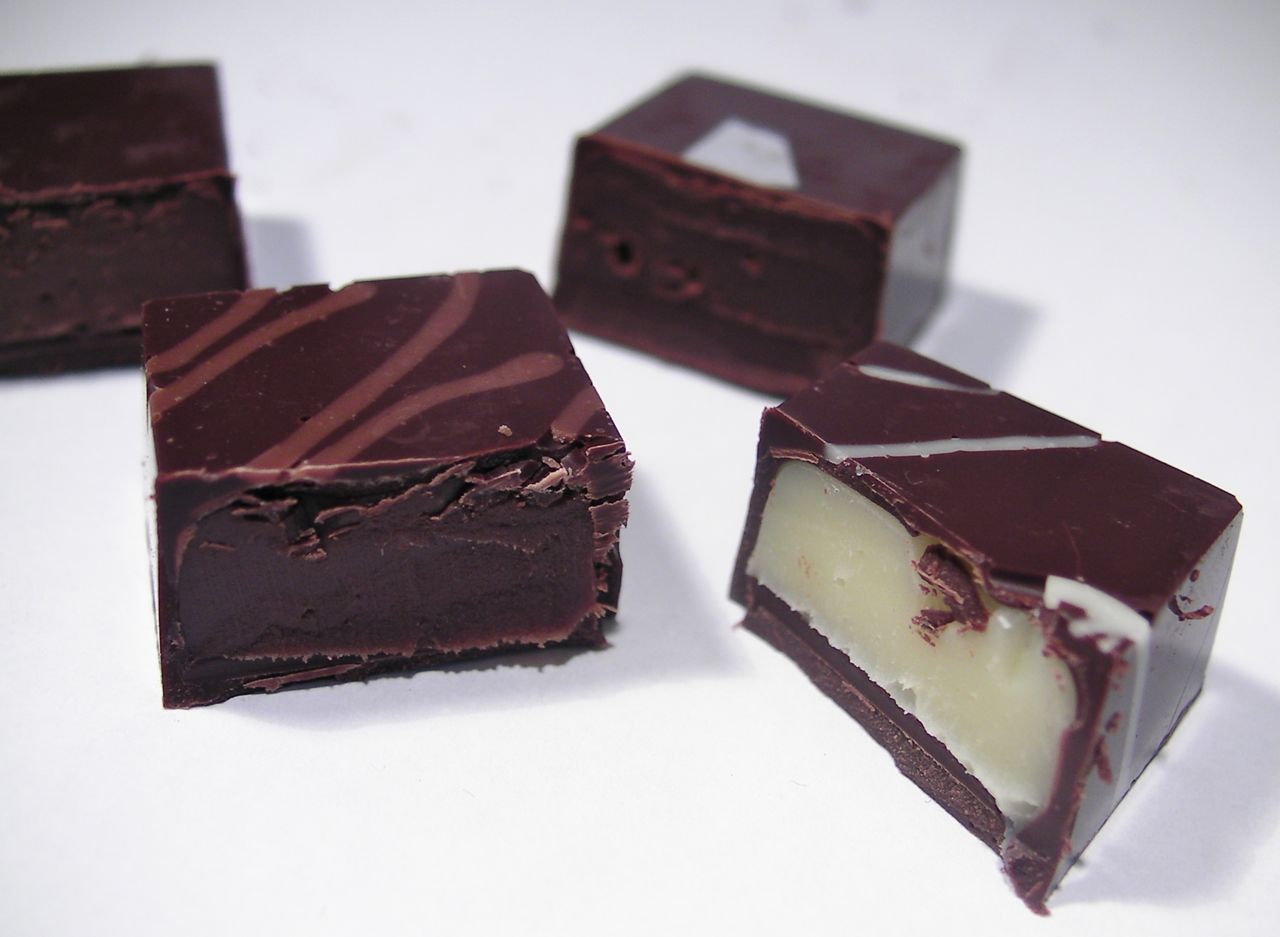
The nine moulded chocolates remind me of Paul Wayne Gregory’s chocolates. A uniform size and shape with simple decorations for each flavour.
But it’s the flavours themselves that are the most unusual thing about these chocolates. Made with wild, local, organic ingredients, Charlottle changes them constantly, depending on what’s in season. And in my box, I had Scots Pine, Larch, Wild Mint and Elderflower & Lemon.
I’m fairly certain I’ve never eaten larch flavour chocolates before.
The Elderflower and Lemon chocolate is quite down to earth though. It’s a very subtly fruity and flowery white chocolate ganache in 70% dark chocolate, and it’s really very pleasant. Nothing unusual or challenging here, just a nicely made chocolate.

The wild mint is kind of amazing. it’s the freshest, most natural mint flavour chocolate I’ve had in a long time. The dark ganache is perfectly smooth, but it’s so full of flavour, it’s almost like having fresh mint leaves in your mouth. I’m not the biggest fan of mint flavour chocolate, but I did enjoy this.
Next up was the Scots Pine. Perhaps surprisingly, this isn’t the first pine flavoured chocolate we’ve reviewed, as Simon looked at this ‘Christmas Tree’ flavour chocolate a couple of years ago.
The pine flavour is very noticeable, yet works well with the dark chocolate ganache. The flavour reminds me a little of the ION Mastic bar from Greece, but done in a much more subtle and elegant way.
Finally, we have that other tree-flavour, the Larch. Slightly more subtle than the Scots Pine flavour, and a little sweeter. There’s still a definite hint of ‘tree’, but I think this one may be my favourite of the bunch.
The chocolates are available to buy on the Charlotte Flower website for around £1 each, which is about the going rate for quality handmade chocolates like these. As the selection is changing constantly though, I recommend emailing or calling first to see what’s currently available.