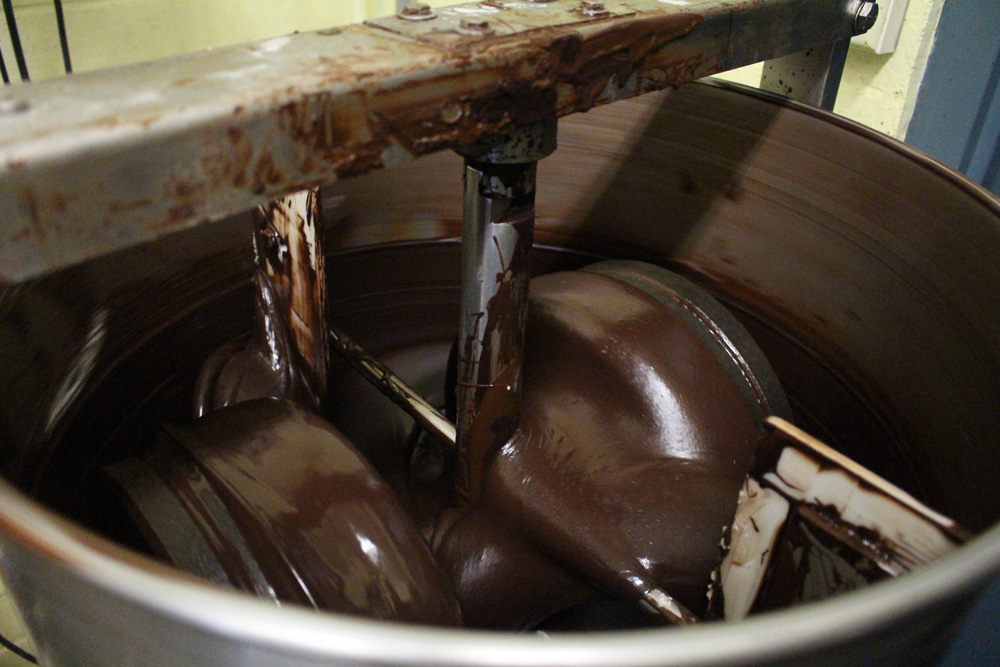
Hawaii may not seem like an obvious place to go looking for quality chocolate. With average daytime temperatures of 27.5C the chocolate is going to get a bit melty for a start.
But Hawaii is uniquely placed in the chocolate world. Connected to the bean-to-bar revolution happening on the US mainland, it’s the only US state with a climate suitable for growing cocoa. The result is a bean-to-bar chocolate industry that uses locally grown cocoa and hundreds of small cocoa farmers hoping to make a living from the crop.

But along with the opportunities come challenges. Hawaii’s location at a latitude of 21° North put it just outside the 20 degree band that is usually considered ideal for growing cocoa. The result is that rather than the usual two harvests per year, most Hawaiian farmers have a continual year-round crop, which they have to harvest every couple of weeks.

That may seem great, but in order to produce quality chocolate, the cocoa beans must be fermented as soon as they are harvested. And with small, regular crops throughout the year, getting enough beans together to ferment effectively can be almost impossible for a small farmer.
There are currently only around 100 acres in the whole of Hawaii dedicated to cocoa farming. US agricultural company Dole owns a quarter of that, with its Wailua Estate in the north of Oahu. The beans from that farm are exclusively processed by Guittard in San Francisco, meaning local chocolate makers only have the output of a maximum of 75 acres to play with.
But that cocoa ripens in small batches throughout the year, making it both difficult to process and particularly expensive. As a result, chocolate makers like Kailua’s Madre Chocolate end up having to import cocoa in order to produce their growing range of exciting chocolate bars.

These challenges are one of the reasons that Hawaii’s Kona Cacao Association set up the Big Island Chocolate Festival. As well as being a celebration of Hawaiian chocolate, it’s an opportunity for growers, chocolate makers and experts to come together and help overcome some of these issues.

This year, I was lucky enough to be invited to the festival. On my 9 day trip to Hawaii, I met chocolate makers and growers, visited factories and plantations and attended all the talks at the festival. I came away learning as much about chocolate production as I have done in years of writing about it and with a huge respect for everyone involved in the Hawaiian chocolate industry.
Over the next few weeks I’ll be sharing some of the stories of the people I met in a series of posts. I’ll be going behind the scenes at chocolate factories and cocoa farms, and sharing Hawaii’s unique cacao story.

My trip to Hawaii was the adventure of a lifetime, and I’m already planning a return visit. If you love chocolate and tropical sunshine, it should be at the top of your list of places to visit.
Without exception, everyone I spoke to was friendly, enthusiastic and happy to share their love of chocolate. It’s an adventure I can’t recommend highly enough.
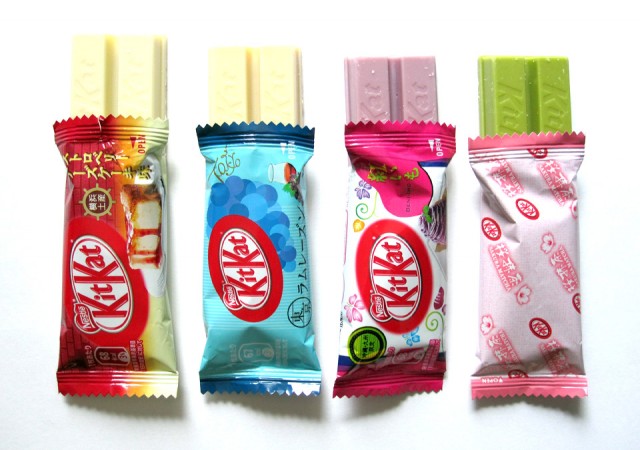
I’m really not sure at what point it became common knowledge that Japan has a thing for Kit Kats, but apparently it is. It seemed that whenever I mentioned to people that I was going to Japan, they asked me about the Kit Kats. Everybody wanted to know if I was bringing back all kinds of weird flavours of Kit Kats for them to sample. And, of course, I was.
In my head, I expected every single convenience store that I visited in Tokyo to have shelf upon shelf of Kit Kats, but that really isn’t the case. Usually you can find the standard milk chocolate variety and also Green Tea, but nothing terribly exotic – that takes a bit more work.
There is a special Kit Kat store, the Chocolatory, which opened at the beginning of 2014. Apparently it has some unique flavours only on sale at that one location, but I didn’t have enough time to search it out. Instead I relied on the souvenir stores which had a decent enough selection of more unusual varieties for curious tourists to purchase. By the time I was done, I had accrued seven different flavours: Strawberry Cheesecake, Rum Raisin, Sakura Matcha, Beni-Imo, Hojicha Roasted Tea, Wasabi and Hot Japanese Chili. Here’s my thoughts:
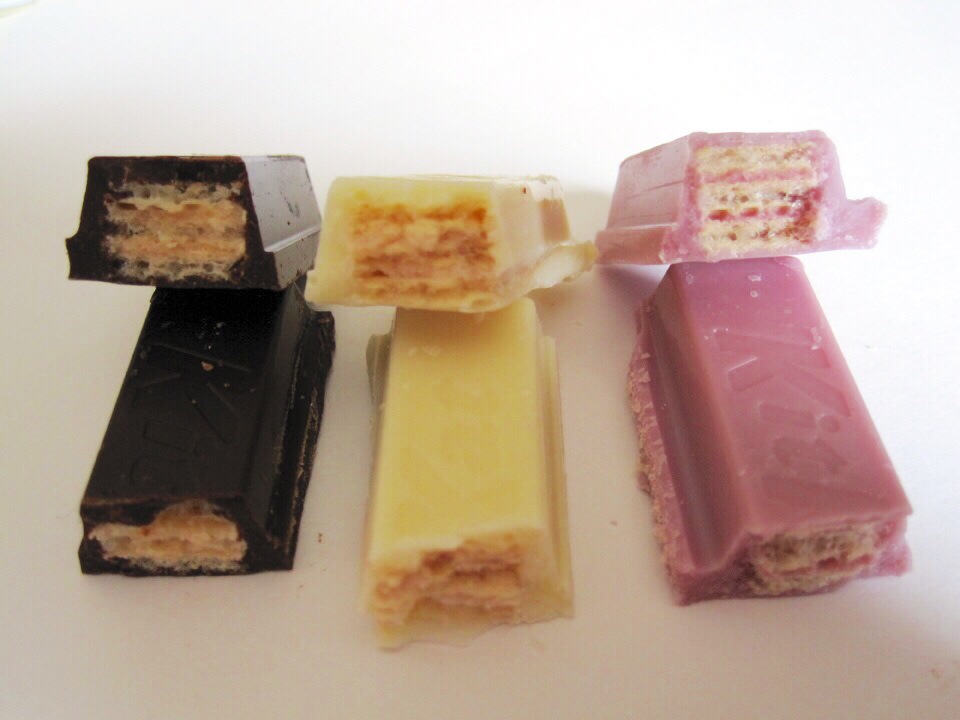
Strawberry Cheesecake, like almost all of these, is covered in flavoured white chocolate with some extra sandwiched between the wafers to make sure there’s no doubt what variety is being consumed. And this is definitely strawberry. That’s about all really. Pleasant enough.
Rum Raisin is a bit more interesting just because it takes me back to my childhood and being given tastes of my dad’s rum and raisin ice cream and being told that I could possibly get drunk as a result. I didn’t, and I didn’t here either. But it tastes good.
The Japanese love cherry blossoms – the Sakura – and who can blame them because when Spring arrives, the country is absolutely covered in them. So it isn’t a surprise that there’s a celebratory Kit Kat which mixes together green tea with a hint of cherry. Its fine if you like green tea because that’s the dominant flavour here. I’m not a huge fan.

Beni-Imo is a Japanese purple sweet potato, and it definitely wins the prize for being the prettiest Kit Kat here. It has more than a touch of fruitiness to it, and most people would find it hard to identify it as being sweet potato. More interesting than tasty.
Hojicha Roasted Tea is the most surprising in the bunch because it completely lacks subtlety. It tastes of the strongest cup of tea you’ve ever had in your life with another layer of flavour because of the roasted element. And better still, the filling in the wafers gives just a touch of creaminess which adds the right amount of smoothness. Surprisingly good.

Wasabi Kit Kats are just plain weird. There’s absolutely no mistaking the familiar scent of wasabi once the foil wrapper was opened. But the taste is where the real weirdness begins because it changes from sweet to savoury again and again. There’s no real heat but there’s still lots of wasabi flavour. It really has to be tasted to be believed, but it isn’t something I need to ever eat again. Ever.
The King of the Japanese Kit Kats, however, is Hot Japanese Chili. First of all, it is the only one here which is covered in dark chocolate making it more like your usual run of the mill Kit Kat. But hidden within is some rather spicy hotness that makes it all worthwhile. It takes a while to really get going but when it does, it gets surprisingly fierce and sticks around at the back of your throat for a while. If only all Kit Kats were this delicious…

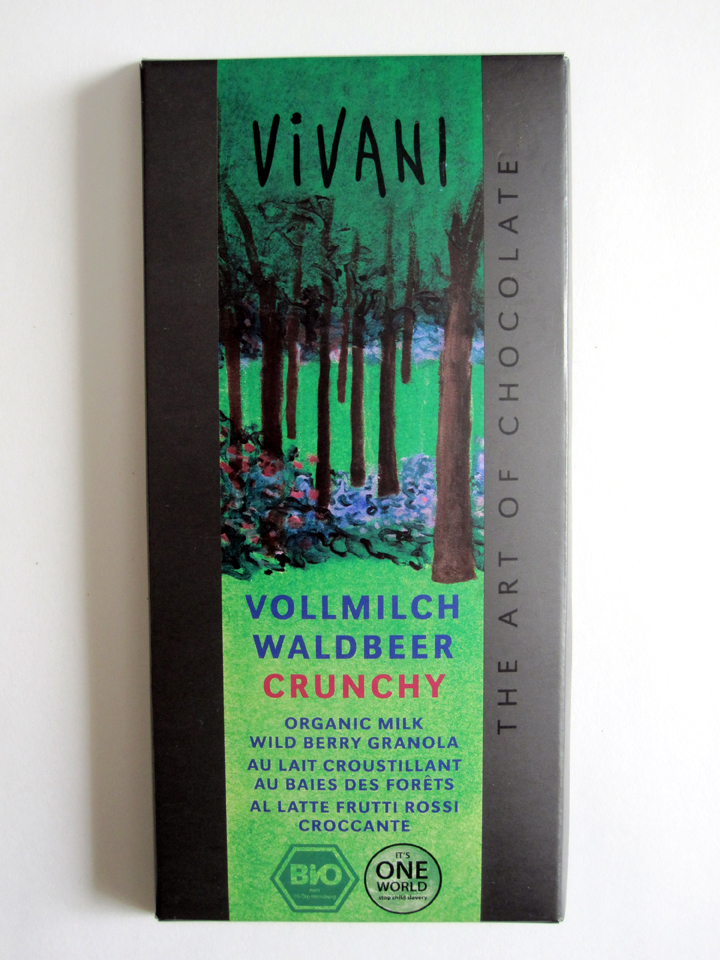
For some reason, there’s absolutely no shortage of Vivani bars in Eastern Canada. The German company is well represented in quite a few local shops and I’ve happily eaten them too. But I’d never seen this particular bar until recently so it naturally caught my eye.
I’m very happy that the people at Vivani didn’t go with any of those dubious health claims for their Vollmilch Waldbeer Crunchy bar. After all, just adding some granola to a bar of chocolate isn’t going to turn it into some kind of superfood. But that’s basically what this is – 33% organic milk chocolate with wild berry granola mixed through it. 33% leaves a lot of room for the raw cane sugar, the first item on the ingredient list, and that translates into a rather sweet bar of chocolate. Those who like theirs dark and rich should stay away.

I’m not quite sure why I was surprised that this tasted so much of granola, but I was. The little clusters of oat flakes really dominate, with the blueberries and raspberries charging to the front of the pack too. But what I wasn’t ready for was the texture. Adding all that stuff to the chocolate makes for a very cluttered bar, plus it goes beyond the ‘Crunchy’ that’s promised on the box. By the end of each square, there’s a grittiness left behind just like when eating a big bowl of granola. And I really, really didn’t like that at all.
Funnily enough, as I was checking back into the Chocablog archives to see if there were any other mixes of chocolate and granola – there was one, but more interestingly in the comments section there was the suggestion of simply mixing a bunch of fruit, nuts and other granola-esque items into some melted chocolate. And that would probably address most of the issues that this bar had. But ultimately, I’m much happier keeping my chocolate and granola as separate entities.
We’d like to wish a Happy Easter to all our readers! We hope you received (and shared) some suitably amazing chocolate eggs and bunnies!
We thought we’d share this short video we found from the recently released British Pathé archive. It’s a fascinating glimpse into how Easter Eggs were made in 1931. The clip shows roasting, melanging and roll refining of cocoa beans, followed by the hand decoration of the eggs themselves.
We thought it would be interesting to compare it to our own trip to Thorntons a few years ago where we saw Easter Eggs and bunnies being made, amongst other sweet treats.
The obvious difference is that the older video shows chocolate being made from the bean, something Thortnons don’t do (all their chocolate is bought in from other manufacturers). That aside, not much has changed in 83 years!