This little brownie was part of my goody bag at the recent Divine Chocolate cocktail evening in Marylebone. As you might expect, it’s using Divine chocolate (their 85% dark chocolate and their milk chocolate), along with lots of organic goodness.
I can’t say I’d ever heard of Blue Basil Brownies before, but they seem similar in size and style to my current favourite brownie from Brownie Points. These have an added bit of decoration on the top in the form of some nice swirls of Divine chocolate.
Texture-wise, they’re quite similar too. They’re quite dense, but moist and light enough that it’s just a little too easy to eat the whole thing in one go. Once again, they’re similar to the Brownie Points brownies in that respect.
The flavour is good and chocolatey, and the Divine chocolate works really well. I’m not the world’s biggest fan of the African beans that Divine use, but for the purposes of brownie making, it works really well.
Having said that, I’d have to just give the edge to the Brownie Points brownie over Blue Basil. They flavour is just that little bit richer and the presentation a touch more stylish. But I still thoroughly enjoyed my Blue Basil brownie and would happily recommend them.
Time for more of Rococo’s beautiful new packaging, inspired by the Moorish tiles in their “secret” Moroccan garden in Motcomb Street. I wouldn’t be surprised if some of the flavours come from there too, although I’m not entirely sure that limes grow naturally in Belgravia.
There are many wonderful flavours in the Rococo range, but I chose this one as I’ve definitely never had basil and lime together before.
The look of the bar is the same as the Moroccan Mint bar I reviewed last month. It’s the same 65% Grenada dark chocolate, with the same design beautiful glossy finish.
This bar uses basil essential oil rather than dried leaves like the mint bar did, so you don’t end up with a small pile of herbs in your mouth after the chocolate has melted this time. The use of essential oil means basil flavour is quite strong, but never dominates the chocolate.
The lime is quite subtle though, and although the flavour has a certain freshness to it, at times it’s almost imperceptible. But I do like lime, so maybe I’m just wishing for a stronger flavour that wouldn’t really work with this chocolate.
I love the fact that the flavours vary subtly as you eat them. Sometimes you pick up a beautiful sweet, freshness, sometimes you get more of the basil or liquorice like flavours with a slightly warm pepperiness at the end. It’s that variation that keeps me coming back for just another little chunk.
This isn’t a bar to rush. It’s probably better suited for long summer days with a cool drink. But Chocolate Week is as good a time as any to enjoy it.
Marmite and chocolate. The perfect combination.
At least it was when top chocolatier Paul A. Young created his Marmite Truffles a couple of years ago. And it was even better when he created an amazing Marmite XO bar last year.
But now it seems the powers that be have caught on, and Marmite have come out with an official chocolate bar. I’m in two minds about this. While they’ve clearly copied Paul’s idea, it does make me happy that someone up there in Unileverland is actually paying attention.
But can Marmite possibly work with a mass produced milk chocolate? And how does it compare to the original.
There’s only one thing for it… Marmite Fight!
Paul A. Young was kind enough to donate one of his own bars for little face-off, and straight off, the most obvious difference is size. The official bar gives you 100g, whereas Paul’s bar is just 50g.
But size isn’t everything…
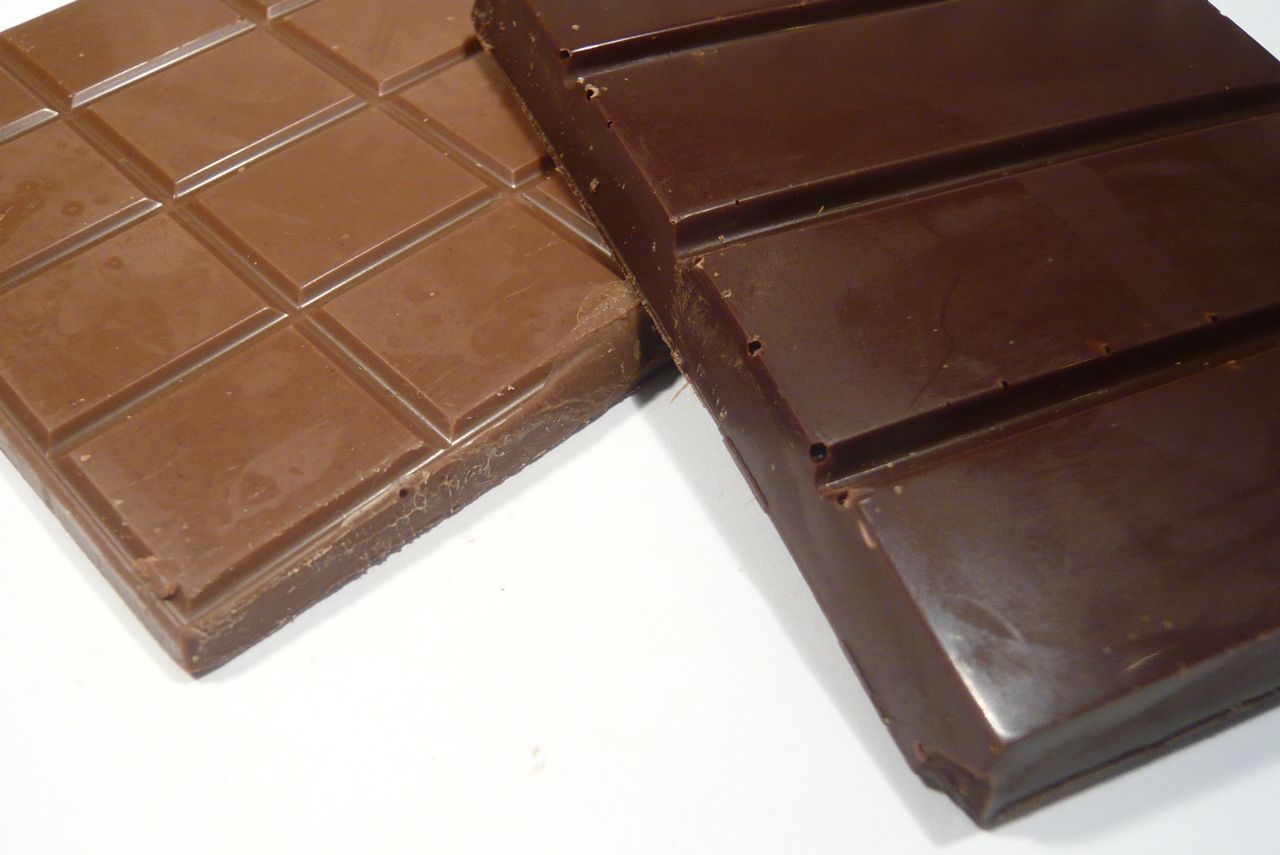
The official bar looks a rather sickly colour in comparison to the rich, dark red 64% Madagascan dark chocolate that Paul uses. But the 31% milk chocolate of the official version is by no means the worst chocolate we’ve ever seen.
But when the Marmite on Marmite action begins, the differences become clear.
Break off a chunk of Paul’s bar, and the Marmite XO immediately starts to ooze out. You can see, smell and taste that it’s real Marmite. The official version just looks like any regular milk chocolate.
A glance at the ingredients reveals “Marmite Flavouring” which includes onion and garlic powder as well as yeast extract. Although it has some of ingredients in common with Marmite, I don’t think it’s actually real Marmite.
I would imagine that’s a manufacturing decision – try to recreate the flavour, but keep it as cheap and easy to make as possible.
Paul has taken exactly the opposite approach. His bar is simply the best quality dark chocolate and Marmite XO straight from the jar.
But taste is the most important thing. To get some feedback from other people, I took the official bar to a cocktail evening and gave people a chunk to try. Quite surprisingly, there weren’t any particularly negative comments. People noted that it smelled like Marmite, but didn’t quite taste like Marmite.
That’s something I agree with. There is a certain Marmiteyness there, but it’s quite subtle, with the flavour seeming to come from small crystals, rather than being evenly distributed in the chocolate. The saltiness does enhance the flavour of the (slightly too sweet) milk chocolate, and it’s actually quite pleasant.
And that’s the problem. Everyone that tried it thought it was ‘quite pleasant’ as well. This is a toned down, mass market take on Paul’s love it or hate it bar. And that’s just not Marmite. They’ve taken the safe route and ended up with something a bit bland.
Yet when I try Paul A. Young’s version, it still makes me giggle. The flavours are so weird that it just shouldn’t work, but for me it does. I know a couple of chocolate lovers who hate it, but personally, I just love it. It is in fact, still the only real Marmite chocolate bar you can buy.
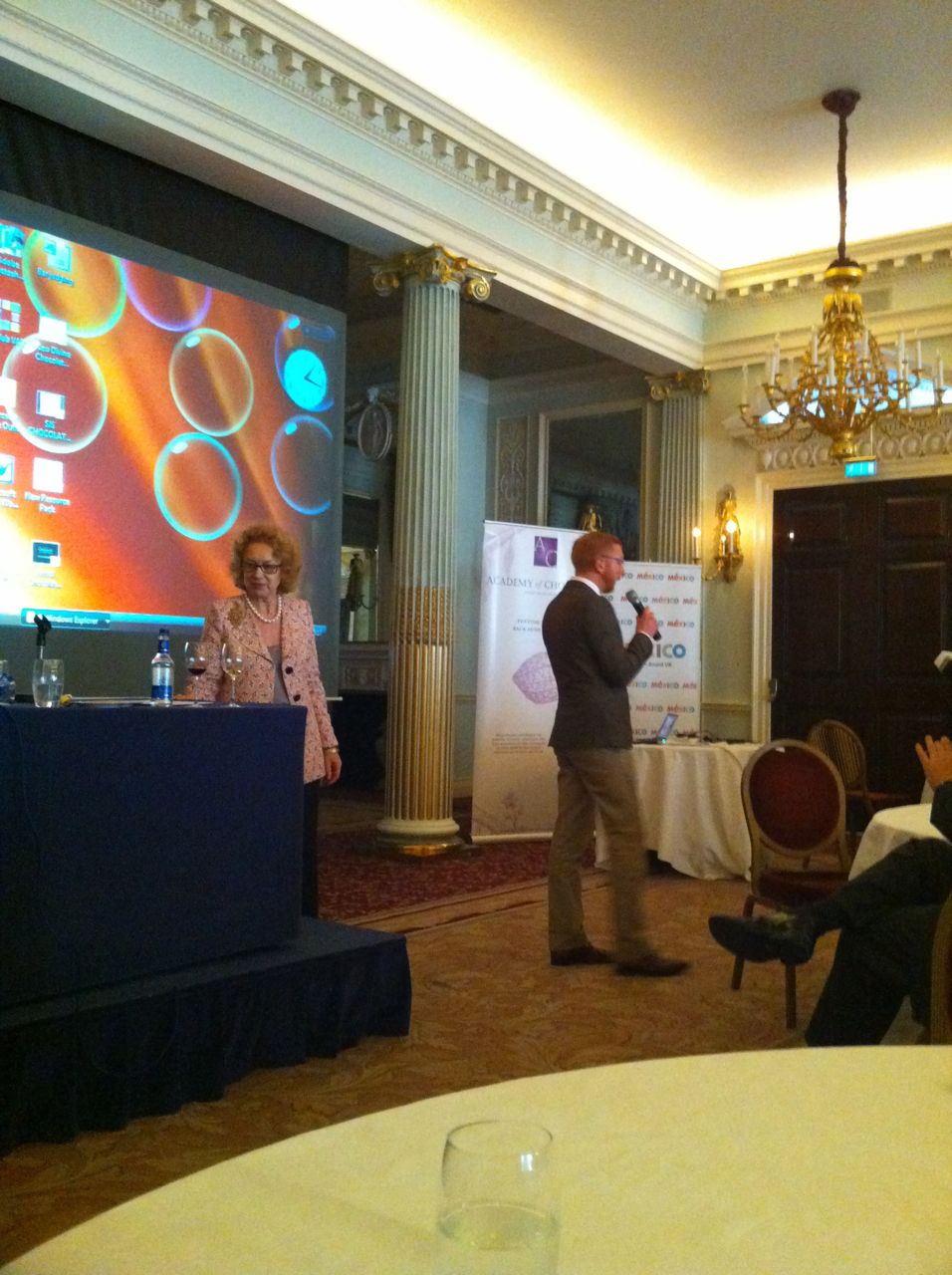
Last Friday, I was lucky enough to be invited to the Academy of Chocolate conference at the Royal Automobile Club in Pall Mall.
The event was a gathering of the great and good from throughout the chocolate industry, with representatives from the largest chocolate companies, right down to the smallest chocolate shops, all keen to find out what’s new in the industry.
The day started with a talk from Craig Sams, co-founder of Green & Black’s. Craig talked about his background in macrobiotics, and the journey that eventually led him to produce the product in the world to carry the Fairtrade mark, Maya Gold. His presentation was fascinating, and covered many of the ethical and scientific issues that went into building Green & Black’s.
After Craig’s presentation, Tony Lass gave an interesting insight into commodities markets, how they work and why they’re necessary. I wasn’t entirely convinced by this, but it was interesting to hear how the cocoa supply chain is organised, and why traceability is so complicated.
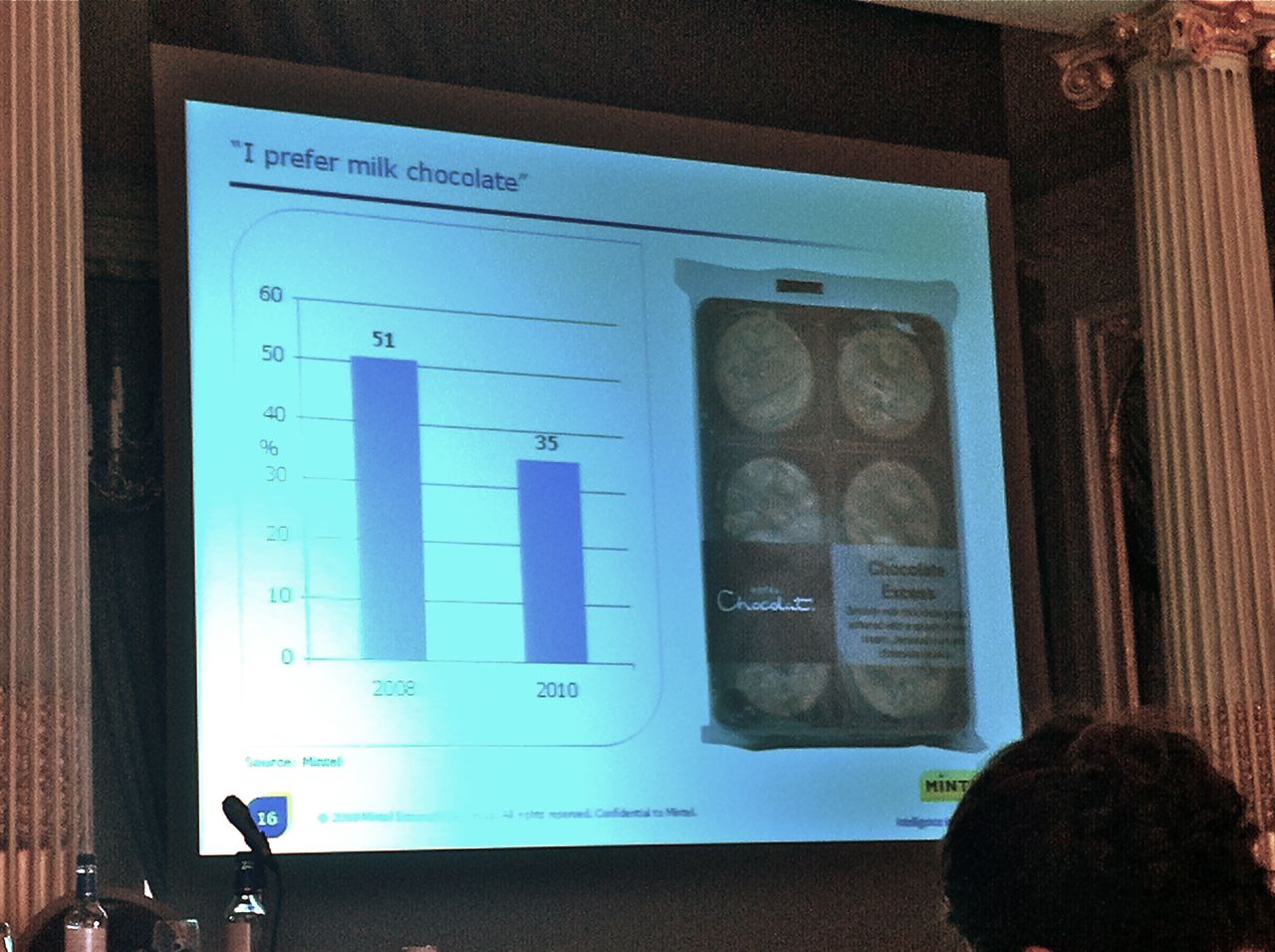
This was followed by a presentation from Richard Perks of Mintel was gave some rather gloomy predictions about the state of the economy, interspersed with many interesting facts about the chocolate industry. Did you know, for instance, that when given the statement “I prefere milk chocolate (to dark chocolate)”, only 35% of people surveyed said yes, as opposed to 51% two years ago.
More people liking dark chocolate can only be good news!
The final presentations of the morning were about sustainability, including a very interesting history of Divine Chocolate from their MD Sophi Tranchell MBE. I found the story of Divine, and how the farmers own 45% of the company exciting, and a little at odds with what was said about commodities markets being “necessary” earlier in the day.
After lunch, there was a great demonstration from William Curley, talks from William, Paul A. Young, and Hotel Chocolat’s co-founder Angus Thirlwell amongst others. All in all, it was a great event, and something that I felt privileged to have been allowed to attend.
I left feeling excited at the state of the UK chocolate industry, but also a little concerned by the plight of the farmers around the world who are absolutely essential to producing chocolate we all love.
There’s one fact from Sophi’s presentation that stayed with me after the event: In Ghana, the average age of the cocoa farmer is over 60. Life expectancy is 56.