The World Chocolate Masters is a curious event. If you’ve never heard of it, it can best be described as a kind of “Chocolate Olympics”. Every two years, top chocolatiers from around the world gather for three days of intense chocolate making competition.
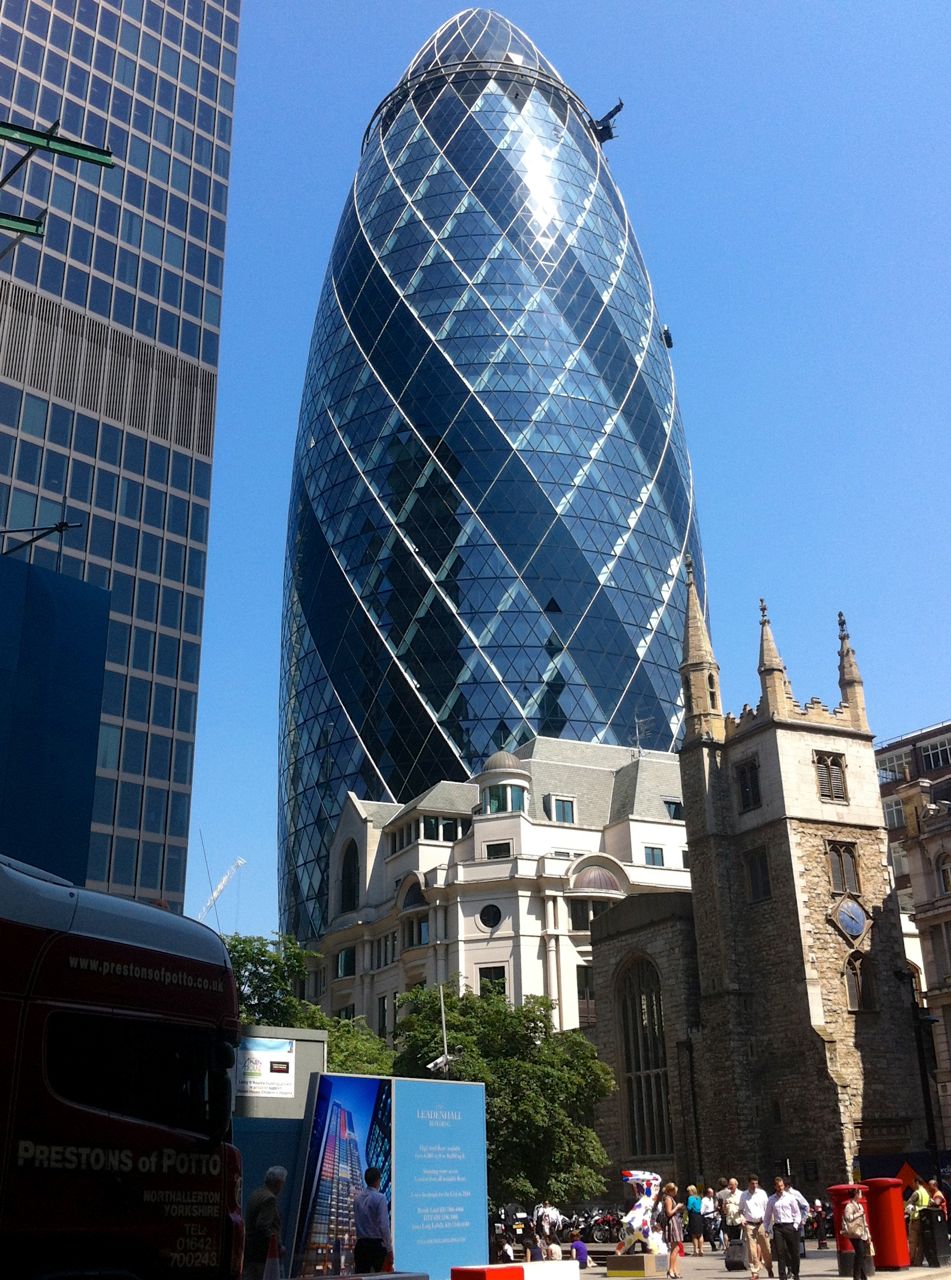
The next World Chocolate Masters finals take place in 2013 at Salon du Chocolat in Paris, but the preliminary rounds are already well under way, with countries around the world selecting their representatives. The UK event takes place in September at the Speciality & Fine Food Fair at Olympia and last week, sponsors Callebaut held a launch event at London’s famous ‘Gherkin’ building.

Architecture & Taste
The theme of for this year’s competition is ‘the architecture of taste’, which goes some way to explaining why we found ourselves at the top of one of London’s most distintive buildings talking about chocolate.
How does architecture relate to chocolate? Well a major part of the World Chocolate Masters competition is devoted to the creation of ‘showpiece’ sculptures which are often architectural in themselves. We were lucky enough to be in Paris for last year’s finals and had the chance to see some of the finalists’ artworks first hand. It’s hard to believe that works like this are made entirely of chocolate.

Of course, being a World Chocolate Master isn’t just about making stunning chocolate showpieces. On day two of the competition, competitors have to make pralines, pastries and desserts, and on the final day, they have to come up with a ‘revisited classic’ – their own interpretation of a classic chocolate creation.

That shouldn’t be too much of a stretch for one of the UK finalists, Alastair Birt. He’s head chocolatier at William Curley where they’re quite well known for their interpretations of retro classics.
We also had the chance to meet two of the other finalists, Conor McAlonan of Liberty Boy Confections and Ruth Hinks, owner of CocoaBlack. They’ll be competing with Simon Woods, patisserie lecturer at Westminster Kingsway College and Richie Heppell, head chef at the Royal Air Force Officers Mess at RAF Leuchars.
All the finalists were relaxed about the prospect of three intense days of chocolate competition, but admitted that the creation of the showpiece was the most stressful part. Not only will they have to come up with a uniquely creative sculpture that fits the ‘architecture’ theme, but they have to make sure it stays in one piece long enough to be judged. In the heat of a competition kitchen, the showpieces are often the first casualties.
Callebaut
It’s fair to say that sponsors Callebaut have a mixed reputation in the chocolate industry. They are after all, the world’s largest chocolate manufacturer, and at Chocablog we’re much more comfortable telling you about the small artisan chocolate producers. It’s these tiny companies working with individual cocoa farmers who are driving current trends in the chocolate industry.
Callebaut were keen to talk about their own commitment to making all their chocolate sustainable, but I’m still not sure that such a large company can have the one-on-one relationship with farmers that helps make some of the small artisan bean-to-bar chocolate the best in the world.
The chocolate market is evolving rapidly and supporting events like the World Chocolate Masters is a way for Callebaut to keep up with current trends. They even showed a video of what they think the top five chocolate trends are at the moment and sustainability played a big part. I do hope they can commit to this. It’s a really exciting time to be involved in the world of chocolate, but that might not be how the average African cocoa farmer feels when they see little, if any, of the profits.
The World Chocolate Masters is a great way to showcase the most talented chocolatiers in the world, but all chocolate lovers need to be celebrating and supporting the people who actually grow the stuff a lot more. That said, there’s probably no company better placed to start making that difference than Callebaut.
I’m really looking forward to seeing the UK finals at the Speciality & Fine Food Fair next month and can’t wait to see what they come up with for their architectural chocolate showpieces. An the subject of architecture, if you’re ever lucky enough to be invited to the top of The Gherkin, don’t miss it. The views of London are spectacular – and the window cleaners are daredevils…


Time once again for another bar from our favourite Lithuanian bean-to-bar chocolate makers, Naive. We’ve reviewed several of their bars before and loved them all.
We particularly like the format of the Naive bars. They’re a fairly standard 70g, but the chocolate is very thin, making the bar wider and taller than the average bar. They’re simply packaged in foil and matte paper, with lots of information and a little story on the front. It’s amazing how simple, recyclable packaging can add an air of quality to a bar of chocolate.

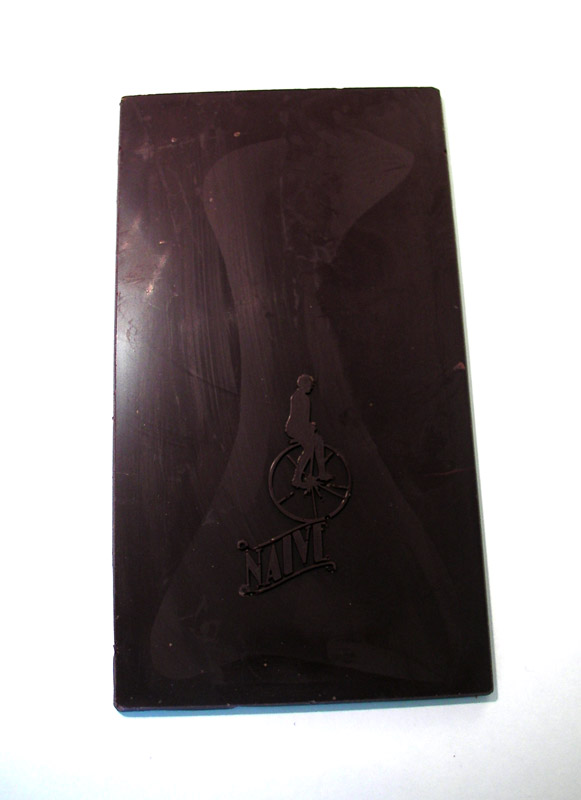
The chocolate itself is as glossy as the other Naive bars, save a few marks from the moulding. It’s completely plain apart from the Naive logo embossed toward the bottom. Again, it’s the simplicity that makes this feel like a quality product.

There are no chunks on the bar, but being so thin it’s very easy to break off any size piece you like. The thinness helps it to melt quickly on the tongue, releasing a burst of flavour.

I find it interesting comparing this bar to the Gru Grococo single estate Grenadan bar reviewed last month. It has many of the same flavour notes, but they’re nowhere near as intense or refined. There’s a subtle fruitiness and creaminess to the flavour, and the texture is nowhere near as smooth. At under £6, it is about half the price of the Grococo bar though.
This is a delicious bar of chocolate, and one that’s certainly worth trying, but it’s not quite up there with the best of what’s coming out of Grenada at the moment and I don’t think it’s the best that Naive have to offer.

While I’m not exactly a world traveller, I do find myself on occasion having to go to various Canadian and American cities as part of my job, usually for conferences. And when I do, I try to find some unfamiliar local chocolate just to liven up my mundane life. So when I was recently in Ottawa, I headed down to the Byward Market to see what I could dig up.

It was actually a bit on the disappointing side, but that was probably my fault. I didn’t really do much planning ahead so I was just stumbling around blindly hoping to discover an incredible chocolate cache around the next corner. And I didn’t. But eventually I found a little deli with an overcrowded shelf of familiar bars and hidden amongst them was exactly what I was looking for.
Rochef Chocolatier are actually located in Gatineau, Quebec which is just on the other side of the Ottawa river and I must admit that I had never heard of them before. But the combination of 70% chocolate with maple sugar sounded good to me. And it looked good too – I like to see what’s inside and that’s what made me pick this one up.

The chocolate itself is Belgian and very rich thanks to a generous amount of cocoa butter. It tastes more like a 60% and doesn’t have the depth of flavour in terms of the chocolate that I was hoping for. Not a big deal – it just impacts speed of consumption and this was one of those bars which was very easy to munch my way through. Plus I was more interested in that maple sugar which couldn’t have competed with anything too robust. It added some nice crunch to the bar, and inevitable sweetness which plays well with the smooth chocolate. And really, maple is always a good addition to darker chocolate.

All in all, a good bar of Canadian chocolate even if wasn’t a spectacular one. The rest of the Rochef range has some other interesting bits and pieces, so they are now on my list of Canadian companies to keep an eye out for. And next time I head to Ottawa, I do my homework first.

It was while doing a little background research into this product that I learned two things. One, Itsu was started by the people that started Pret A Manger. Two, Itsu is (at present) mainly a ‘London Thing’, although their snacking range (of which this is just a small part) are more widely available in branches of Waitrose & Sainsbury’s, Moto service stations, and some cinemas.
So, for those that don’t know, Itsu is a chain of fast Japanese food style restaurants which served the usual assortment of Bento boxes, Sushi and noodle dishes. This little box of chocolate coated edamame (Soy beans to you & me) is part of their foray into the snack/sweet market. The chocolate is 35% cocoa but also worryingly contains ‘vegetable fats in addition to cocoa butter’. The packaging is simple enough – a flip top cardboard box and a sellophane bag to keep the beans fresh.

I’ll be frank about the chooclate – it’s okay. Not awful by any means, particularly as it boasts a reasonably healthy 35% cocoa solids, but obviously not high-end. It’s definitely not too sweet, which means I found it quite tolerable, and it does work remarkably well with slightly salty edamame. These little nuggets put me in mind of chocolate coated peanuts, but without the disappointment of having to chew your way through a load of peanuts once the chocolate has all gone. The edamame are very tasty and devilishly moreish. They’re crisp, light, and pack a far more interesting flavour than boring old peanuts (I was never a fan) and if the packaging is to be believed, provide a good source of fibre and ‘may help lower cholesterol’.
Personally, I would definitely buy these again, not so much for the quality of the chocolate but more because of the lovely way the edamame combine with the chocolate. It’s a rich, semi-sweet, nutty, earthy combination with a hint of saltiness to cut through the chocolate. In fact, truth be told – I’d quite like William Curley to do a ‘posh’ version of these (and to send me a lifetime supply for suggesting such a thing).
Definitely recommended.