Today’s our fifth birthday. We’ve spent the last five years writing delicious nonsense, and we’re looking forward to the next five! But we’re too busy celebrating to write a proper review, so here’s some Comic Relief Rice Krispie Squares instead.
We’ve already reviewed Kellogg’s Totally Chocolatey Rice Krispie Squares, and these are practically the same.
Kellogg’s, however, insisted we tell you that they have this limited edition Red Nose Day version out, with “edible red noses”. I said I’d be happy to write about them, but obviously… I’d need samples.
So yeah. This is what they look like.
And they taste exactly the same as the non-red-nose versions. They’re just as chocolatey and chewy as before. They’re a sweet and sticky snack rather than proper chocolate (or indeed a proper breakfast), but they’re still kind of tasty. The noses are apparently just coloured cereal balls. The only other difference is that 3p from every bar goes to Comic Relief, and Kellogg’s plan to raise £500,000 by selling them.
And that’s pretty much all there is to say about them. You’ll find them in all good supermarkets between now and Red Nose Day on March 18th.
Black is perhaps not the most common choice of color for wrapping a chocolate bar, though I do rather like it. It gives a masculine style not always found in chocolate. (The gloss of this particular package, however, I could do without.)
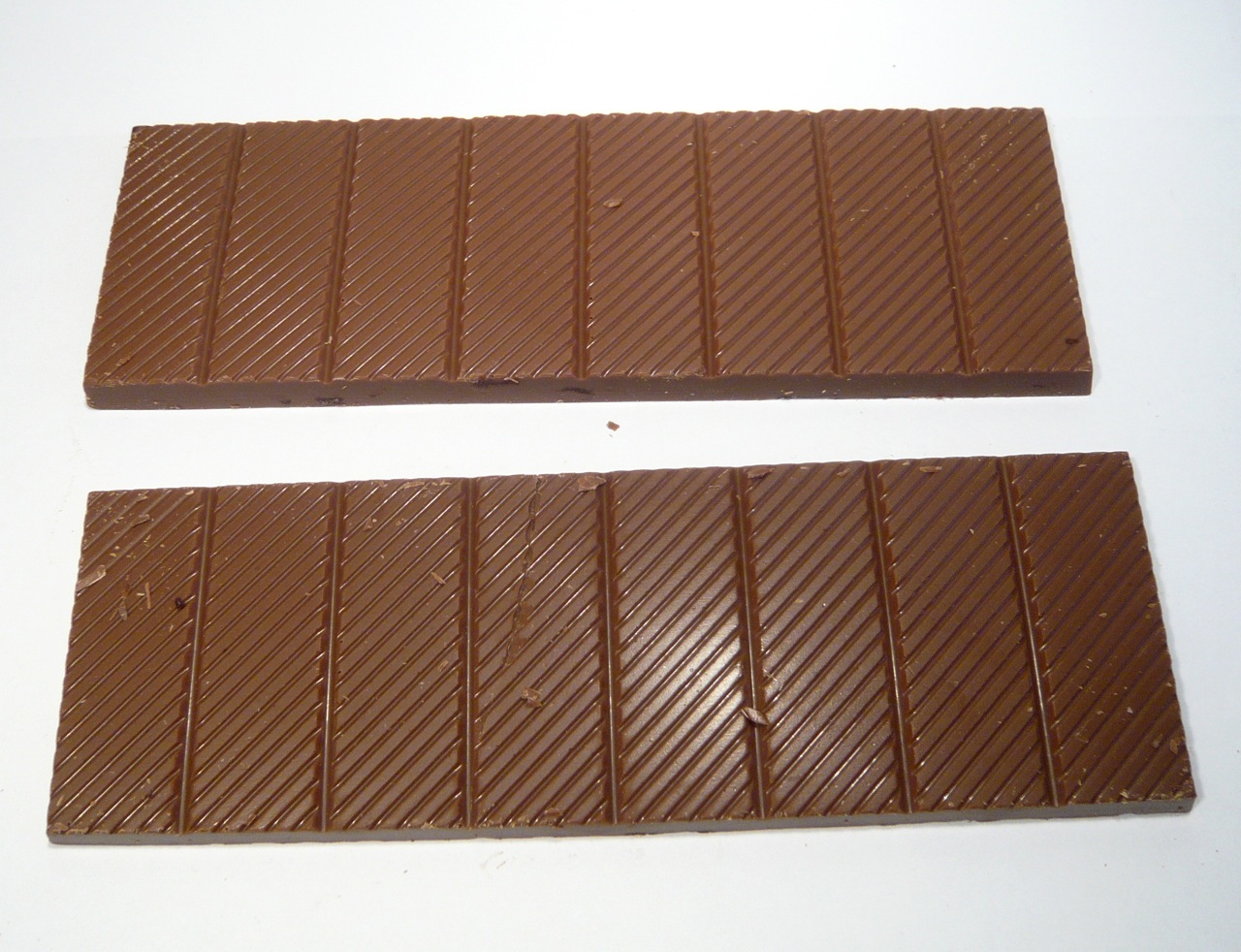
The other point of interest about this bar is that it contains both milk and dark chocolate (hence the name “Black and Tan”). Rather than being mixed together (which would spoil the individual light and dark colors), the dark was poured into the mold first, followed by a layer of milk.
The top side, then, is tan with a couple of tan spots, and the bottom is tan with some black swirls around the sides. Out of the two, the milk chocolate wins the match. There is more of it, and its flavor has more prominence. Not that the dark chocolate was probably of a very hefty cocoa percentage to begin with.
For Astor Chocolate, it seems, is not the maker of sleek, luxurious, deeply-serious chocolate that can wear no other color than black. They make the novelty, gift-giving sort of products such as chocolate gift cards. This chocolate is fitting for such a company: the dark chocolate gives an edge to the widely-accepted milk chocolate. It reminds me of a dark pudding as it melts away in my mouth: enjoyable for now, not much to remember later.
Say hello to yet another in the (seemingly endless) line of Thornton’s slabs. Honestly, I’m beginning to think there are as many Thornton’s slabs as there are Japanese KitKats, and that really is saying something.
This one uses 37% Ecuadorean cocoa milk chocolate and organic dried banana. The majority of the ingredients are either fairly traded, organic, or (in the case of the sugar, cocoa, cocoa butter, sugar and banana – both). Full marks all round for ingredients, as ever.
I’ve reviewed a handful of banana/chocolate combinations for Chocablog, and have always seemed to preface these reviews with a few lines expressing my opinion that this is a difficult combination to get right. Of course, this is just my opinion, and I’m sure there are many of you who enjoy banana and chocolate in all of its many variations, and if you do you’re very likely to enjoy this.
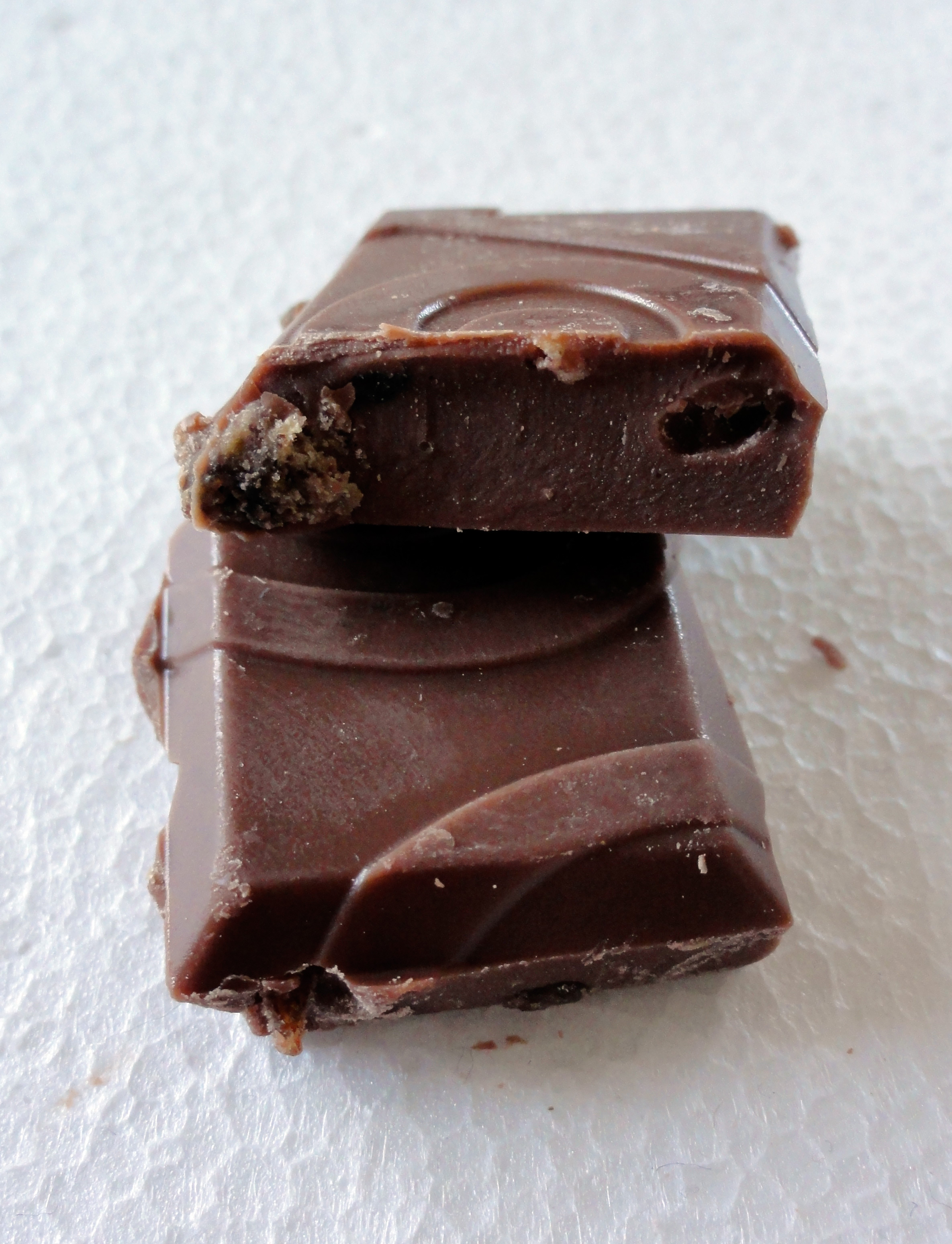
Each piece of this slab is packed with tiny pieces of dried banana. The good news is that it isn’t the brittle dried banana you might find in a wholefood shop. The bad news (for me at least) is that it tends to overwhelm most of the flavour of the chocolate which, when you consider that Thornton’s have gone to the trouble of selecting good quality cocoa from Ecuador, seems a bit pointless.
The banana makes up only 14% of the overall weight of this slab, but that’s quite a large percentage – remember that most salted chocolate contains only 1% salt or thereabouts. Once the chocolate has melted away you’re left with a fairly hefty amount of soft, chewy banana to chew on. The banana itself isn’t all that bad. It certainly dosn’t have that overpowering, sightly fermented taste that some banana confectionery seems to have. It’s just that this chocolate bar with banana is more banana than chocolate.
Given my wariness around banana chocolate (and my slightly negative opinion) I thought I’d offer it round a few friends and see what they thought. I’m afraid their reactions were very similar to my own, which did little for the chocolate but made me feel better about the way I felt when I first tried it. If you love banana and quite like chocolate, this is the bar for you. If you’re more interested in the taste of chocolate, I’d give this one a miss. As fruit and chocolate combinations go, it’s not the best thing I’ve tried. Not by a long
shot.
It’s Fairtrade Fortnight and the nice people at the Fairtrade Foundation were good enough to send some samples of Fairtrade chocolate that we hadn’t seen before, so look out for more over the next couple of weeks.
Jme, if you weren’t aware (I wasn’t) is part of Jamie Oliver’s ever growing empire, although thankfully the packaging doesn’t have the words “Jamie” or “Oliver” on it anywhere.
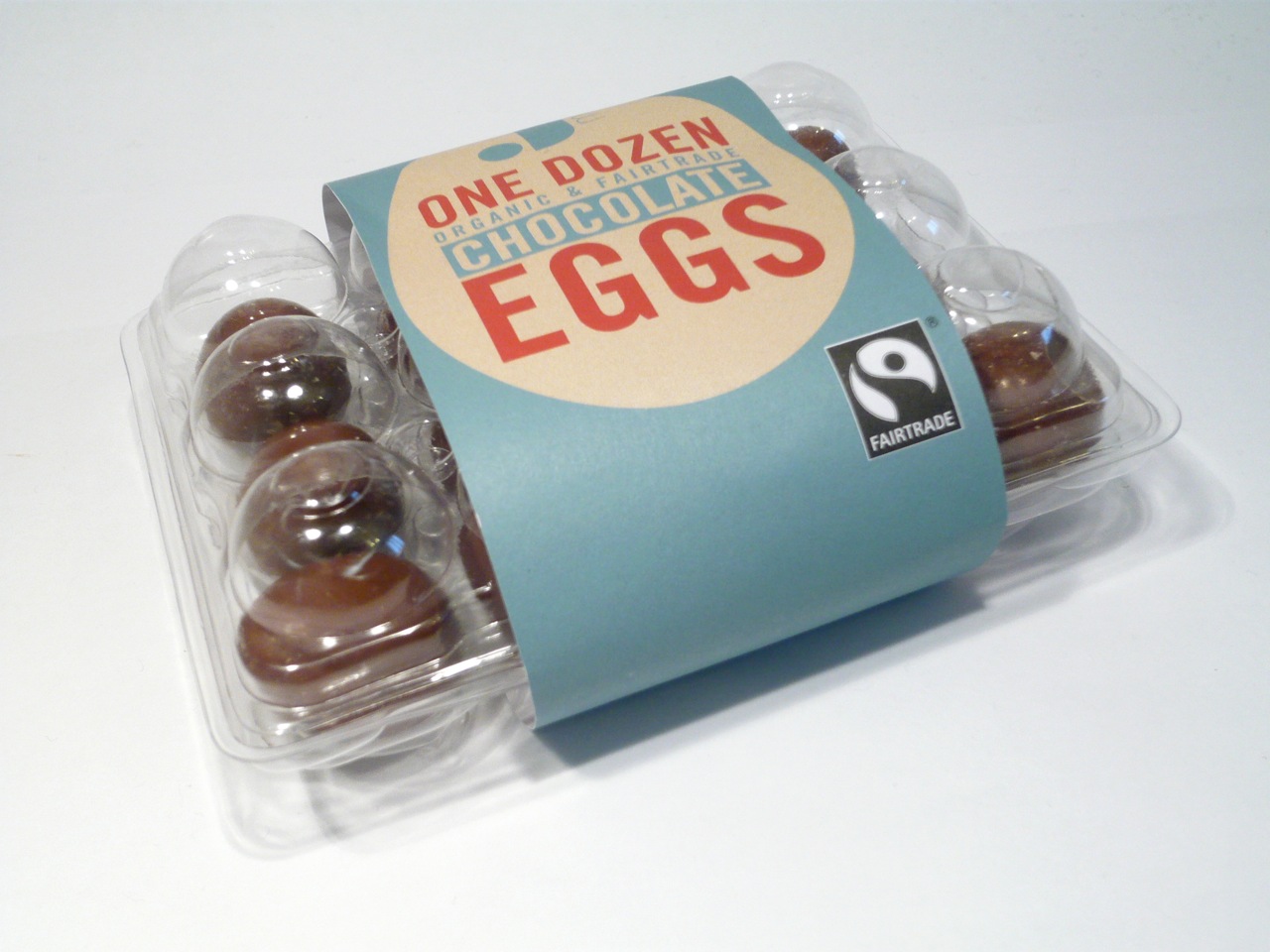
We were sent a 100g carton of mini chocolate eggs and two milk chocolate bars.
All the packaging here is quite cute. It’s simple but eye-catching, although in the case of the eggs, the red-on-blue writing makes the ingredients list almost impossible to read. I did manage to work out that the milk chocolate is a healthy 37% cocoa solids, it’s certified organic, and 78% of the ingredients by weight meet Fairtrade standards.
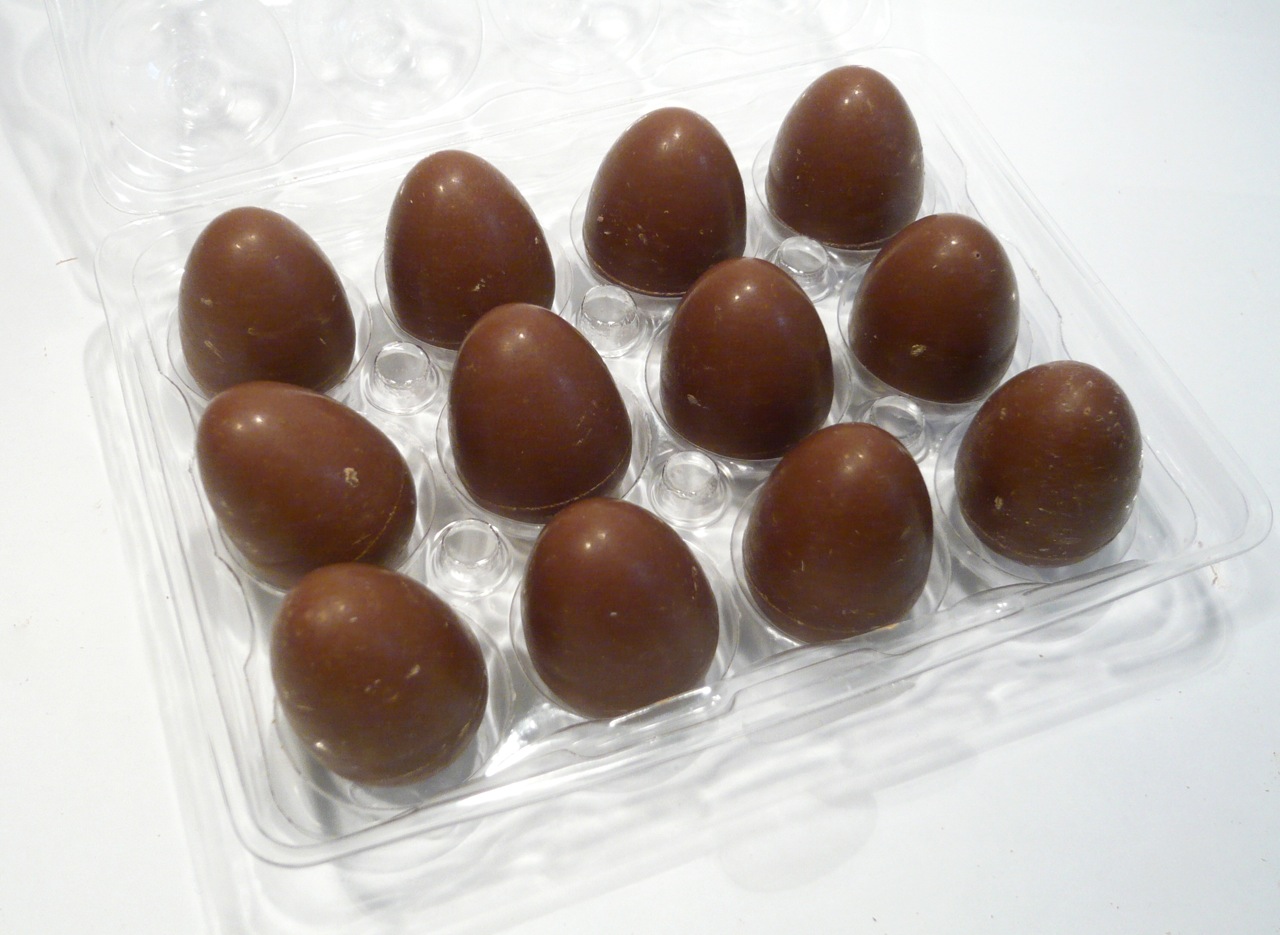
The actual eggs are nice enough, but a little uninspiring. They’re simply solid milk chocolate. It’s a very passable milk chocolate, but it’s by no means the greatest I’ve ever tasted.
Next up, the two milk chocolate bars.
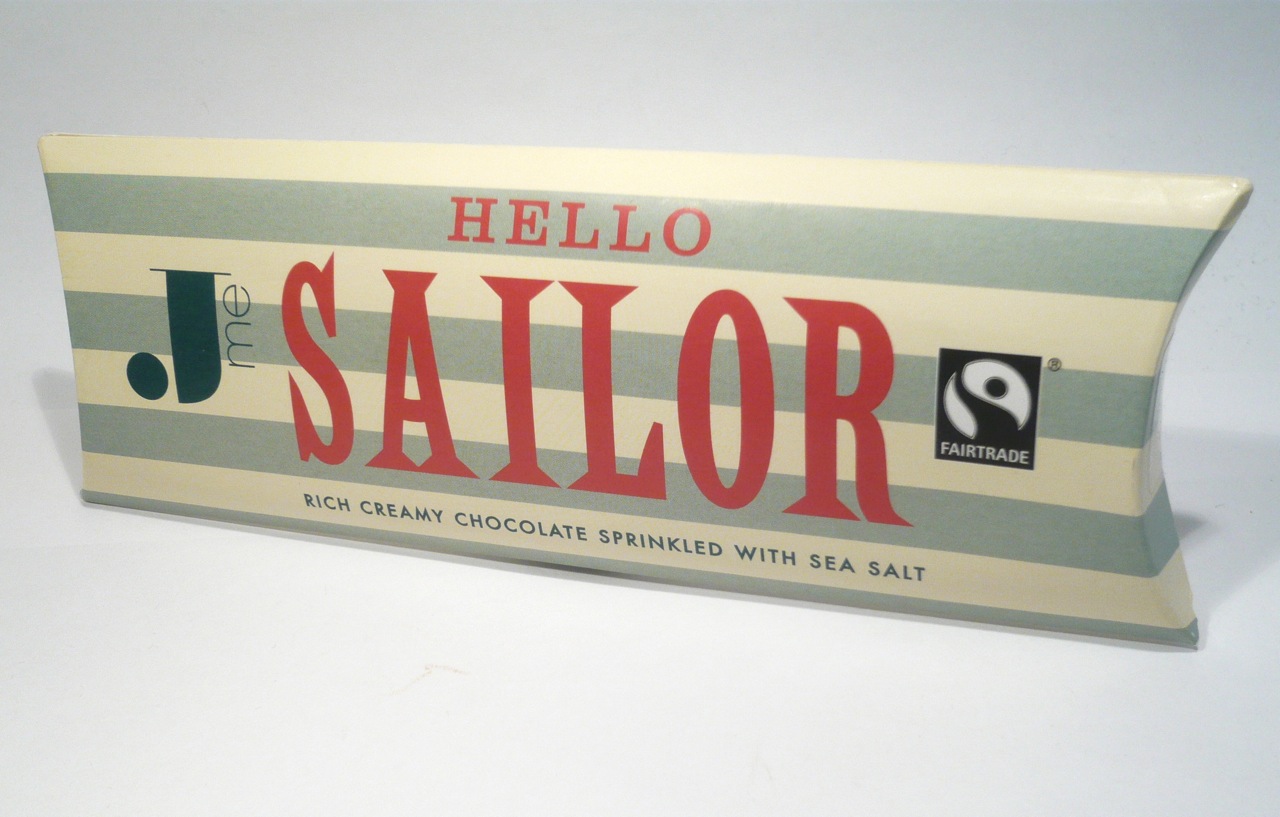
I’m not convinced by the names; “Smooth Operator” and “Hello Sailor” are obviously inspired by the Jamie Oliver vernacular, but I’m not convinced it’s necessary. The packaging itself, however is quite nice (aside from the cheap cellophane wrapping inside).
But the chocolate here is a bit different. Both bars are made with a whopping 56% cocoa solids milk chocolate. To put that into context, that’s almost three times as much as that other well known Fairtrade milk chocolate, Cadbury Dairy Milk.
The only difference between the two bars is that the ‘Hello Sailor’ bar contains a hint of sea salt to help bring out the flavour.
And it really works too. While both bars are pleasant, the salted bar is really quite moreish. It’s a rich and creamy milk chocolate that’s never too sweet and all too easy to eat in one go. I really quite enjoyed it.
That said, there is one negative for me. I have no idea where the cocoa beans in any of this chocolate came from, or who made it for Jamie Oliver. If I’m buying a product certified as Fairtrade, I’d like to know who manufactured it and exactly where the producers who got a fair price are.
Traceability is a real problem in the chocolate industry at the moment, and I’d really like to see the Fairtrade Foundation insisting this kind of information is printed on all packaging as part of the certification process.
But aside from that niggle, I’m fairly impressed with this chocolate – particularly the bars. At £2 for a 60g bar, it might be more than you’re used to paying for your everyday milk chocolate, but I do think it represents value for money.
Update:
Our friend Sarah Payne of Cocoa Loco tells us that they make the mini eggs:
“We make the mini eggs in the Jme fairtrade chocolate range, you asked about the origin of the beans, so just to let you know they are single origin beans grown in the Dominican Republic by a Co-operative of Cocoa Farmers called Conacado, if you want to find out more about the cocoa their website is www.conacado.com.do.”
Update 2
Stephen at Seed & Bean tells us they make the bars, also using beans from Concado.