I’ll be honest with you right from the start – I’ve never liked the Guylian Seashells chocolates that seem to very popular gift ideas at Christmas time, Mothers Days and as ‘thank you’ presents. The icky blandness of the milk and white chocolate and hazelnut paste has never floated my chocolate boat.
Having said that, a new range of Guylian dark chocolate squares caught my eye the other day.
This tiny little 45g box offered three different varieties of dark chocolate with varying levels of cocoa solids. This is a clever idea and reflects the current trend that sees chocolate appreciation and tasting becoming as fun, prevalent (and poncy sometimes, let’s face it) as wine and coffee tasting.
Solitaire held three squares of each flavour (perfect for the Lockett family of three, all keen to try them) in the following styles:
- Asian Dark 56%
- Aztec Gold 65%
- African Ebony 70%
The difference in colour is quite noticeable from 56% to 70%. Interestingly, despite using cocoa from Asia (pretty broad description there, covering an area of the planet that houses at least three billion people), Africa (a rather large continent) and Aztec Gold (presumably South America), the chocolates themselves are made in Belgium. Oh.
Despite Belgium perhaps not having the reputation for being the most fun and vibrant place on earth, they’ve made a cracker of a name for themselves in the chocolate world, and these three unassuming little squares are no exception.
We started with the Asian Dark 56% and were impressed with the sweet, silky texture. The bitterness of the cocoa emerges with a faint hint of white pepper flavour, producing a very satisfyingly smooth and lingering taste. This would make a lovely block of dark all on its own – I certainly craved more than the 5g serving I had.
The Aztec Gold, entering the fray at 65% cocoa solids was less sweet with a noticeably stronger and bitter flavour than the Asian Dark but not so that it was overpowering. Still pleasantly smooth with a creamy mouth feel to it.
African Ebony 70% was of course the most bitter in flavour, and celebrated it. Unlike some dark chocolate at this level (Whittaker’s immediately springs to mind), it wasn’t gritty but remained sleek to the tongue and taste buds. Just perfect for late nights on the couch.
Guylian have come up with a real winner in my book. They have also released much larger boxes of these trios, which I’ll certainly be buying again. It is a clever and attractive way to encourage resisters to The Dark Side to move towards the heaven that is 56% percent and beyond.
Spain again for this particular oddity (actually the second bar I have seen with Aloe in it, and also the second white chocolate and rhubarb combination I have tried) from the people who made the lemon & pepper bar I reviewed recently.
I’m not alone in being rather less enthusiastic about white chocolate, but when I saw this I was reminded of the rhubarb chocolate in Hotel Chocolat’s superb Seasons box, and felt I ought to give it a try in the interest of research and for the benefit of all Chocablog readers.
The rhubarb content is delivered in much the same way as the Lemon was in the other Trapa bar – as crystals. This does of course mean that there’s an amount of sugar there too, but happily it didn’t really stop the naturally tart rhubarb flavour coming through and cutting the sweetness of the white chocolate. The aloe vera was, I must say, something of a lost cause Okay, it’s there, and according to some people it will probably have done me some good, but in terms of adding to the taste of this product, I am unable to tell you anything. 0.1% is never going to filter through something as intensely flavoured as rhubarb!
It’s a combination that works really well, with the rhubarb doing a sterling job of reducing the sweetness of the chocolate. The chocolate itself is a pretty decent Swiss blend with 24% milk solids and a creamy, soft mouthfeel.
I’m off to Spain again in a month or so, and I’ll be keeping an eye out for more Trapa bars. Based on current experience they seem to be producing some fairly worthwhile mid-priced chocolate bars. I’d recommend white chocolate and rhubarb to anyone who dislikes overly sweet white chocolate products.
Here’s the second installment of BoingBoing TV’s tour of the TCHO chocolate factory:
You can watch the first part here, or download the high quality version from BoingBoing TV here.
DMC Confectionery is based in the McLaren Vale, South Australia, an area rapidly gaining as much fame for their wines as the Barossa Valley and more besides. This picturesque part of my home state is also renowned for gourmet foods including olives, almonds, cheeses, organic produce, the best farmer’s market and chocolate.
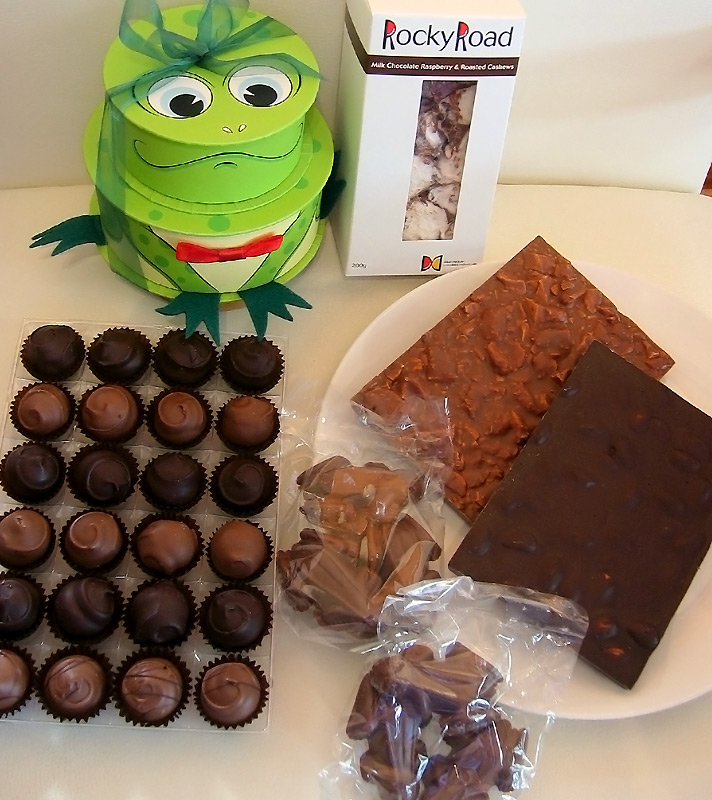
This is where Barbara comes in. She contacted Dom and arranged to meet with me. Wisely, she came to my abode bearing gifts:
And she was also the bearer of knowledge which is even more powerful when combined with enthusiasm, determination and a dollop of humour. Needless to say we hit it off nicely.
DMC confectionery is a new reincarnation (or should that be ‘carnation’ if it’s new) of David Medlow Chocolates; a brand that is most well known for their gourmet, grown-up pectin jellies and ‘real’ Turkish delight. DMC confectionery still manufacture these and have even improved on them (watch this space for a review). They also make a uniquely Australian-flavoured filling for an extremely famous Australian chocolate making company who must, for legal reasons, remain nameless. Either that or I’ll have to kill each and every reader.
Fillings aside, DMC confectionery make chocolate frogs. For some reason, it is the frog that is the most famous shape for chocolate and DMC confectionery’s particular little bloke is sold in selected wineries and gourmet shops, still wrapped in de-identifying clear plastic or sold separately.
However, there is a way you can tell if they are DMC confectionery originals and not inferior copies. DMC frogs have toes. That’s right folks; toes! That’s the kind of attention to detail the DMC folk are into – that, and adding famous South Australian red wine varieties to their hand made chocolate truffles that I’ll be reviewing later.
Let’s get back to the milk chocolate frogs. They are truly delicious. To steal a phrase from Simon’s review of Tesco’s Cocopia milk chocolate, these frogs taste like all good quality chocolate frogs should (but often don’t) taste like. They are creamily sweet and could easily be accepted as the Chocolate Love Child produced from the secret fling between Cadbury Dairy Milk and Lindt Extra Creamy.
They melt easily on the tongue yet have enough of a cocoa flavour for adults (even those taking a short detour from The Dark Side) to appreciate. My forty year old and nine year old companion tasters agreed and eagerly ate a second, then third and fourth to keep reminding themselves of just how good they were.
Take heart, Aussie chocablog readers. DMC confectionery frogs and other chocolates including blocks, truffles and jellies are also sold interstate in Melbourne as well as at selected wineries, gourmet cafes and quality chocolatiers. Just remember to search for and buy only those with the toes.