Out of Pittsburgh, Pennsylvania comes Love Street Living Foods, who sells organic, raw, and vegan food products. No fine print here beneath the stated values; Love Street means serious business. No genetically modified ingredients, no refined sugars or flour, no additives or pesticides, and 100% unprocessed, just to name a few. I’m not one to actively seek out foods this intense, shall we say, but I’m happy enough when they come my way as I do believe they have a lot of health issues straight.
The four products I was sent to try are the Super Fudge bar, Maple Crystal bar, and Chocolate and Chocolate Coconut Spreads. To start off, I like their look: the plain colors are fitting for a raw/vegan atmosphere. The tree, with its implications of life, I like; the tiny people picking cacao pods (at least so I deem them to be) add a slight whimsy to the “healthy” idea of it all.
I dug into the Super Fudge bar first, a 70% cacao sweetened with agave nectar. Three other ingredients to note are coconut oil, maca, cayenne, and lucuma powder. If you’re wondering about the maca and lucuma, Love Street also sells these powders on their own; I imagine they’re added as a part of the “superfood” ideal. This being my first true raw chocolate experience (the other was more an energy bar than chocolate bar), I found the raw texture not so different as I’d expected. It doesn’t last so long and has substance similar to a ganache, but that was about it for me. And it tastes so delicious. The aroma it releases when you tear open the package is like when you split open a fruit — fresh, rich, alive.
It tastes like chocolate in its most basic form. Fudgy in a natural way, with an earthy flavor probably influenced by those added powders. Just a little bit is very satisfying. This chocolate makes me happy.
the Maple Crystal is also 70%, with Ecuadorian criollo cacao and Vermont maple sugar in place of the agave syrup. This one has a slightly darker color, and true to the name, little crystals of maple sugar. That makes it more of a nibbling chocolate. It’s also a slightly sweeter bar, less earthy. Still delicious, and quite strong.
Then there are the spreads. I had to remind myself I was supposed to be reviewing them, but who can resist being caught up by two jars of chocolate nectar? We’re back to the agave sweetener for them — the only differences in ingredients between the two are coconut oil in the Coconut Spread and crystal salt in the Chocolate. Their texture is like what we all dream of: flowing and smooth chocolate unhindered by useless filler ingredients. So sinfully good. Stick them in the refrigerator if you so desire and they’ll become less liquid.
Chocolate and agave syrup are the flavors of the plain spread, like some superior interpretation of chocolate syrup. Though I have mixed feelings on coconut (I usually just say I don’t like it), I fear the Coconut Spread is changing my mind. There is no way to draw back at a taste this fresh. The spreads are great on bread and seem perfect for dipping fruit in; now I wish I had some ice cream to pour them on. Not that it would be a hardship to simply eat them straight out of the jar.
All in all, I’m impressed. Quality ingredients, quality values, and quality taste.
Last night, I was invited to a blogger’s event organised by Green & Black’s at the Miele showrooms in London.
The event was designed to tie in with Green & Black’s “Piece of Green & Black’s” campaign – a slightly gimmicky cross between The Apprentice and The X-Factor with the aim of finding an assistant for their Head of Taste, Micah Carr-Hill.
Personally, I have reservations about the idea of hiring someone by way of a PR campaign, but decided to try to approach last night’s event with an open mind.
There were three main parts to the evening, with plenty of cocktails to help things along. First we were given a short talk about taste, and given a few samples of extracts that are used in the food industry. This was interesting, but perhaps a little odd for someone to be extolling the virtues of artificial vanillin (the main one being “it’s cheap”) at an event for a company with the word “Organic” in it’s logo.
To be fair, Green & Black’s use organic vanilla rather artificial vanillin (which is often extracted from petrochemicals), but it would have been nice for someone to have been talking about the benefits of using natural ingredients as well.
After the talks, we were given the chance to sample a couple of ganaches (chocolate, cream and other flavours) and a couple of cocktails and asked to try to work out the flavours in each. This turned out to be much more difficult than anyone expected, but it was partly complicated by everything being very, very sweet.
The cocktails were not pleasant, and the white chocolate ganache we were asked to try was made with Green & Black’s white chocolate that has so much vanilla, it’s nigh on impossible to taste anything else. Given the extra flavour was a subtle white tea, I’m not surprised that nobody (as far as I know) got it right.
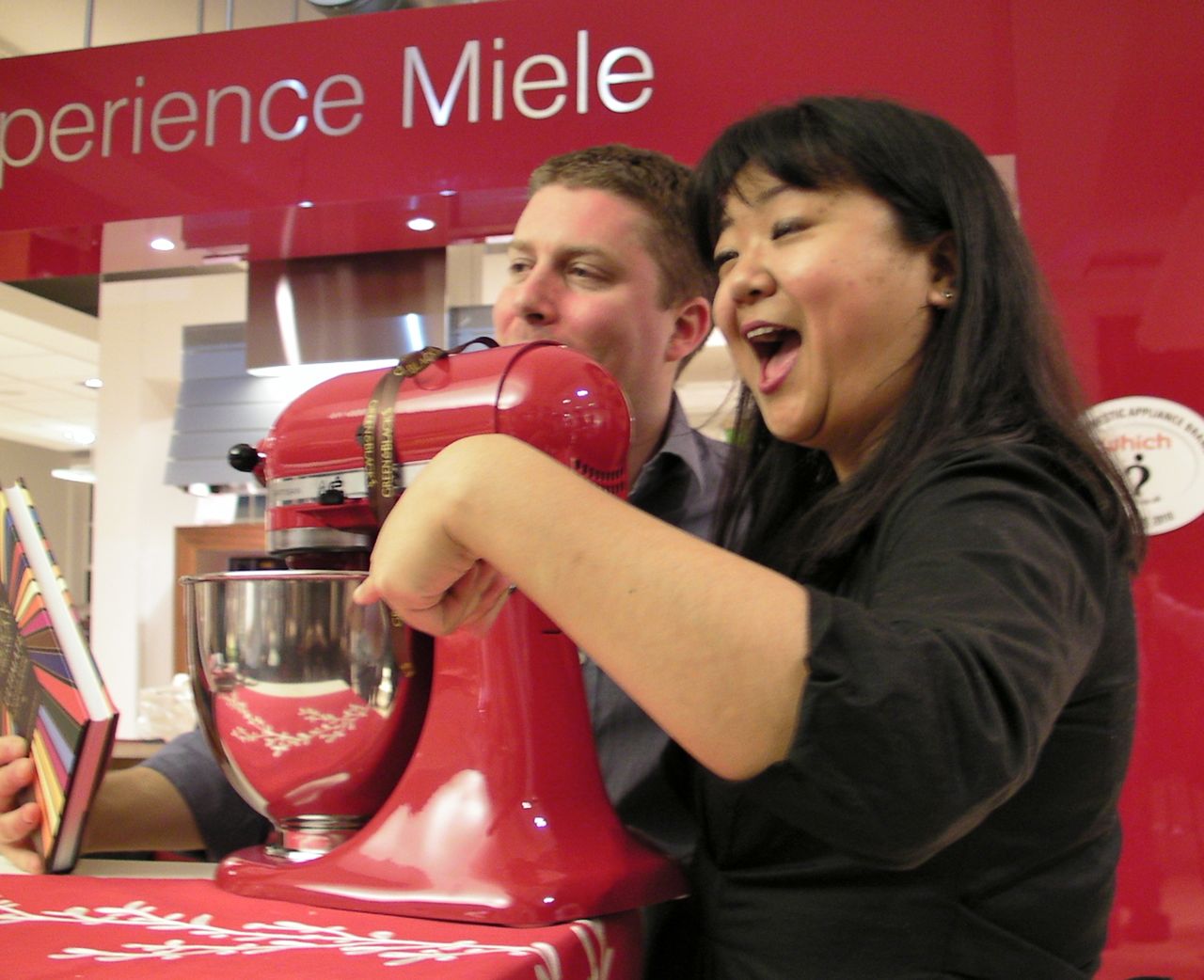
But the highlight of the evening was the 15:15 Challenge itself. Bloggers were asked to prepare a dish from scratch in 15 minutes for under £15. And the results were spectacular. I was blown away by the quality and diversity that people came up with in such a short space of time – a task not made easier by the pressure of having large groups of fellow bloggers constantly taking photos of the process. First prize went to MiMi who won an impressive KitchenAid mixer for her outstanding efforts.
I have to say that despite my scepticism, I really enjoyed this event. It was well organised, the Green & Black’s people were all lovely, and it was amazing to watch real food bloggers doing their thing. I still think their “Piece of Green & Black’s” campaign is more of a PR stunt than a serious attempt to hire someone, but I’m willing to be proved wrong.
I want to be proved wrong.
Photo Gallery
Here’s something I bought from HF Chocolates in Milton Keynes. These two little boxes of Leone Chocolate Drops are somewhat unusual in that they happen to be dairy free – something that will please at least four people I know, and probably many more.
Despite the fact they’re branded as ‘dark’ chocolate, I’d put them more in the ‘continental bittersweet’ category. Shape wise, they’re a little like miniature Rolos but without any caramel, Oh, and they’re made with proper chocolate.
Taste wise, these have remarkably similar characteristics. The chocolate is soft, light, and melts quickly. Obviously the 74% version is slightly more bitter than the 64% (which comes across more like a high cocoa content milk chocolate) but I found them both rather enjoyable. One major criticism has to be the packaging. Once you’ve removed the paper outer on a box of Leone pastilles, there’s nothing to tell you which version you’re eating. Given that the non-dairy free versions also come in the same boxes, this could be an issue for the unwary chocolate eater.
Judging by the delighted reaction of one of my milk-free friends, this sort of chocolate is still something of a rarity in the UK (either that or she just doesn’t look that hard). Judging by the taste of these pastilles, I’d say anyone is likely to enjoy munching on them. They’re a handy way to keep a little chocolate fix in your pocket, they’re obviously made with ‘proper’ chocolate, and they didn’t cost me a fortune.
Unfortunately (for you) HF Chocolates is a wholesaler, so you’re going to have to look for suppliers in the UK. But it will be worth your while.
A certain person who shall remain nameless has been teasing me with these Ben Tre bars for some time. With a series of emails and texts along the lines of “I bought you a Ben Tre bar to try” followed soon after by “Oops! I ate it!”, I decided the only way I was ever going to get to try this particular chocolate was to buy it myself.
Buy it. With money. Shocking, I know!
For the uninitiated (like me), Ben Tre is the name of the region – and the plantation – in Vietnam where the beans for these bars come from. The area was chosen both for the quality of the beans and to help provide a secure income for local people still affected by the aftermath of the Vietnam War.
The 70g bars are made by Demarquette and cost a very reasonable £4.99 each, £1 of which goes to charity.
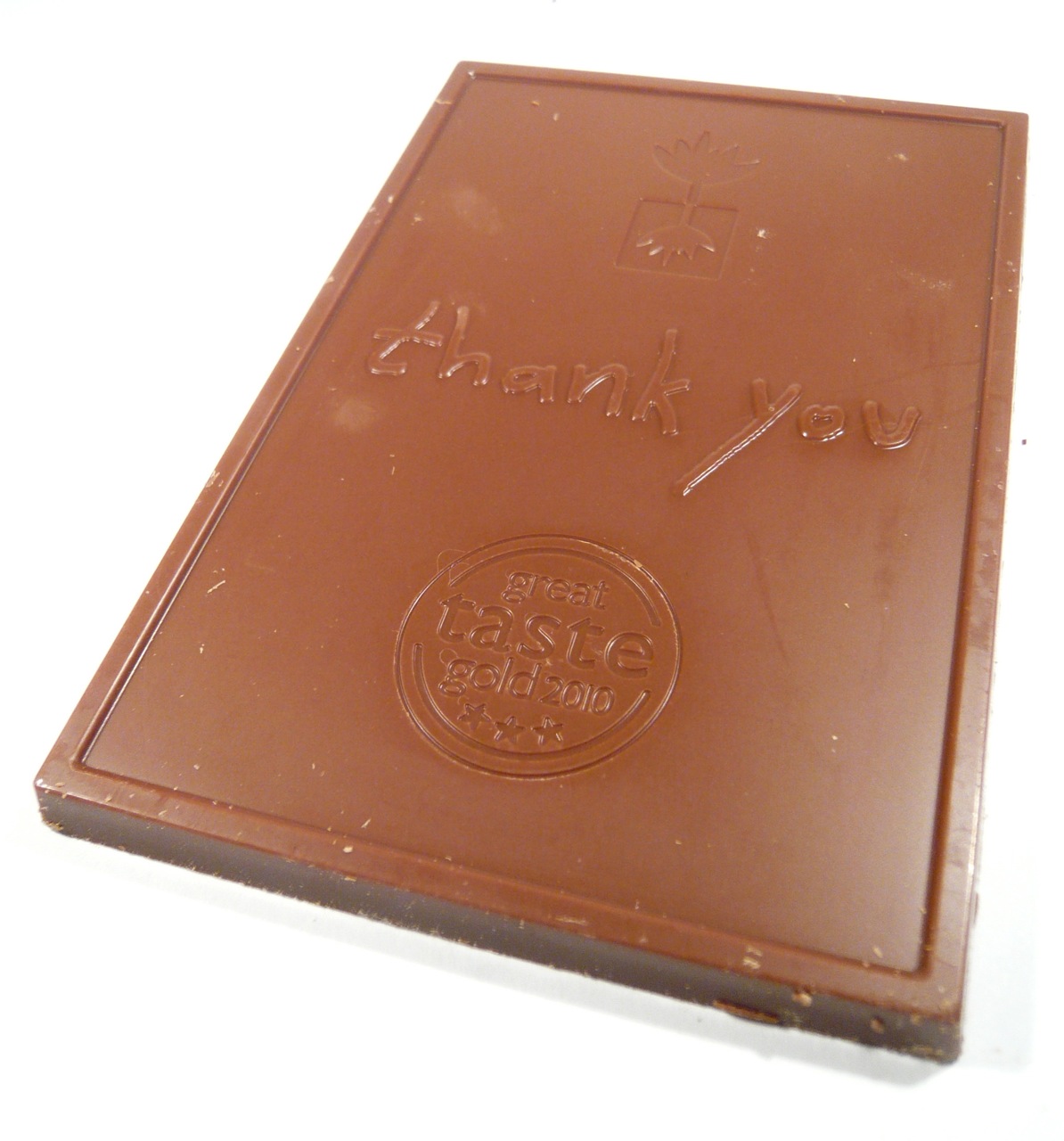
The dark chocolate bar is 70% cocoa solids, and has a nice gloss and a good clean snap. I do think the logos embossed on the front of the bar are perhaps a little bit tacky though – and I really don’t need to be thanked for eating chocolate.
The chocolate has a really exotic and interesting flavour. It has the sweet, fruitiness that I love in dark chocolate, but also a fresh, almost grassy taste that gives way to a rich, chocolatey experience. It’s never too bitter or too sweet, has a wonderfully smooth texture and it melts away quickly on the tongue. It’s quite different to the overtly zingy Madagascan dark chocolates that I usually prefer, but it’s very, very good, not to mention moreish!
The 40% milk chocolate version is equally delicious. Going straight from the dark to the milk, it feels very creamy, but it’s not too sweet. All those fresh, exotic notes are still detectable though.
The text on the front of the packaging for these bars asks the question “Is this the best chocolate in the world?”. I’m not sure about that, but it’s certainly high on the list. If you take the exceptionally reasonable price into account as well, then the answer may well be yes.
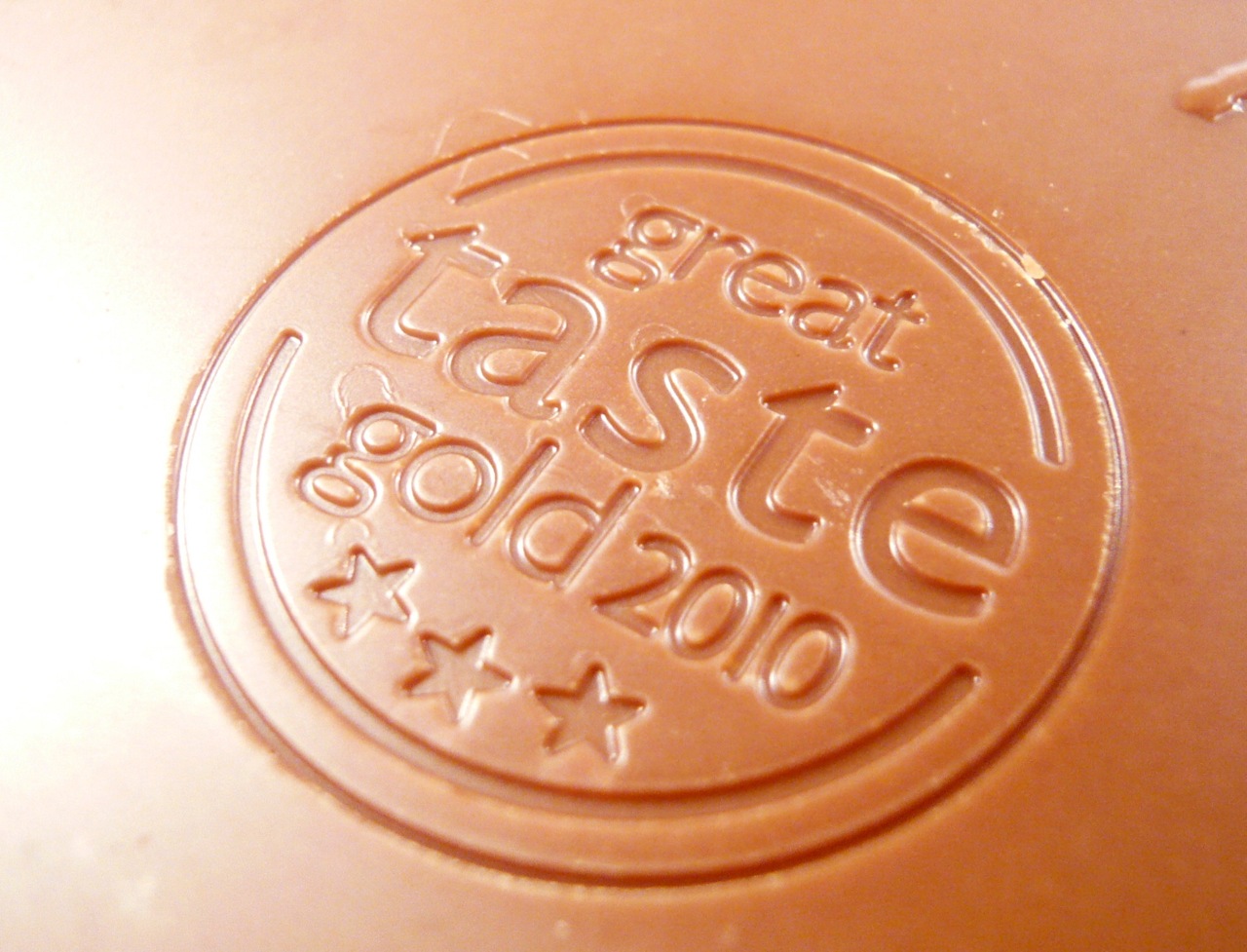
The one thing that urks me just a little is the repeated use of the Great Taste Awards logo. It’s featured several times on the pack, and even embossed into the chocolate itself. In my opinion, it’s something that’s become overused lately, to the point where it’s fairly meaningless. To go as far as to emboss the Great Taste logo on the chocolate itself might be going a little far.
That said, I don’t think you’ll find a better quality / value balance in any other chocolate on the market today. And given that a quarter of what you pay goes straight to charity. I recommend popping into Demarquette’s shop in Chelsea or ordering a bar or four online through their web site. Do it now.